The series The Audacity, starring Billy Magnussen, takes Silicon Valley culture to the extreme. His character, Duncan Park, is the eccentric CEO of a data mining company, in a plot that explores artificial intelligence, corruption, and the value of information. In a recent interview, Magnussen reflects on AI as a double-edged sword: a powerful tool for knowledge, but dangerous when it supplants human expertise. The series, though grotesque, reflects very real debates about the social impact of technology.
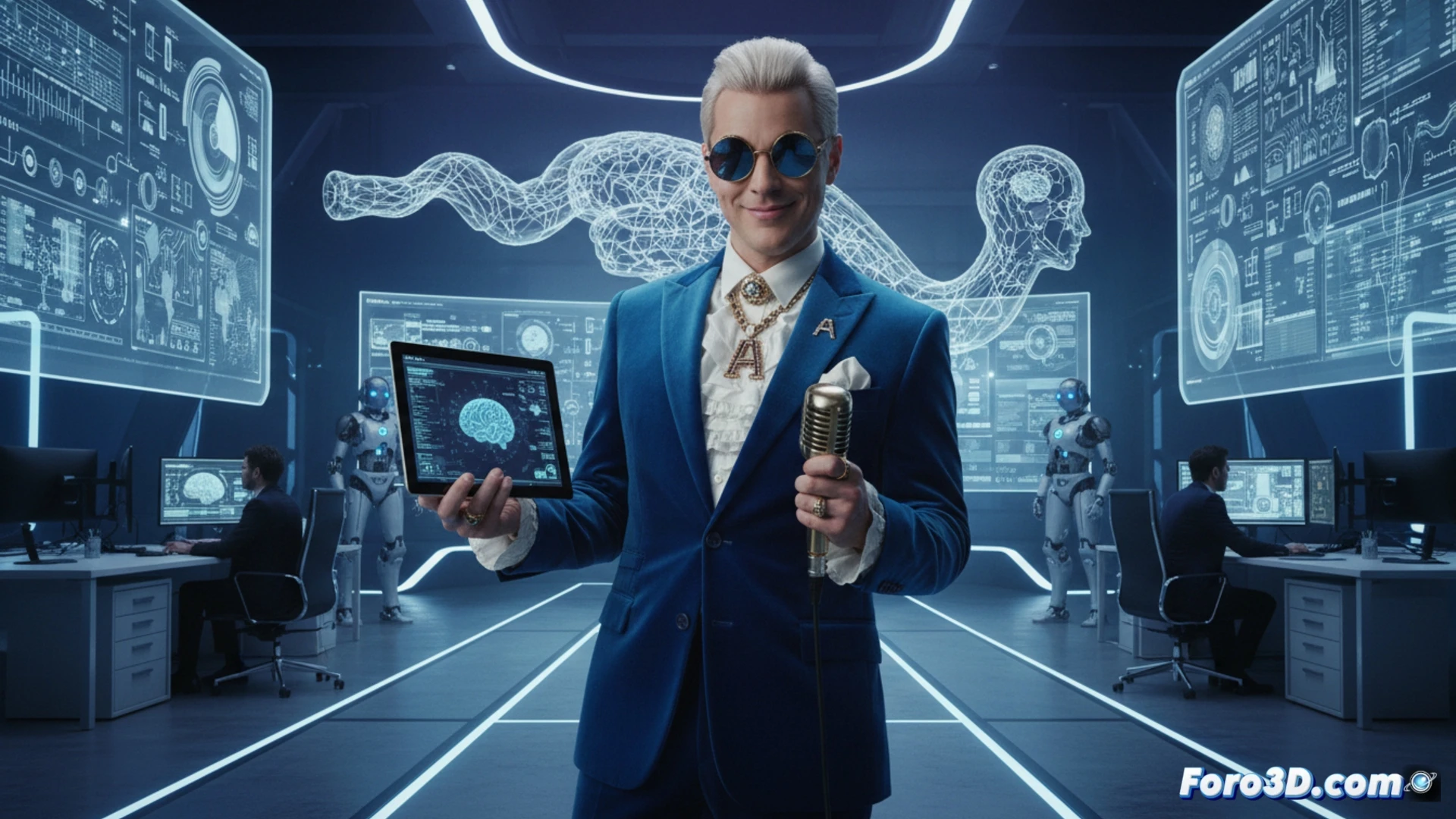
Visualizing the intangible: the role of 3D and VFX in technological narrative 🎬
Series like The Audacity face the challenge of making the abstract visible. Concepts like algorithms, data mining, or global information flow are not physical. This is where 3D and visual effects become key narrative tools. They allow the creation of powerful visual metaphors: complex holographic interfaces, data maps that grow like organisms, or representations of AI as an omnipresent entity. This visualization not only serves the plot but shapes the public's perception of how these technologies work, making their potential and threat tangible. The entertainment industry thus visually educates and generates a collective imaginary around AI.
Exaggerated fiction or distorted mirror of reality? 🤔
Magnussen claims that reality surpasses fiction. And therein lies the value of these narratives. The Audacity, by caricaturing the tech ecosystem, manages to capture the humanity—with its ambitions, fears, and questionable ethics—behind the code. By taking debates into the realm of dramatic satire, the series amplifies crucial issues: the privatization of intimacy, dehumanization in decision-making, and corruption disguised as innovation. It's not about predicting the future, but examining the present through a lens that, though distorted, illuminates the real risks of unchecked technological power.
To what extent does the dystopian satire of series like The Audacity reflect the real risks of power concentration in technological elites who decide the future of artificial intelligence?
(P.S.: the Streisand effect in action: the more you prohibit it, the more it's used, like microslop)