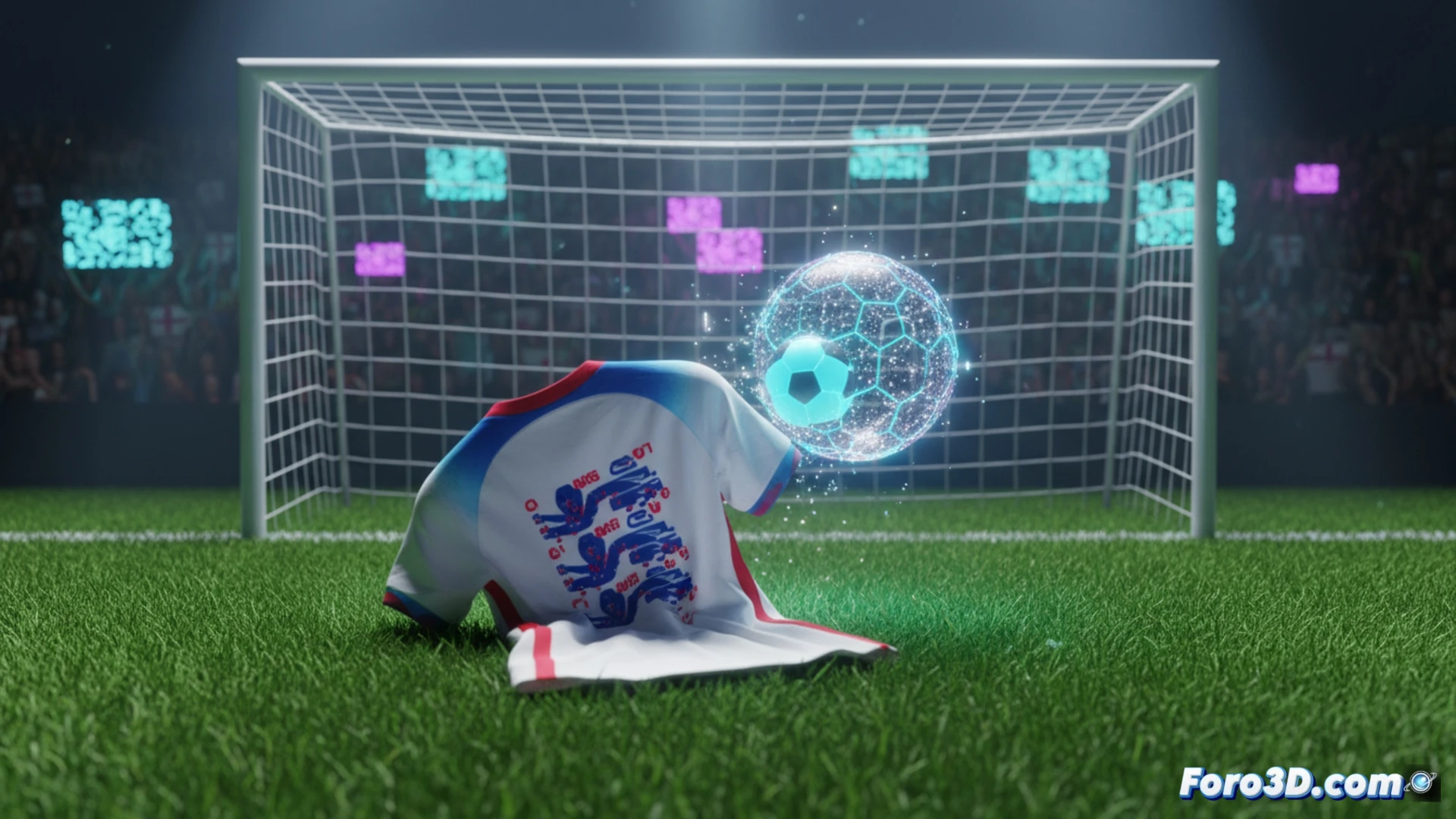
The England football team intended to generate hype with a video of their new kit for the 2026 World Cup. However, the announcement turned into a case study on the risks of AI. In the background, a poster showed nonsensical text: IV Omree Lionss. Social media users instantly identified the blunder as the work of artificial intelligence, unleashing criticism for using AI instead of human designers. This incident demonstrates the public's growing ability to detect AI-generated content and their rejection when they perceive a lack of quality and authenticity.
AI Literacy and the Critical Eye of the Digital Public 🤔
The case is emblematic of a new phenomenon: the general public's AI literacy. Users are no longer passive consumers; they have developed a critical eye to identify the characteristic flaws of generative tools, such as incoherent texts, anomalies in hands, or, as here, jumbled nonsensical words. This creates a new challenge for brands and creators. AI is a powerful tool for ideation or iteration, but its opaque use or as a cheap substitute for the professional creative process comes at a high cost. The audience values authenticity and perceives merely substitutive use as a lack of respect, instantly damaging the brand's trust and reputation.
Lesson for 3D and Visual Creators: AI as an Assistant, Not as an Author 🛠️
For professionals in 3D design and visual communication, the lesson is clear. AI must be integrated as an assistant within a workflow directed by human intention and expert judgment. It can accelerate tasks, explore variations, or generate base concepts, but supervision, refinement, and the authentic final touch must be human. The goal is not to hide AI use, but to employ it to enhance genuine creativity, maintaining the quality standards that the public expects and that our profession upholds. Trust is the most valuable asset.
To what extent is the credibility of a brand or institution compromised when careless use of generative AI tools is detected in their marketing campaigns?
(PS: trying to ban a nickname on the internet is like trying to cover the sun with a finger... but in digital)