The reactivation of the A-357 highway works in Málaga, after more than a decade stalled, is a clear example of how vital infrastructure projects can be hampered by outdated planning. This case underscores the pressing need for modern methodologies. In the niche of 3D Industrial Logistics and Production, tools like BIM and digital twins present themselves as the solution to avoid the cost overruns and delays that have marked the history of this road.
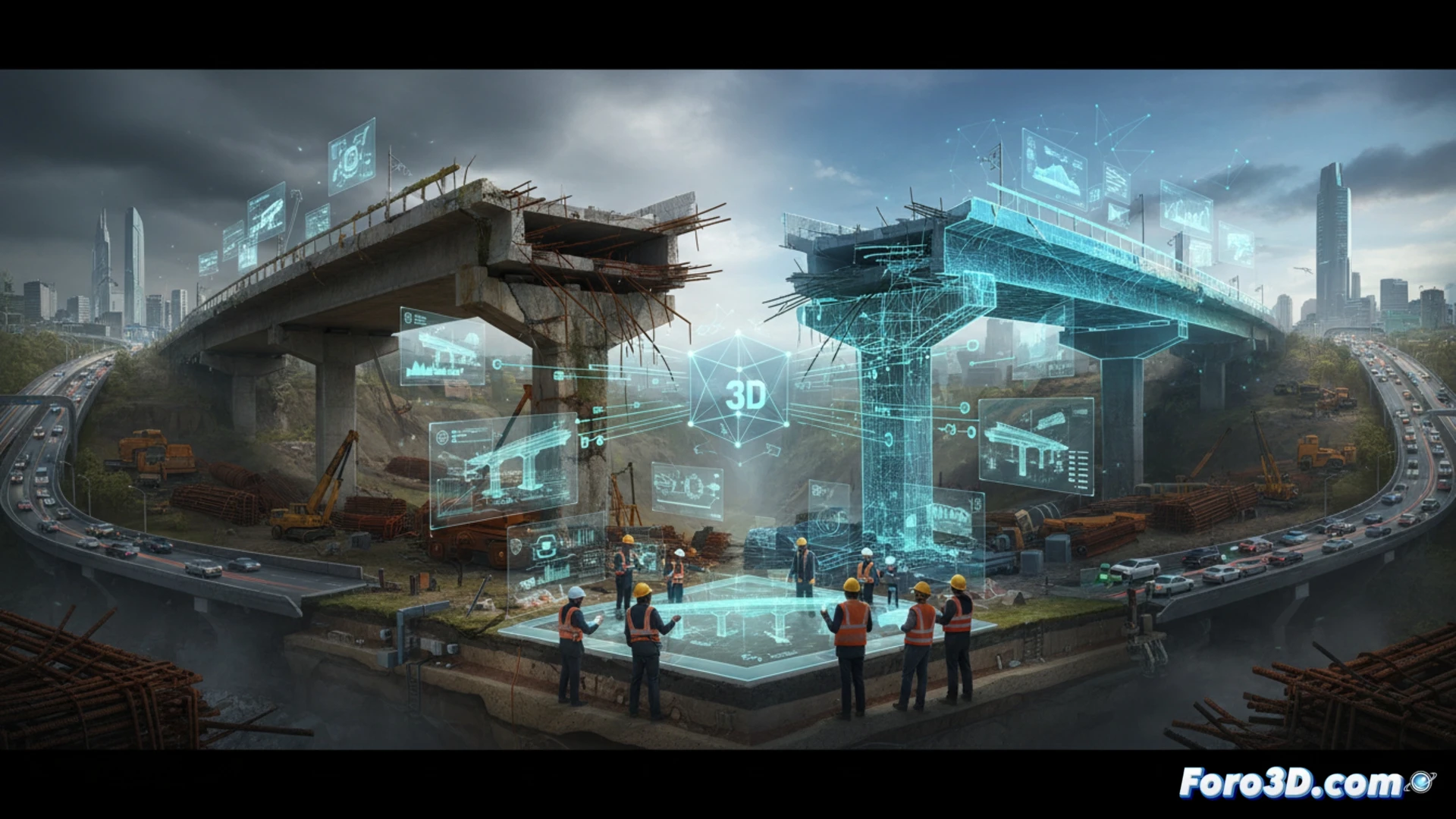
BIM and Digital Twins: From Stagnation to Precise Execution 🛠️
The awarding of the pending section, with its viaduct over the Río Grande, is an ideal project for building information modeling. An integral 3D BIM model would allow coordinating all disciplines, from the foundation to the pavement, detecting interferences before reaching the construction site. A digital twin of the environment would simulate current and future traffic flow, justifying the investment, and model the construction logistics: location of concrete plants, truck routes, and task sequencing. This virtual planning in 4D is key to meeting the 46-month deadline and controlling the 41.6 million budget.
Lessons for the Future of Civil Engineering 📈
The planned completion in 2026 should not be just a physical milestone. This project must mark a methodological turning point. The systematic adoption of these 3D tools in the planning of public infrastructure is the best guarantee for their long-term viability and efficiency. It transforms civil works into an industrialized process, where complexity is managed before moving the first stone, ensuring that critical investments like the A-357 fulfill their function without new setbacks.
How is 3D printing of metals and concrete transforming the planning and execution of critical infrastructure like the A-357 highway?
(PS: visualizing logistics flows is like watching ants... but with less order and more budget)