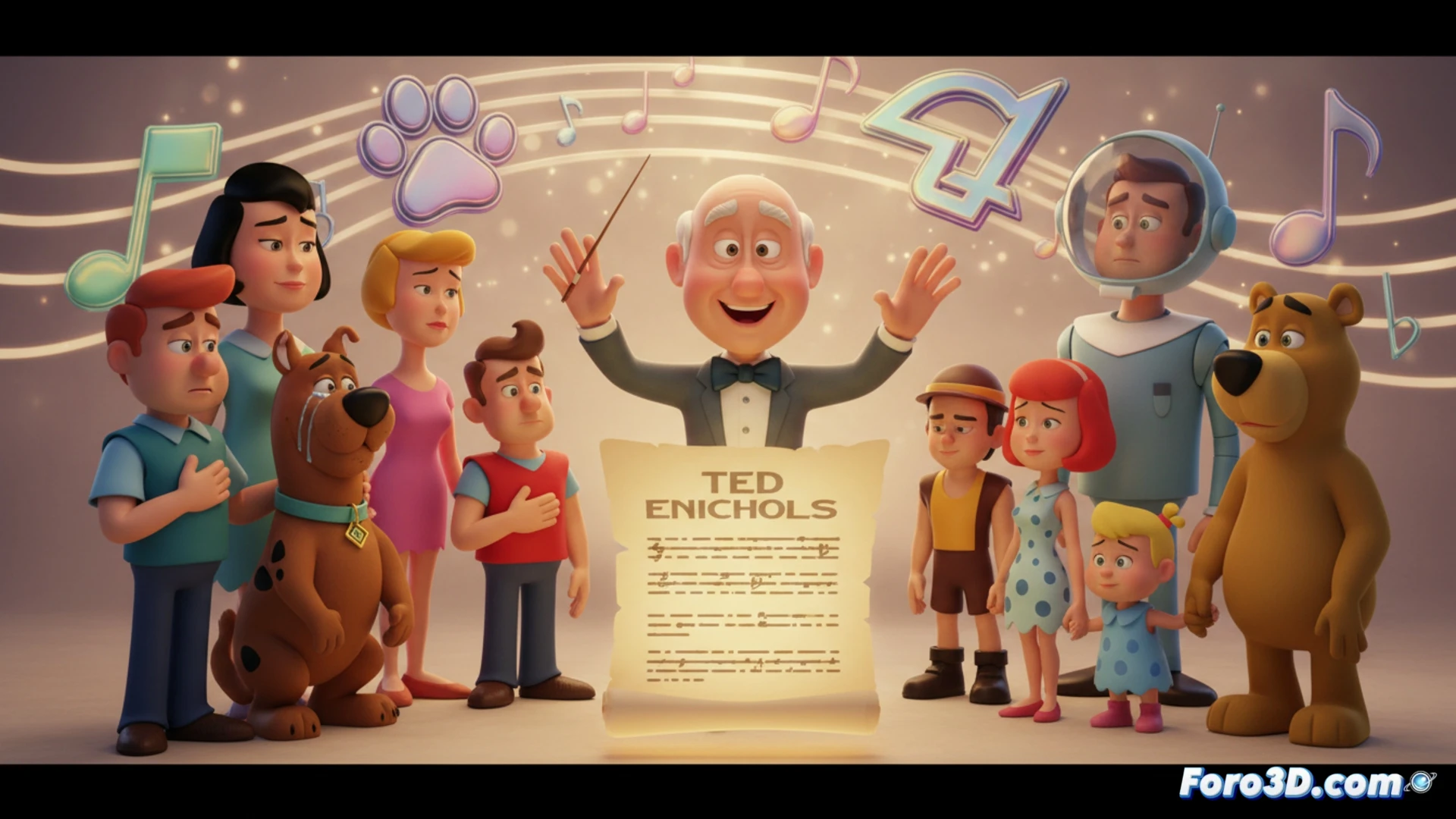
On January 9th, at the age of 97, composer Ted Nichols passed away, a victim of Alzheimer's. His name is indelibly linked to the Hanna-Barbera universe, where his music defined the auditory landscape for generations. From the mysterious melodies of Scooby-Doo to the prehistoric joy of The Flintstones or the epic adventure of Jonny Quest, Nichols built unique sonic identities. His work was not mere accompaniment, but the emotional backbone that granted coherence and enduring character to these animated series, consolidating his legacy in popular culture.
From musical leitmotif to 3D previsualization: building worlds from preproduction 🎬
Nichols' work as sound architect finds a direct parallel in modern audiovisual preproduction tools. Just as he used specific melodies and rhythms to define a show's personality before a single frame was drawn, today 3D artists employ animated storyboards, previsualizations (previs), and virtual set models to build the narrative world. These techniques allow planning cinematography, editorial rhythm, and spatial sound integration for immersive environments, such as 3D audio for virtual reality. 3D previsualization acts as the initial visual score, establishing the universe's coherence and saving resources, continuing the tradition of planning the complete experience from its foundations.
Legacy and continuity: planning as the essence of narrative 🎵
Ted Nichols' passing reminds us that the essence of a great audiovisual production lies in solid planning that defines its identity. His music was the sonic blueprint that brought life and unity to animated worlds. Today, that philosophy endures and expands with digital technology. The meticulous construction of universes, whether through musical notes or digital blocks in a 3D environment, remains the fundamental step to create immersive and memorable stories. His legacy is not just songs, but a timeless principle: a well-built world, from its conception, is the key to connecting with the audience.
How did Ted Nichols' minimalist work influence the Hanna-Barbera soundtrack to define the sonic identity and narrative of classic television animation?
(P.S.: Previz in cinema is like the storyboard, but with more chances for the director to change their mind.)