Polygon Runway has shared a detailed analysis of their latest isometric illustration, created with Blender 5.0 and paying homage to 90s PC video games. This breakdown is not just a display of nostalgic art, but a practical guide on the pipeline for generating assets with a deliberate retro aesthetic. The artist breaks down how specific technical decisions in modeling, texturing, and lighting align to evoke the visual essence of that era, offering valuable lessons for indie game developers seeking to capture a similar charm in their projects.
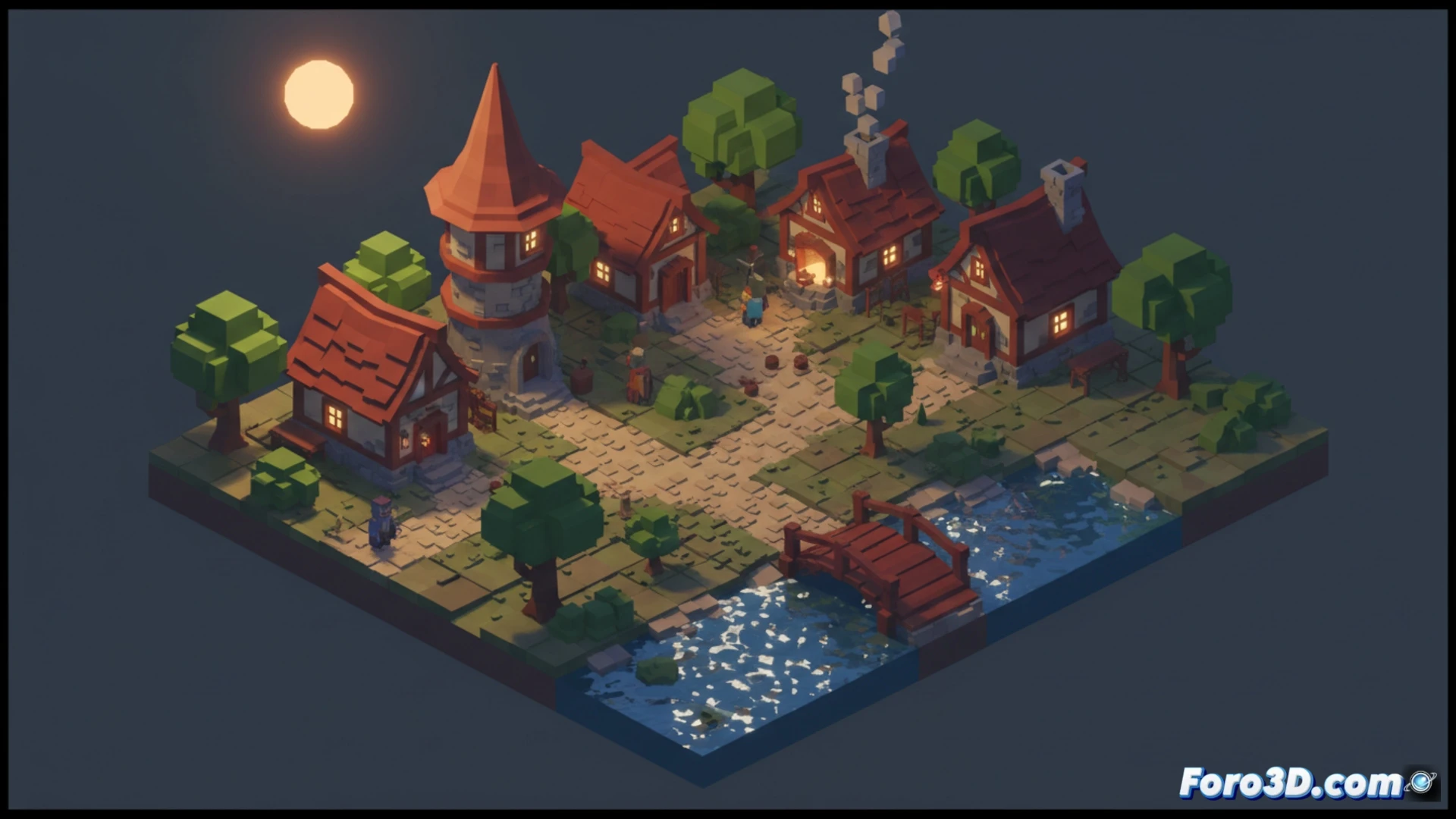
Technical Pipeline for Retro Aesthetics: From Geometry to Screen 🎨
The process begins with meticulous construction of the scene using low-poly geometry, prioritizing recognizable shapes over complex detail. This approach is not only faithful to the original style but is fundamental for optimizing assets in a game engine. The applied textures are deliberately pixelated and low-resolution, working in conjunction with a limited and saturated color palette to define the material and environment. The lighting, strategically placed, does not seek physical realism but to create depth and volume, accentuating shadows to reinforce the isometric perspective. This controlled angular composition is key to sealing the feel of a classic video game.
Lessons for Indie Game Development 👾
This analysis transcends the creation of a static image. It demonstrates how a well-defined technical pipeline in Blender, focused on stylistic constraints, is directly transferable to video game production. The discipline in low-poly modeling, economy in texturing, and non-physical use of light are principles applicable to generating efficient assets with personality for indie projects. The final result validates that technical limitation, when approached as a conscious artistic choice, becomes the fundamental pillar for building worlds with a strong and nostalgic visual identity.
How can the workflow in Blender be optimized to create isometric low-poly art with authentic 90s aesthetics, from modeling to lighting and rendering?
(P.S.: 90% of development time is polishing, the other 90% is fixing bugs)