Mariano García, world champion in 1,500 meters, has revealed a curious ritual of his team: celebrating victories with ColaCao. This act, beyond the anecdotal, is a liturgy that strengthens group cohesion. In the niche of sports and 3D technology, this raises a fascinating question: can we analyze and optimize these rituals with digital tools? The answer opens a field for improving performance through the management of psychological and social dynamics.
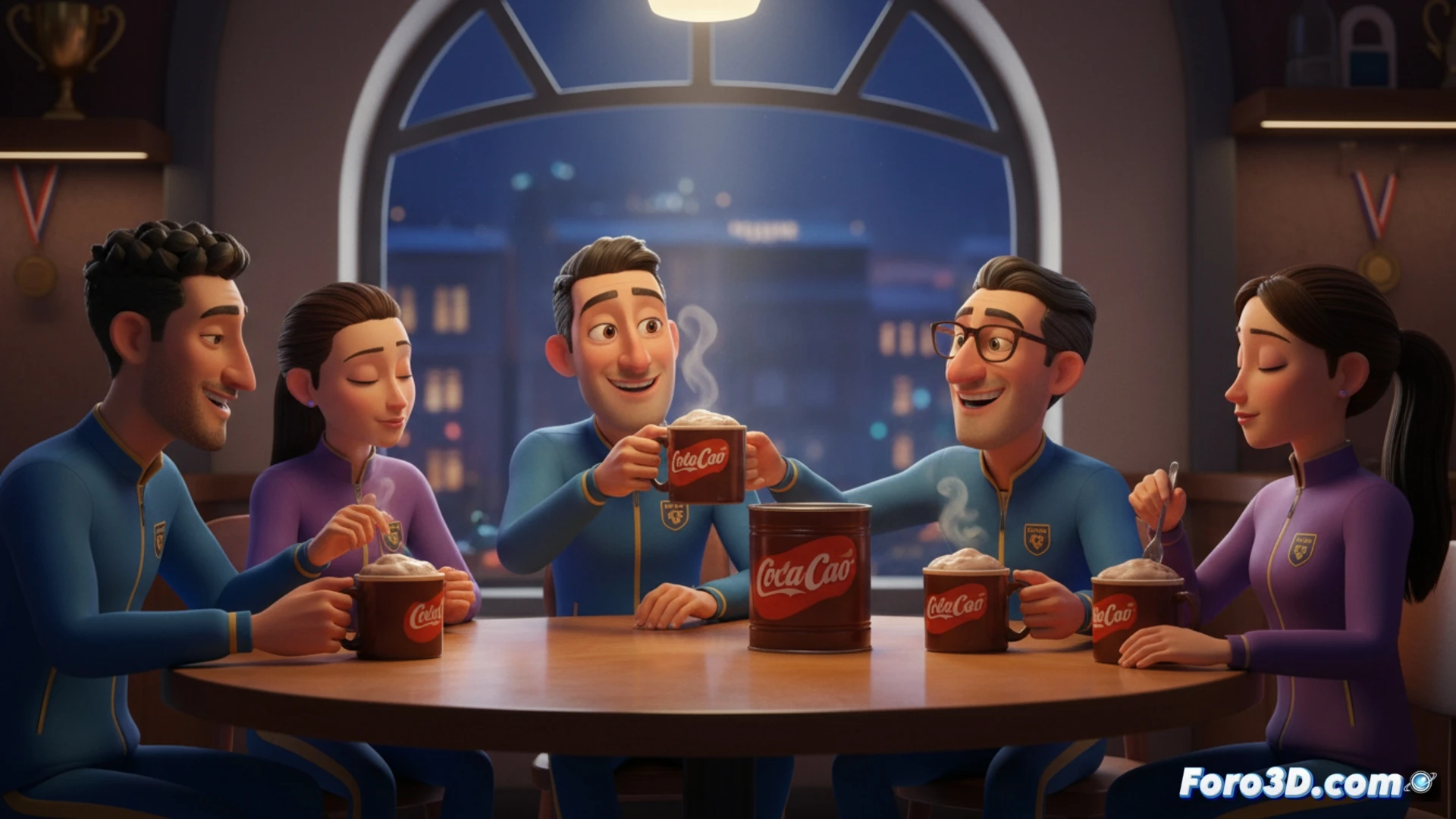
3D Simulation and VR to Train Post-Competition Cohesion 🎯
3D technology allows going beyond the anecdote. Through 3D scanning and modeling, the exact environment of a celebration can be recreated, such as a hotel room in the early hours, to study interactions. With virtual reality, teams can train post-effort transition protocols, practicing rituals that foster camaraderie and relaxation in a controlled environment. Augmented reality could overlay physiological stress data on a group model, visualizing how social dynamics affect recovery. This transforms a spontaneous habit into a quantifiable and optimizable performance factor.
Beyond the Physical: Sports Psychology Modeled in Three Dimensions 🧠
García's story underscores that success is also built with simple and shared gestures. 3D technology offers us the tool to give tangible form to these psychological intangibles. By modeling these liturgies, we do not dehumanize them, but recognize their scientific value and enhance them. The future of high performance lies in integrating the modeling of the mind and the group with that of the body.
How can sports rituals, like that of Mariano García's team, be modeled and animated in 3D to analyze or enhance their psychological impact on performance?
(P.S.: player tracking is like following your cat around the house: a lot of information and little control) 🏆