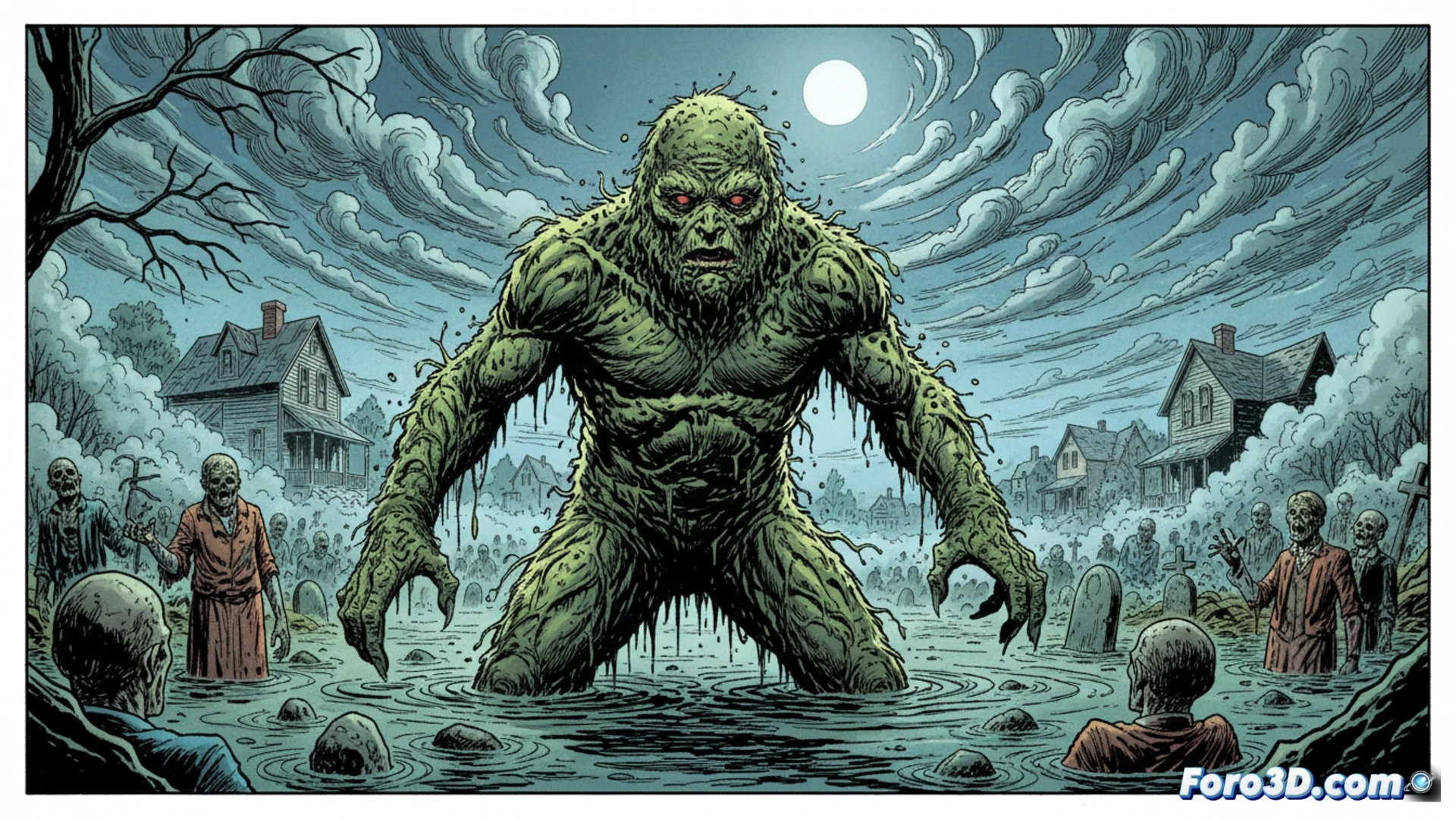
The graphic novel Swamp Thing: The Dead Don't Sleep stands as a deliberate exercise in visual nostalgia. Its power lies in rejecting contemporary aesthetics to embrace a tone of psychological and atmospheric horror typical of the eighties. This anachronistic approach is not a flaw, but a fundamental narrative decision. For 3D artists and previsualizers, studying this work is a masterclass in how to define and maintain a cohesive atmosphere from the conceptual phase, using the emotional palette of classic horror to guide every visual decision.
From Page to Previz: Building Tension with Composition and Tone 🎬
The comic achieves its horror not with jumpscares, but with oppressive visual composition, somber color palettes, and a slow pace. These are decisions that in a 3D or cinematic pipeline are made in preproduction. By analyzing its pages, we can extract principles applicable to storyboarding and scene blocking in 3D software. How to frame a sequence to generate unease rather than pure fright, how to use lighting and ambient fog to define the mood, and how character and environment design reinforces themes of decay and nature. A previz or animatic can test these composition and pacing ideas before the costly final render, ensuring that the atmospheric essence is preserved.
Essence over Novelty: Narrative Planning in Early Stages 🎨
This work demonstrates that a strong visual and tonal identity precedes technical complexity. For 3D projects, this reinforces the critical importance of the art bible and moodboards in the initial phases. Defining that a project must evoke a damp gothic horror or an ominous nostalgia guides all subsequent decisions, from modeling and texturing to lighting and postproduction. Swamp Thing reminds us that, regardless of the tool, narrative power lies in a clear and well-planned vision, where every visual element serves a coherent emotional atmosphere.
How can we apply the atmospheric horror techniques and visual nostalgia of Swamp Thing: The Dead Don't Sleep in the 3D preproduction phase to create more immersive and emotionally resonant narrative environments?
(P.S.: Previz in film is like the storyboard, but with more chances for the director to change their mind.)