Adobe has unveiled at GDC 2026 the upcoming features of Substance 3D Designer 16.0, focusing its power on creating environments for video games. The star is the complete overhaul of the Shape Splatter node, which now allows dispersing 3D shapes defined by distance fields (SDF) with real-time ray tracing and per-instance control. This update, along with improvements in displacement and extended support for OpenPBR, promises a qualitative leap in generating terrains and complex scenarios for real-time engines. 🎮
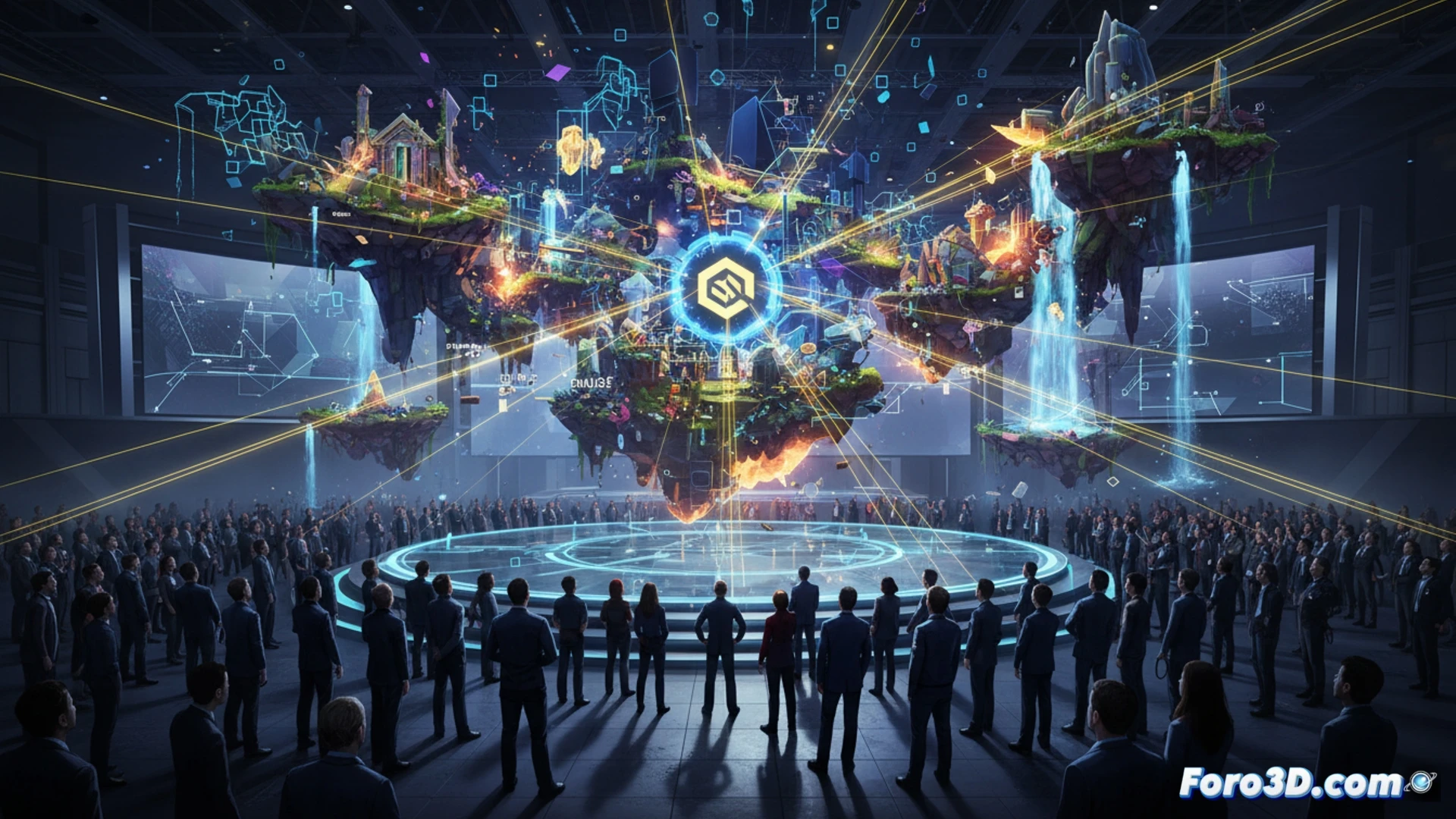
From texture splatter to intelligent 3D geometry dispersion 🧠
The fundamental change lies in the evolution of the classic Shape Splatter. It no longer limits itself to distributing height maps or flat textures, but can instantiate and disperse complete 3D SDF shapes, such as rocks or logs, with precise collisions calculated via ray tracing. This allows creating piles of stones or dense forests with artistic per-instance control, directly in the material graph. The introduction of new nodes to create and manipulate native 3D SDFs in Designer integrates this technology organically. For real-time pipelines, this means generating high-quality dispersion geometry that can be exported as meshes or leveraged in the material's own displacement, all within a non-destructive workflow.
A more robust ecosystem for real-time development ⚙️
These improvements, added to the ribbon graph samples for Painter that facilitate creating custom tools, reinforce the Substance ecosystem as a technical backbone. Artists and technicians gain unprecedented control over asset density and placement directly in the material stages, shortening iterations between Designer, Painter, and the engine. The commitment to OpenPBR and advanced displacement consolidates a predictable pipeline with high visual fidelity, essential for current and future video game standards.
How does the integration of SDF and ray tracing in Substance 3D Designer 16.0 redefine procedural environment creation workflows for open-world video games?
(P.S.: shaders are like mayonnaise: if they break, you start all over again)