In Germany, two apparently disconnected events highlight the same challenge: the management of environmental crises. While a stranded humpback whale challenges rescue efforts due to a lack of adequate equipment, activists protest against climate policies they consider insufficient. Both scenarios, the immediate incident and the slow-motion catastrophe, demand better planning and communication tools. This is where 3D visualization and simulation emerges as a crucial technological bridge.
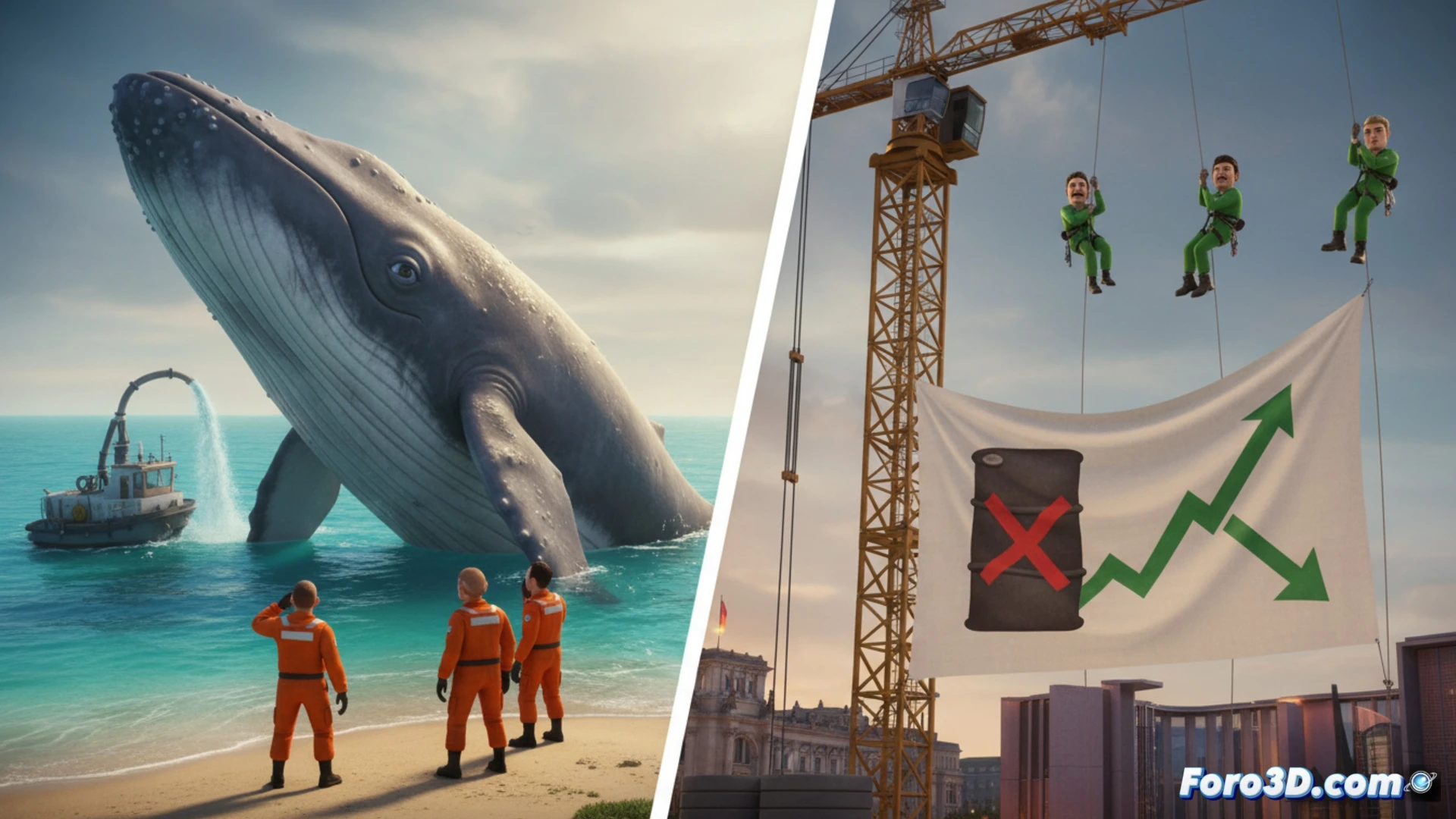
Digital twins and rescue planning: from stranding to climate mitigation 🐋
The initial failure in the whale rescue due to insufficient dredger power evidences reactive planning. A digital twin of the bay, with precise 3D modeling of topography, bathymetry, and tidal dynamics, would have allowed simulating rescue operations with different equipment, anticipating critical points and optimizing resources. This same logic applies to the climate crisis. Modeling sea level rise, emission flows, or the impact of energy transitions in 3D allows visualizing scenarios, evaluating policies like the German 65% program, and communicating the consequences of inaction or success in a tangible way.
Beyond visualization: awareness and informed action 🗺️
The Greenpeace banner is a message in the air; an interactive 3D simulation of Berlin's future climate is an immersive message. 3D technology transcends mere illustration to become an instrument of deep analysis and awareness. By allowing us to see and experience complex data, from the stress of a stranded cetacean to the transformation of a landscape over decades, it facilitates an emotional and intellectual understanding that drives more informed and urgent action, both in immediate rescues and in the great global catastrophe.
How can 3D simulation transform the response to environmental catastrophes, from mass strandings to large-scale protests, optimizing resources and saving lives?
(PS: Simulating catastrophes is fun until the computer melts down and you become the catastrophe.)