At CERN, an experiment called STEP is preparing the first antimatter transport service. Its goal is to carry antiprotons, confined in a portable magnetic trap, to other European laboratories. This would allow extremely precise measurements far from the interfering radiation of the main accelerator. 3D visualization is key to understanding this milestone, showing the delicate container and the journey of the most elusive particle.
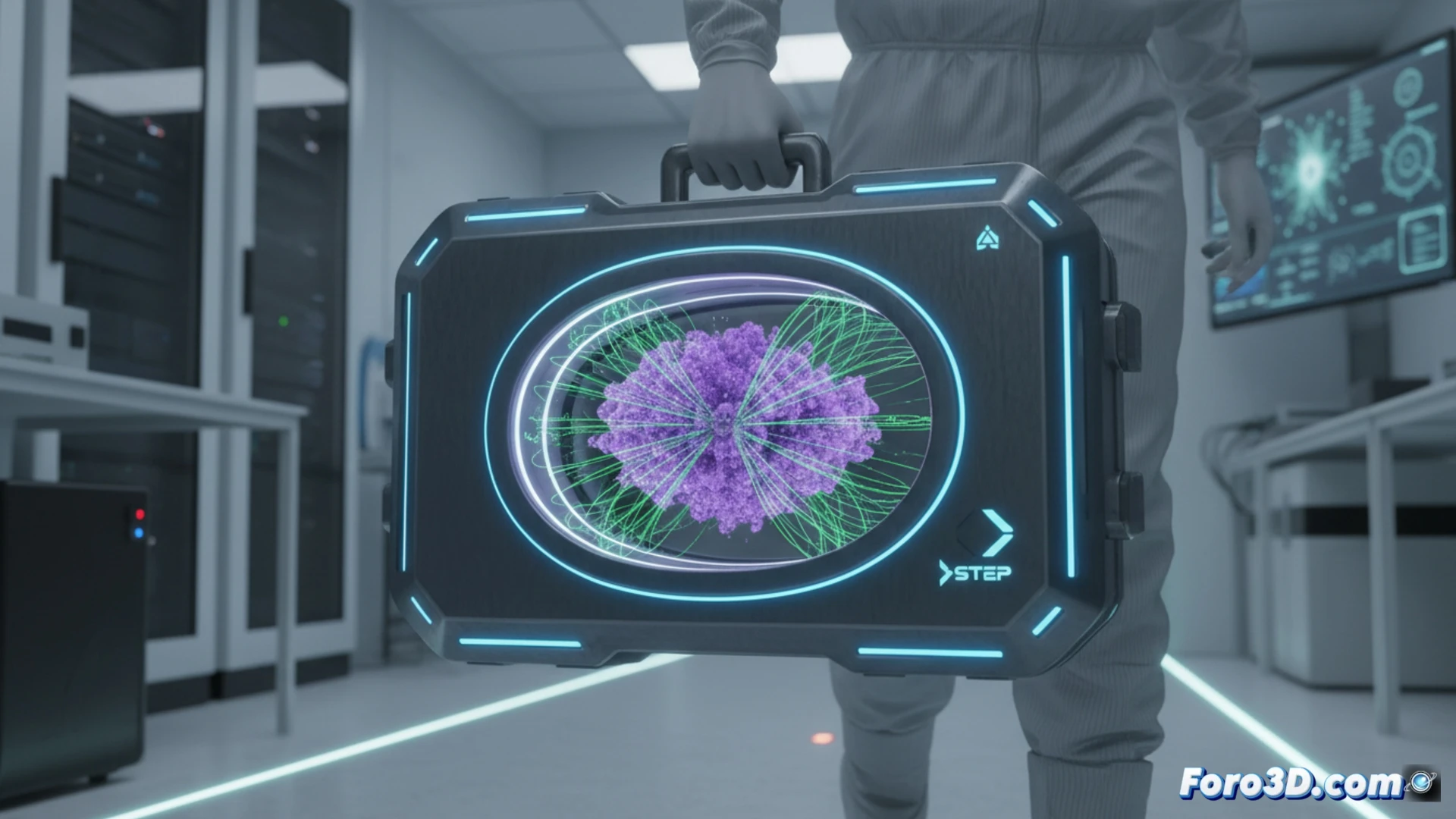
The technical challenge of confining the unconfineable 🧲
Antimatter annihilates upon contact with ordinary matter. To store it, STEP uses a portable Penning trap: a strong magnetic field and electric fields keep the antiprotons suspended in an ultra-high vacuum, preventing them from touching the walls. A detailed 3D visualization can show the device's layers, the magnetic field lines trapping the particles, and the annihilation process if something fails. This capsule is the core of the entire project.
Visualize to answer the big question 🔬
This transport is not an end, but a means. It belongs to the BASE experiment, which compares the properties of protons and antiprotons with incredible precision. Any minimal difference would explain why the universe is made of matter. A 3D infographic can tie it all together: the magnetic suitcase traveling, measurements in stationary laboratories, and a representation of the Big Bang, where matter and antimatter, created equally, began a mystery that STEP helps unravel.
How are magnetic field simulations designed and validated for portable antimatter confinement in experiments like STEP?
(P.S.: at Foro3D we know that even manta rays have better social bonds than our polygons)