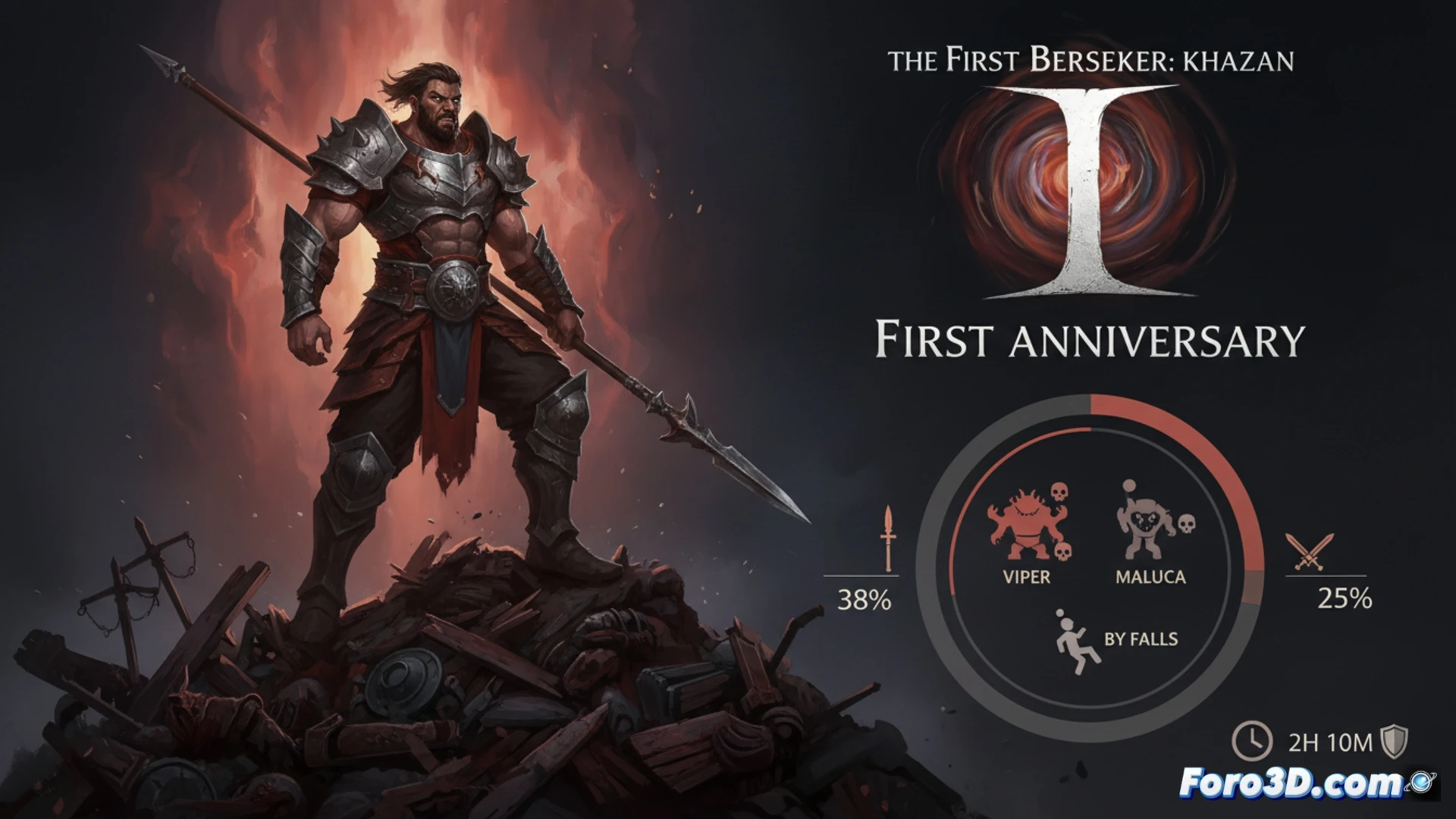
On the first anniversary of The First Berserker: Khazan, Nexon and Neople have published a player data report along with a message from creative director Junho Lee. This statement, which thanks the community and promises more content, is not just a courtesy gesture, but a valuable source of information for analyzing the game's design and its relationship with users. The statistics reveal gameplay patterns, the effectiveness of combat systems, and the difficulty of encounters, offering an inside look at the title's performance after a year on the market. 📊
What the data reveals about balance and gameplay experience ⚖️
The shared figures allow for a technical analysis of the game's balance. The fact that 40% of players completed the story on the highest difficulty suggests a well-calibrated challenge, accessible yet demanding. The lethality of bosses like Viper and Maluca, with millions of deaths, indicates well-designed encounters that require mastery. The popularity of the spear (38%) over other weapons invites reflection on its power balance or learning curve. The data on deaths from falls and traps, added to the over 273 million total deaths, underscores the importance of level design and difficulty curve. The Hardcore run completed in 2h 10m shows the level of optimization achieved by the most dedicated community.
Communication and post-launch management as key to engagement 💬
Beyond the numbers, the communication strategy is noteworthy. Junho Lee's direct message, confirming that the story continues and that the team is working enthusiastically, transforms cold data into a shared future narrative. This practice strengthens the community, retains players, and builds trust. In a saturated market, this transparency and dialogue are crucial elements for a game's longevity, demonstrating that developers listen and plan future content based on users' real experience.
Would you use LODs or Nanite to maintain performance?