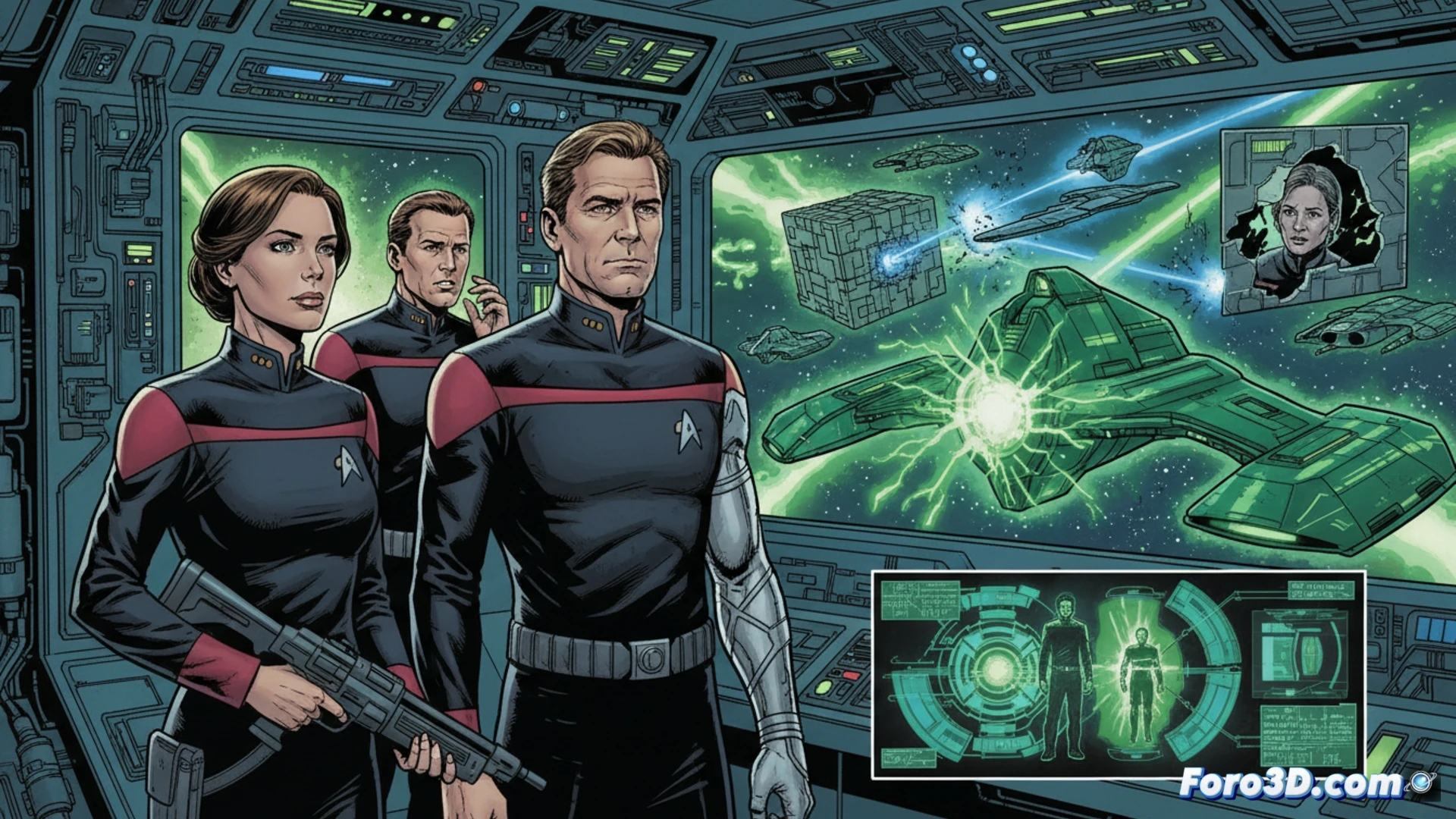
The comic Star Trek: The Last Starship #6 presents a plot perfect for a narrative video game. With the Federation fallen, Kirk and Sato face the traitorous Emerald Coalition. The climax revolves around Kirk's heroic sacrifice, teleporting to the enemy warp core. However, a final twist suggests his motives might be selfish, adding a layer of moral ambiguity that is pure gold for game design.
From page to gameplay: adapting twists and technology 🎮
The betrayal and Kirk's hidden motives are the core of a moral choice mechanic. A reputation or alignment system could change based on player decisions, leading to multiple endings. Technologies like teleportation offer unique possibilities for puzzles or infiltration, while an destabilized warp core could be a countdown level. Borg technology, key in the plot, could translate into a body upgrade system with risks, where the power gained endangers the mission or the character.
Ambiguity as a narrative engine 🤔
The doubt about Kirk's true purpose is the most valuable lesson. In a video game, not clearly revealing the intentions of a playable character or ally can generate deep narrative tension. This challenges the player to act based on uncertainty, making their decisions carry the weight of suspicion. It is a resource that transforms a linear story into a personal and memorable experience.
How can we adapt the non-linear narrative structure and exploration of identity from "Star Trek: The Last Starship #6" to design a video game with meaningful choices and deep branching?
(P.S.: a game developer is someone who spends 1000 hours making a game that people complete in 2)