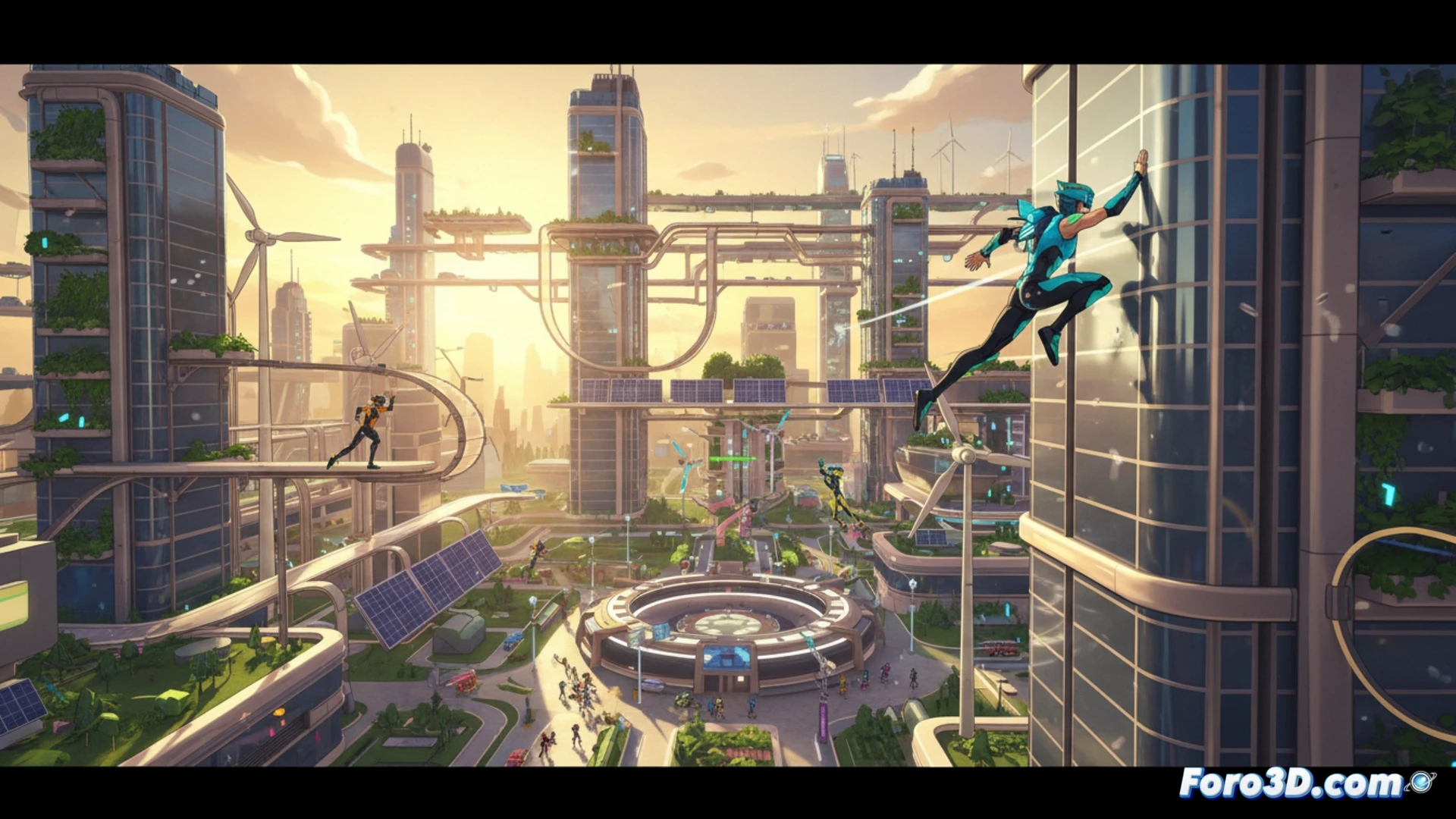
Second Stage Studio has launched Sprint City in early access on Steam, a competitive 2D platformer that places movement fluidity at the center of its design. For $11.99, players already access the complete core experience, a move aimed at validating the game's core. This analysis focuses on breaking down the parkour mechanics that define it and evaluating the early access strategy, key to the development of an indie title that plans to grow with its community. 🎮
Movement mechanics and multiplayer technology as pillars 🏃♂️
The success of Sprint City lies in its movement system, a set of tuned controls that prioritize speed and uninterrupted flow. The level design in the solarpunk city is not just a backdrop, but a network of routes that reward technical mastery. From a development perspective, its hybrid multiplayer approach stands out: a shared online world along with an innovative option that allows inviting friends to play for free directly from the browser, a technical solution that reduces entry barriers and facilitates testing. This architecture is fundamental for a game whose appeal is competition and the constant improvement of routes.
Early Access and building a lasting community 👥
The early access launch with the complete gameplay loop operational is a smart bet. It allows monetization and receiving feedback on the solid core, while the future roadmap, with new modes, city expansions, and activities, focuses on variety and long-term retention. Character customization and the high-tempo soundtrack complement the experience, but it is the promise of an evolving environment, shaped by players, that could cement an active community around movement mastery.
How does Sprint City balance the tactical depth of competitive parkour with accessibility for new players in its early access phase?
(P.S.: a game developer is someone who spends 1000 hours making a game that people complete in 2)