The announcement that Spain will reach the 2% of GDP in defense spending in 2025 marks a strategic turning point. This leap from 1.4% will mobilize billions of additional euros, strengthening the European backbone of NATO. Beyond the political figure, this capital flow will reconfigure industrial and technological dependency maps within the Alliance, challenging established balances and creating new critical nodes in the continental military supply chain.
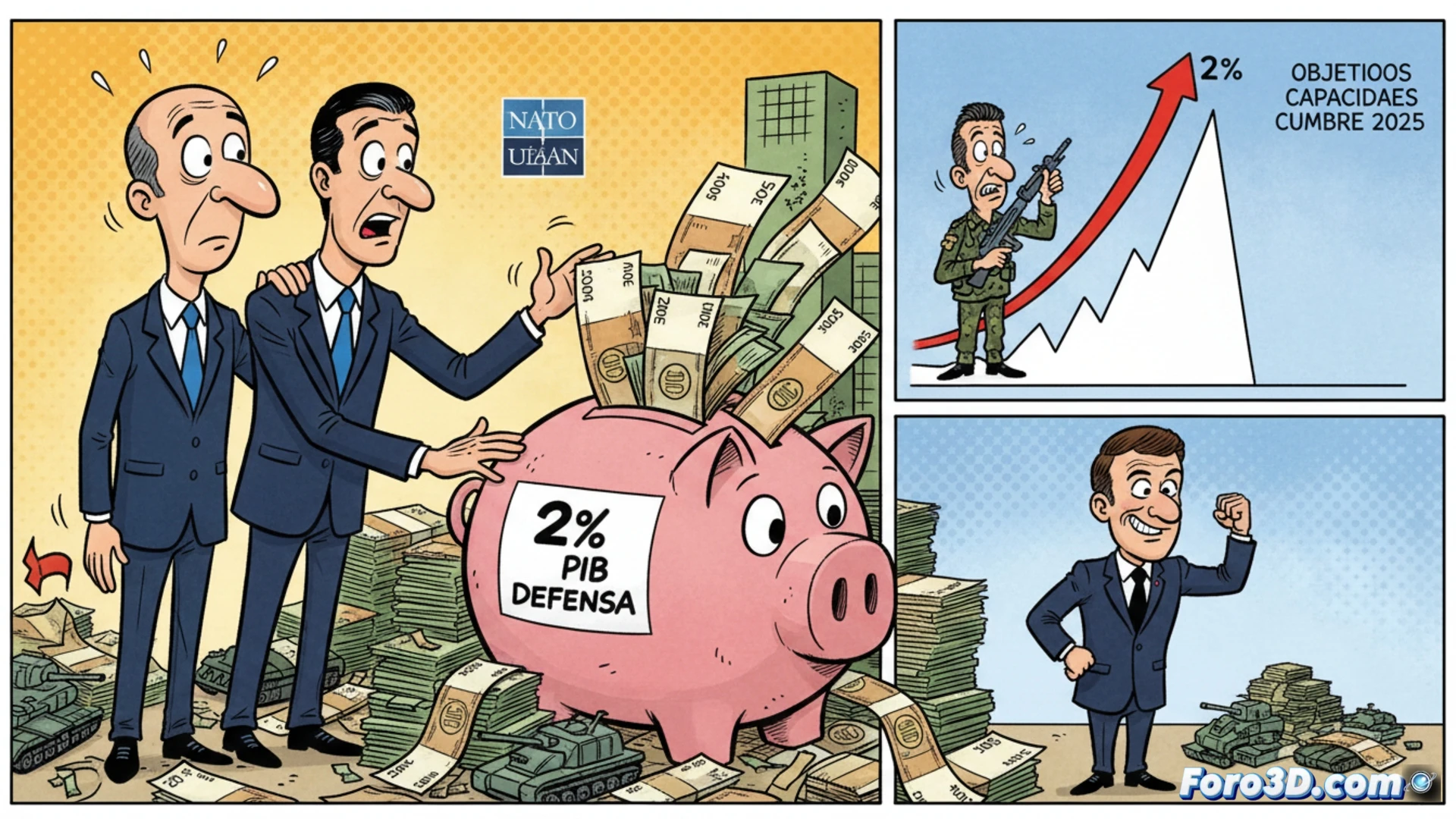
Visualizing the investment flow and technological dependencies 🗺️
A 3D model of the European defense supply chain reveals how Spanish investment does not operate in a vacuum. By simulating the flow of these funds, immediate pressure is observed on subsectors such as naval construction, electronic systems, and cyberdefense, where Spain has consolidated capabilities. However, the interactive graphic also exposes critical dependencies: aviation engines, high electronics components, and advanced missile systems remain concentrated in other allied countries. The challenge is not just to spend more, but to invest in a way that strengthens the weak links in the collective chain, reducing vulnerabilities and fostering real interoperability, beyond mere equipment purchases.
Beyond 2%: the competition for capabilities ⚔️
Rutte's praise comes accompanied by a warning: Spain must increase investment in concrete capabilities. Here, the geopolitics of the supply chain becomes crucial. Will Spanish investment be complementary, strengthening European industrial niches, or competitive, seeking autonomy in already saturated sectors? The redistribution of capabilities within NATO is not a zero-sum game, but a delicate balance between national sovereignty, collective efficiency, and the urgent need for resilience in a fragmented strategic landscape. True success will be measured by how this spending transforms the European defense industrial architecture.
How will Spain's increase in defense spending to 2% affect the resilience and strategic autonomy of NATO's critical supply chains on the southern flank?
(P.S.: geopolitical risk maps are like the weather: there's always a storm somewhere)