The movie Sorry to Bother You (2018) transcends absurd comedy to establish itself as a powerful work of art-activism. Through the story of Cassius Green and his adoption of a white voice to succeed in a call center, the film unleashes a fierce satire against savage capitalism, labor precariousness, and dehumanization. Its vision, considered exaggerated at its premiere, today proves to be a lucid and disturbing x-ray of the social and technological ills that define our decade.
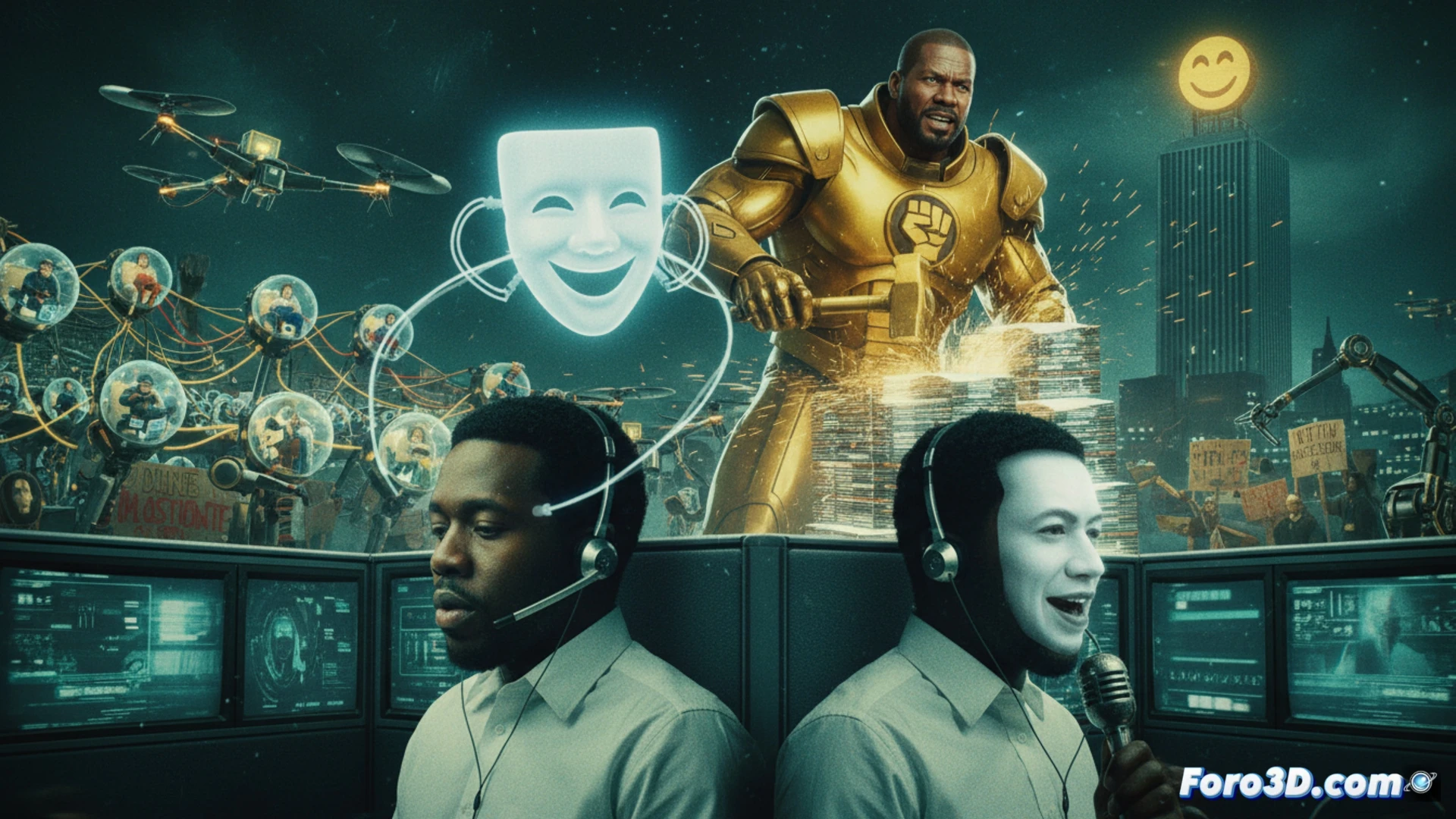
The White Voice and Other Metaphors of Technological Dehumanization 🤖
The core of the film's critique lies in deeply effective visual and narrative metaphors. The white voice is not just a comedic device; it is the literalization of labor alienation and forced cultural assimilation. Later, the plot introduces a dystopian biomodifying twist that symbolizes the conversion of the worker into a mere optimized resource, erasing their humanity. These ideas connect directly with contemporary digital art-activism, where artists use 3D, VR, and AR tools to create immersive experiences that denounce mass surveillance, the platform economy, and the loss of bodily autonomy in the digital age.
Speculative Cinema as a Tool for Social Denunciation 🎬
Sorry to Bother You vindicates speculative fiction and cinema as laboratories for critical ideas. Its function is not to predict, but to exaggerate present trends until they become unbearable, acting as a distorting mirror that forces us to look. In a context where digital art and new media are ideological battlefields, the film demonstrates that the most radical satire and the boldest aesthetics can be fundamental tools for questioning the status quo and making visible oppressive power structures.
How can digital artists use dystopian satire, like that of Sorry to Bother You, to create art-activism narratives that expose the contradictions of contemporary capitalism and technological surveillance?
(P.S.: at Foro3D we believe that all art is political, especially when the computer freezes)