A study led by Andrea Carminati and Tim Brodribb reveals that plants' ability to obtain water is not limited by their physiology, but by the physical properties of the soil. Water is retained in soil pores by capillary forces, which intensify drastically as it dries. When the soil water potential falls below -1.5 MPa, roots cannot extract water quickly enough. This finding explains the failure of previous programs to create drought-resistant crops.
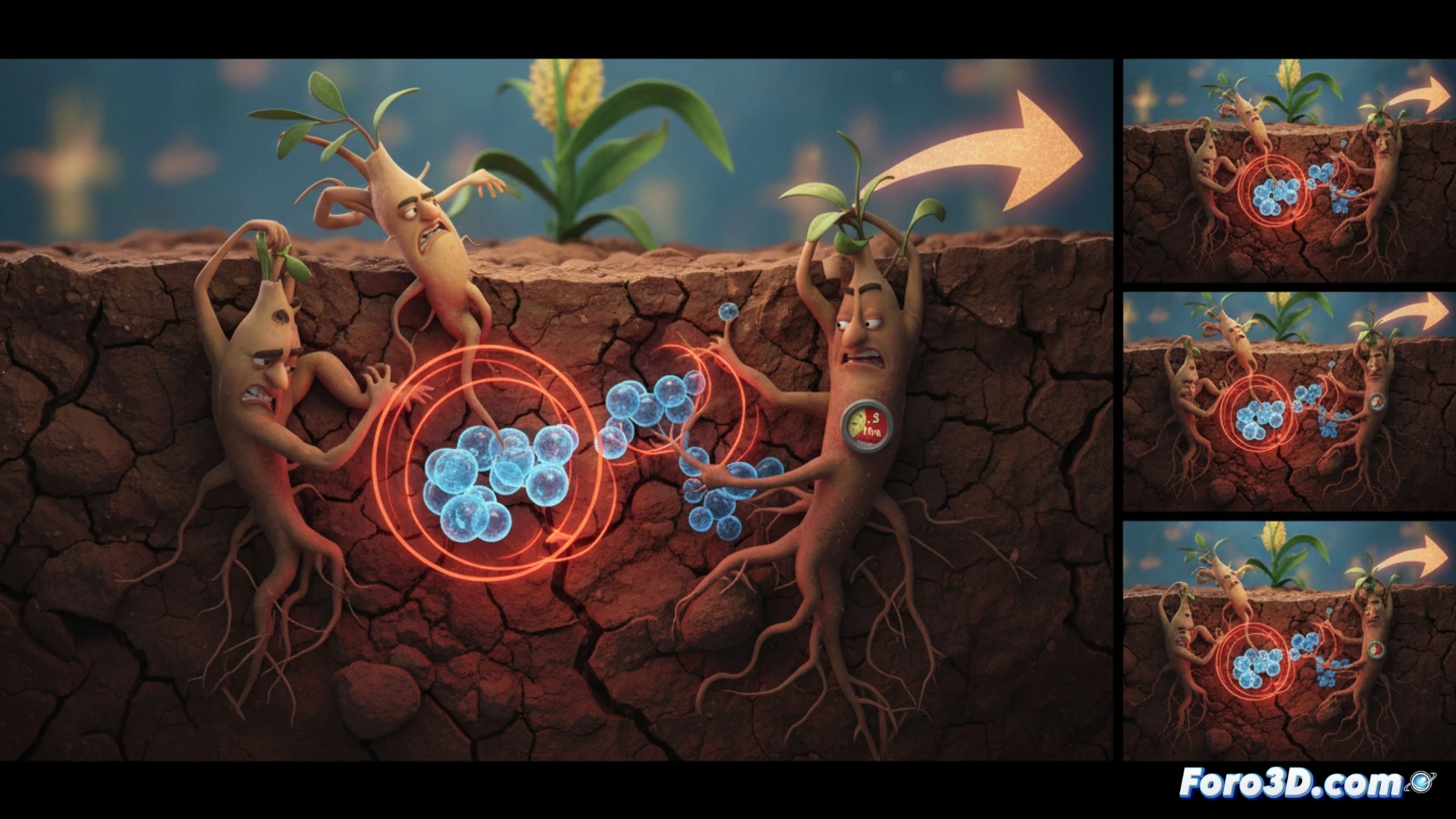
3D Visualization of the Soil-Root Interface 🌱
3D scientific visualization is key to understanding this phenomenon. Interactive models can be created that detail the architecture of soil pores, simulate capillary forces within them, and show the distribution of water potential. Visualizing in 3D how roots and their root hairs interact with that porous matrix under water stress allows an intuitive understanding of the physical bottleneck. These tools are invaluable for agronomic research and education, transforming complex data into accessible representations.
3D Modeling, a Tool for New Solutions 💡
This visual approach underscores that future solutions for drought must focus on soil management, not just plant genetics. 3D models can virtually test strategies such as improvements in soil structure or precision irrigation. By visualizing the real problem, 3D technology guides science toward more effective and sustainable solutions, proving to be an essential bridge between fundamental research and its practical application.
How can scientific visualization of water dynamics in the rhizosphere improve our understanding of the physical limits imposed by the soil on plant water uptake? 🔍
(P.S.: fluid physics for simulating the ocean is like the sea: unpredictable and you always run out of RAM)