Sodium-ion batteries emerge as a realistic alternative to lithium, promising greater safety, lower cost, and sustainability thanks to the abundance of sodium. Their application in electric vehicles and energy storage networks is gaining momentum. In the automotive field, their efficient and safe integration largely depends on 3D modeling and simulation tools, which allow optimizing their design from the very first moment.
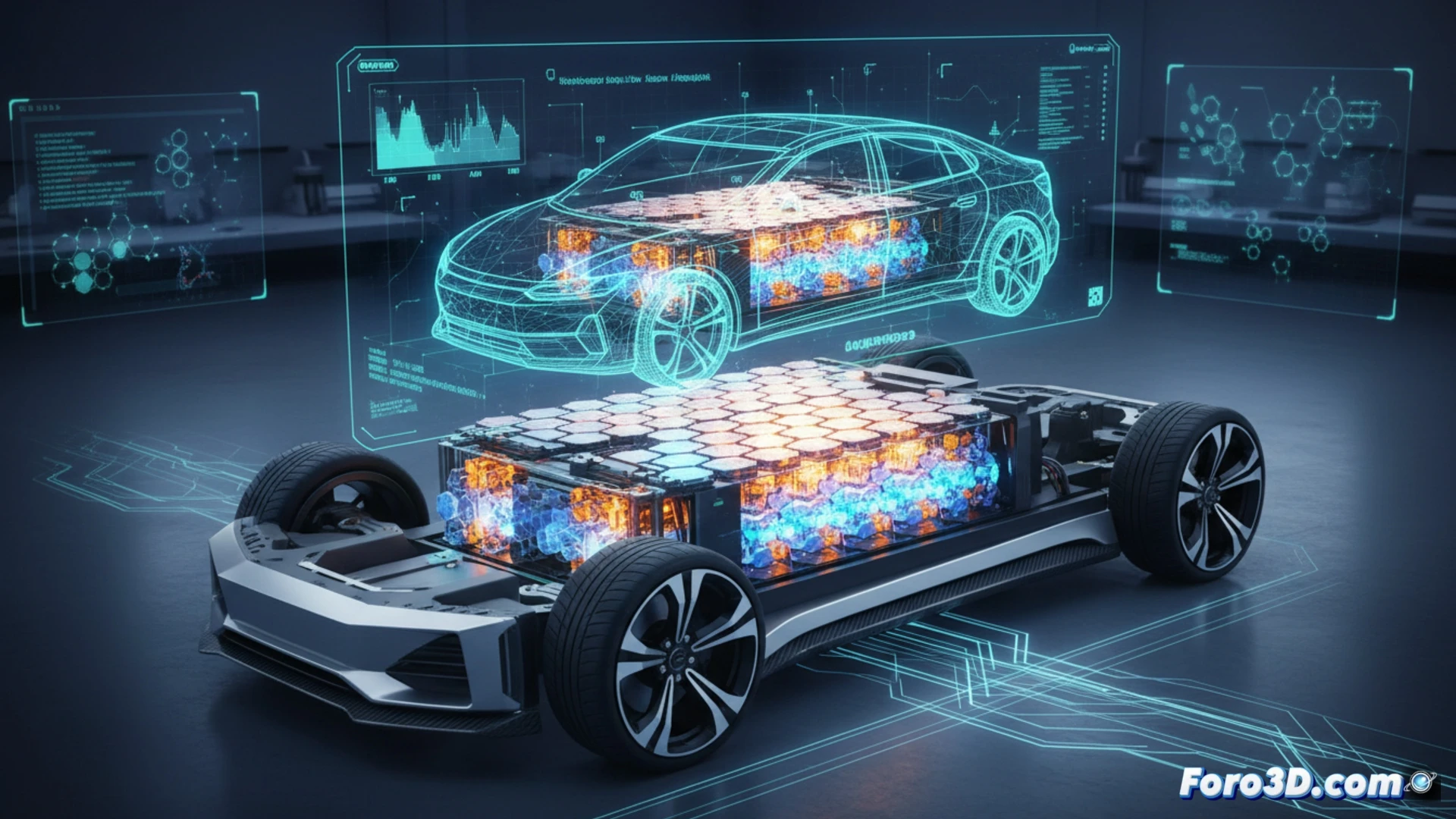
3D Modeling and Simulation for Sodium Battery Integration 🔋
The architecture of an electric vehicle is a complex puzzle where battery packaging is critical. 3D modeling allows designing the sodium-ion module, optimizing its shape and arrangement to maximize capacity without compromising safety or interior space. Through thermal simulations, its behavior under stress can be predicted, managing temperature more efficiently than in lithium ones. Structural simulations are vital for analyzing response to impacts and vibrations, ensuring the robustness of the assembly in the vehicle chassis.
The future of development lies in digital simulation 💻
These 3D technologies not only accelerate the development cycle, allowing thousands of configurations to be tested virtually, but they are the key to safely implementing a novel chemistry. By simulating and directly comparing performance against lithium batteries in a virtual vehicle environment, engineers can mitigate risks and optimize sodium battery integration, paving the way for their mass adoption in electric mobility.
How could sodium batteries and 3D printing revolutionize the design and manufacturing of electric vehicles by enabling new chassis architectures and energy storage systems?
(P.S.: at Foro3D our cars have more polygons than horsepower 🚗