In 1988, Slugs offered a visceral and unrestrained response to creature cinema. Taking the narrative structure of Jaws, the film relocates the terror to a small town besieged by carnivorous mutant slugs. This analysis explores how, beyond mere plagiarism, Slugs uses its wild premise and explicit gore to build an effective horror experience, becoming a notable example of visual storytelling within the most extreme genre cinema.
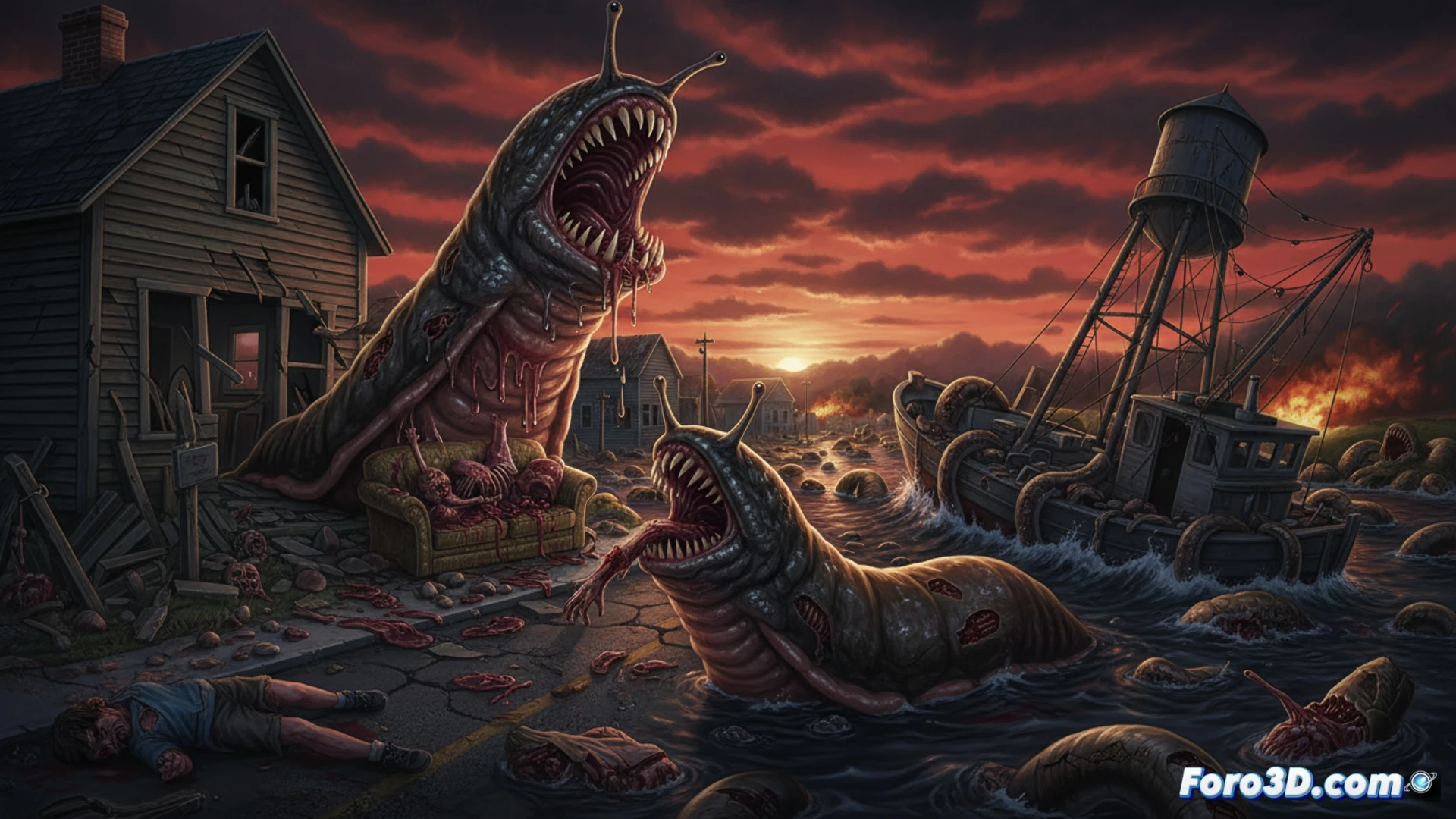
From Spielberg's structure to visceral horror: techniques and adaptation 🎬
Slugs adopts the scheme of Jaws with precision: an initial mysterious attack, authorities who downplay the threat, and a trio of heroes who confront the monster. However, its visual technique diverges radically. Here, gore is not just an effect; it is the core of the narrative. Practical effects and exaggerated makeup turn every death into a visual set piece that defines the tone. The camera does not shy away from details, using blood and viscera to convey the absurd ferocity of the threat. This visual decision, far from Spielberg's suggestive suspense, prioritizes immediate physical impact and places the film in splatter territory, where creature design and its practical execution are the true stars.
The visual legacy of an unrestrained cult classic 🐌
The effectiveness of Slugs lies in embracing its excessive nature without complexes. Its cult status is due to how its consistent, albeit extreme, visual decisions achieve a unique tone. It demonstrates that an apparently ridiculous premise, backed by a technical execution committed to its own horror, can create an enduring identity. It is a case study on how genre cinema uses limited resources to generate a strong visual impression, prioritizing the memory of its most impactful images over narrative depth.
What do you think of this preview?