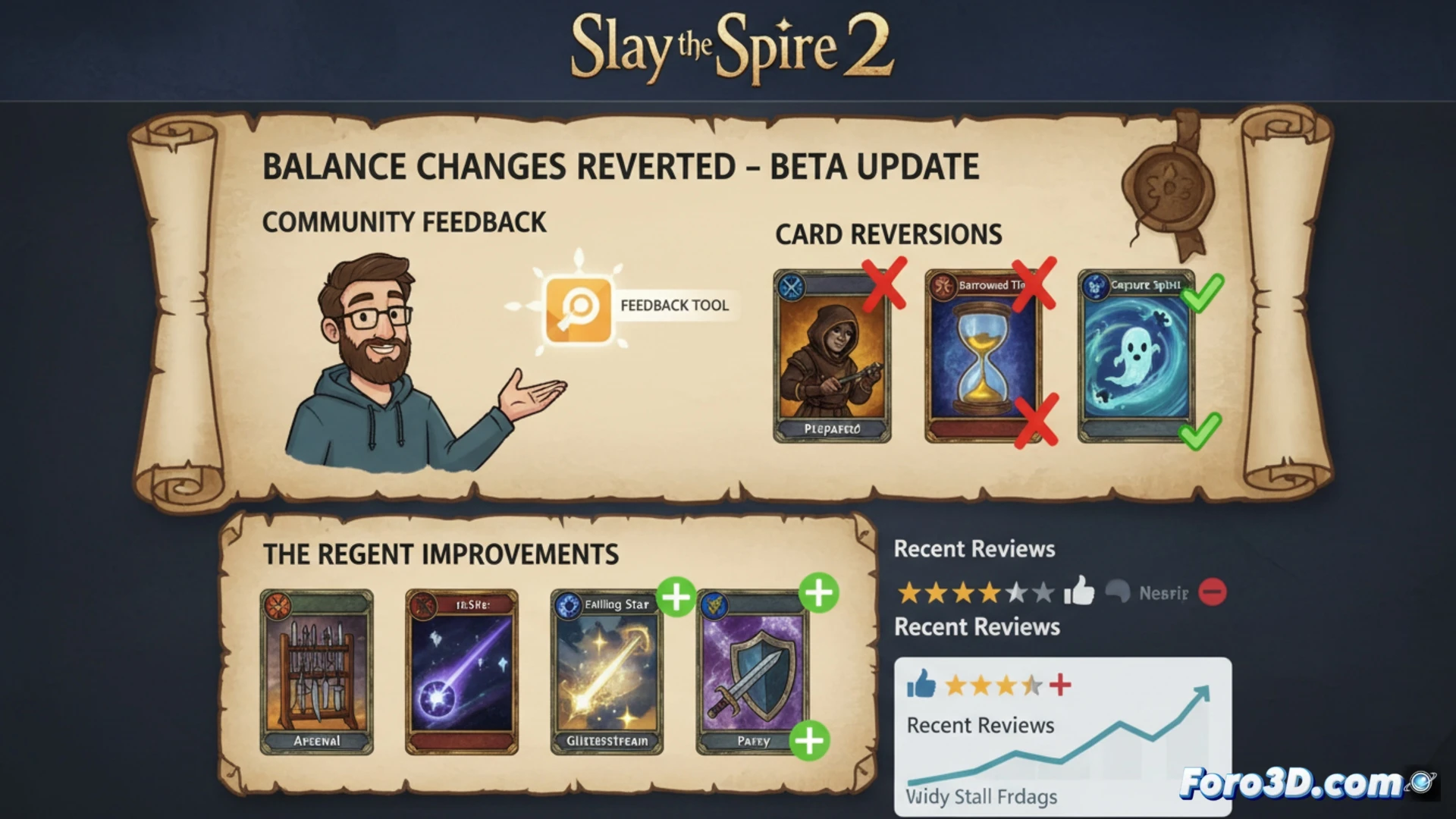
Mega Crit studio has reverted balance changes in the Slay the Spire 2 beta following an avalanche of negative reviews on Steam. The trigger was modifications to key cards like Prepared, Borrowed Time, and Capture Spirit, perceived as too aggressive by the community. Anthony Giovannetti, developer, clarified that nothing in beta is definitive and urged using official feedback channels. This episode underscores the delicate relationship between designers and players during development, where necessary adjustments can clash with a character's perceived identity. 🎮
Analysis of mechanics adjustment and community response ⚖️
The case is a manual for beta management. The reverted changes affected core synergies of the Silent character, demonstrating that altering foundational pillars of the game, even for balance reasons, carries a high risk of rejection. In parallel, the developers showed agility by reinforcing the The Regent class, considered the weakest, with a complete reconfiguration of the Arsenal card and improvements in damage, block, and forge values of others. This dual action, reverting the unpopular and boosting the weak, illustrates iteration based on quantitative data and qualitative sentiment. The beta acts as a laboratory where massive and emotional feedback is a metric as crucial as win rates.
Lessons on iterative design and communication 📢
This episode leaves clear lessons. First, proactive communication is vital: reminding that the beta is a testing space mitigated long-term damage. Second, listening to the community does not mean blindly obeying it, but discerning between resistance to change and genuine design problems. The team maintained its thesis on certain dominant synergies but prioritized the game's long-term health. It is a reminder that balance is a continuous process, where humility to rectify is as important as the initial vision.
How can a studio manage massive feedback from a community during the development of a sequel without compromising its original design vision?
(P.S.: optimizing for mobile is like trying to fit an elephant into a Mini Cooper)