In the development of defense systems, the layered architecture is an established approach. SkyDefender implements this concept with three concentric defensive layers, designed to intercept aerial targets based on their proximity to the protected target. This article breaks down the operation of each protection ring and its integration into a single network.
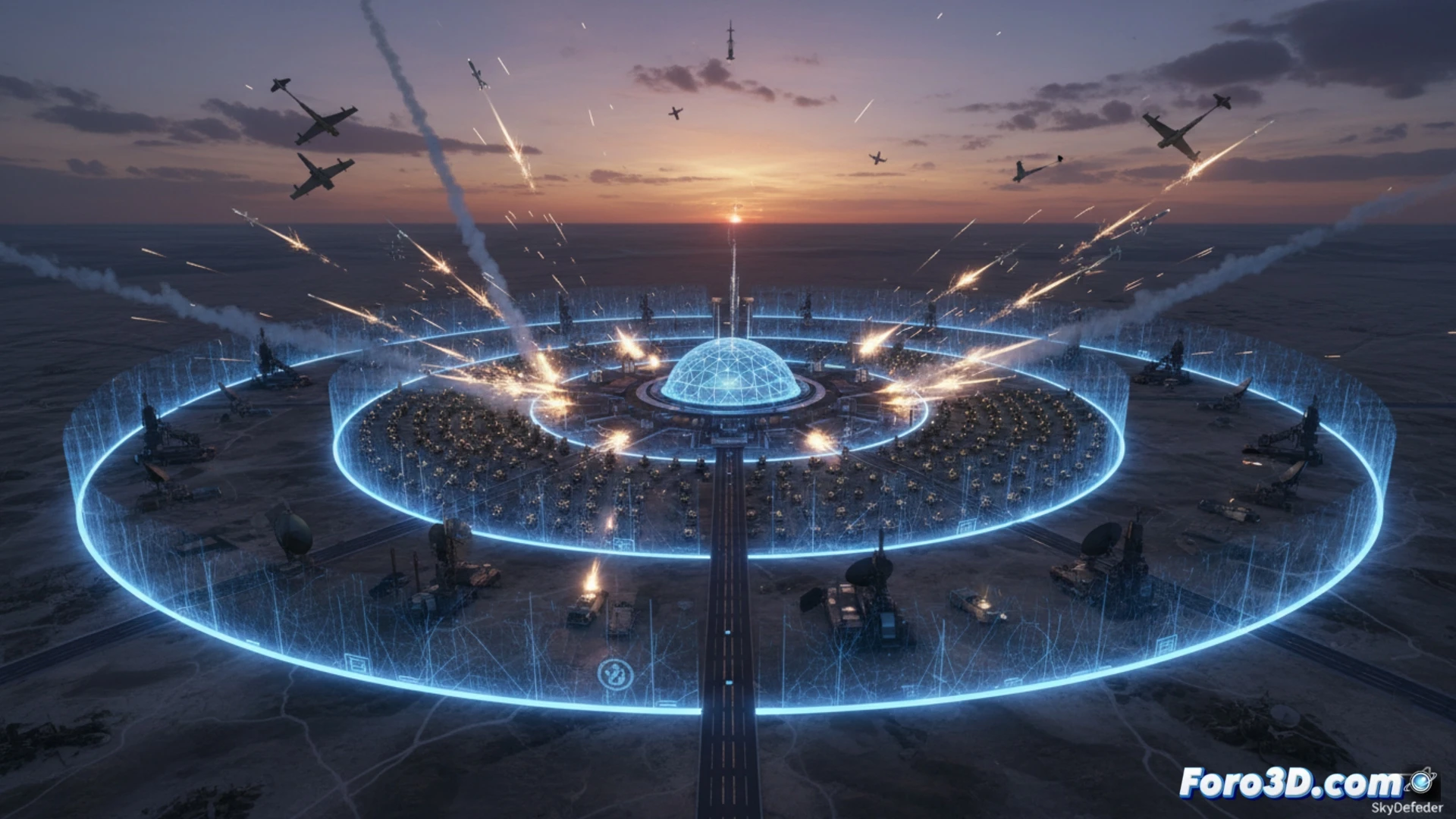
Integration of sensors and weapon systems in layers 🛡️
The outer layer employs long-range radars and high-altitude surface-to-air missiles, intended to neutralize threats at distances greater than 100 km. The middle layer uses medium-range systems and radar-guided automatic cannons for targets that surpass the first line. The inner layer, for point defense, relies on active defense systems with high-rate machine guns and electronic countermeasures for last-resort interceptions.
When your last line of defense is a manual grenade launcher 😅
There is a moment in every technical demonstration when, after explaining phased array radars and hypersonic missiles, someone asks: What if something gets through all the layers?. The official response talks about redundancies. The unofficial one implies that, at that point, the strategy boils down to creative measures. It is the improvised defensive layer, where the procedures manual suggests having a metal umbrella and a lot of faith on hand. The effectiveness of this layer is not backed by simulations.