Air defense systems are evolving toward layered solutions. This article examines the first tier of SkyDefender, called ForceShield. Its function is to intercept low-altitude threats, such as drones or cruise missiles, before they penetrate the protected perimeter. We analyze its operational approach.
Technical foundations of the interception system 🛡️
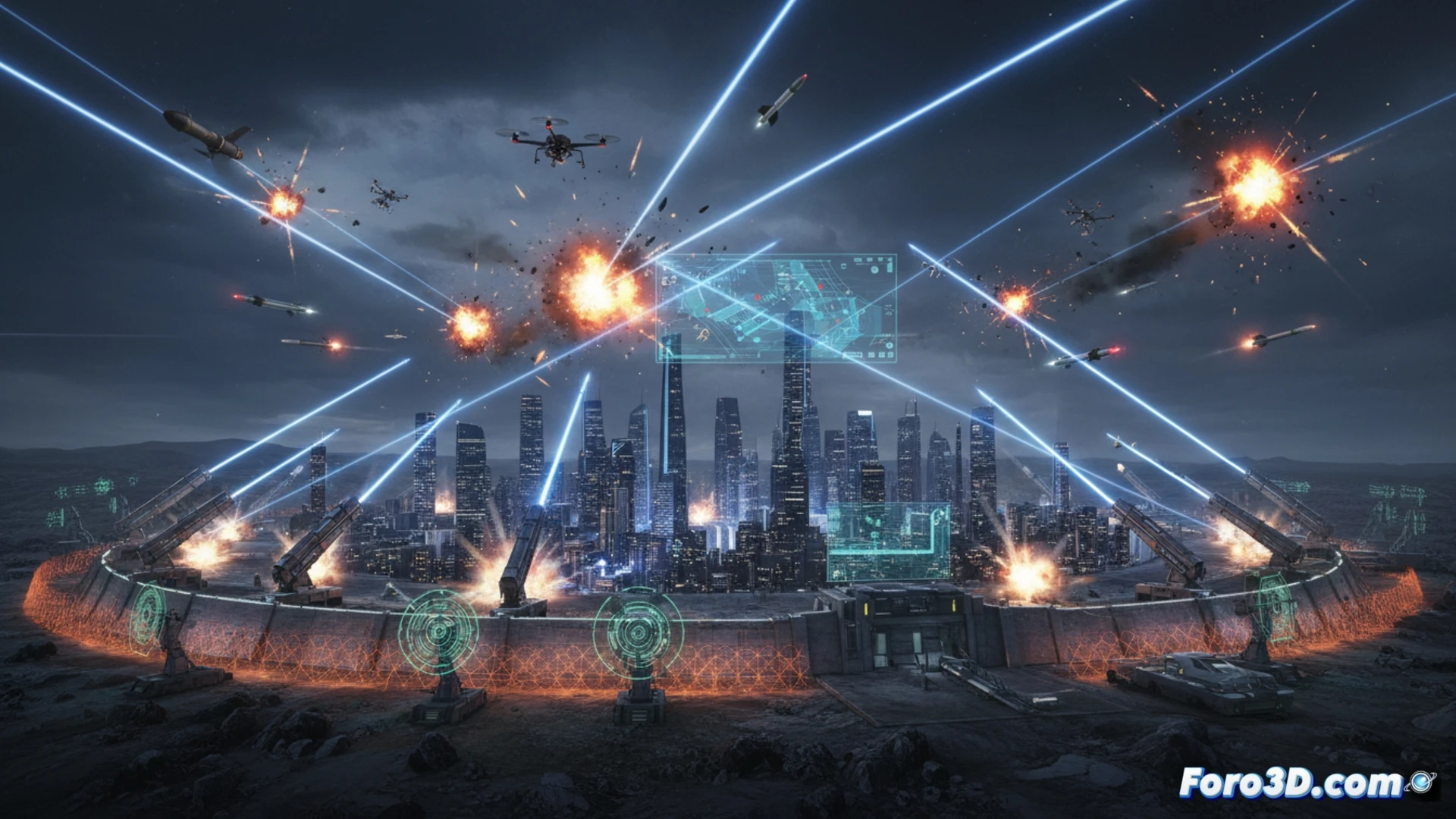
ForceShield operates with a set of modulated radiofrequency emitters and passive sensors. Detection is based on a network of synthetic aperture radars, which identify targets by their radar and thermal signature. After confirmation, the emitters generate a high-power directed beam to saturate the target's guidance systems, causing it to crash or deviate. Integration with the command system is via low-latency encrypted protocols.
When your shield is better than home wifi 😅
It's curious that this technology can take down a drone at two kilometers with a precise emission, but then the system operator can't watch a streaming video on their mobile without it cutting out. It seems the bandwidth priority is clear. One thinks that, with what it must have cost to develop ForceShield, they could have included a repeater so the signal doesn't drop in the control room. Air defense, impeccable; video call with the provider, mission impossible.