Skoda announces a strategic shift with the return of the plug-in hybrid Octavia in 2027, a version previously withdrawn. This new PHEV will integrate a 1.5 TSI engine and an electric one, totaling 204 HP, and a battery of nearly 20 kWh for 140 km of electric range. This technical development cannot be understood without the intensive use of 3D modeling and simulation technologies, key to redesigning the vehicle's architecture efficiently and competitively.
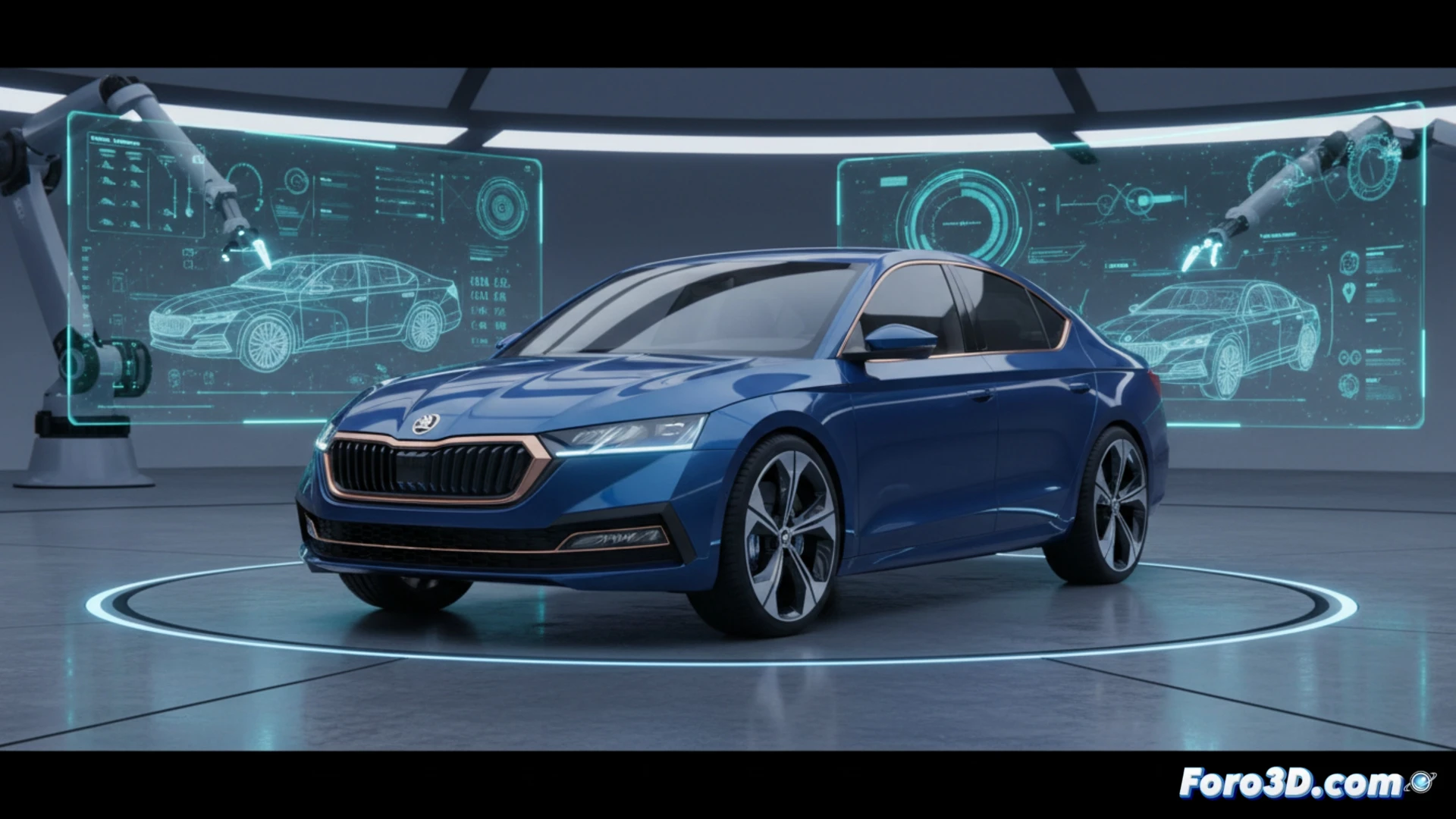
3D Modeling and Simulation: The Core of Hybrid Development 🛠️
Reintegrating a complex PHEV system into an existing chassis is an engineering challenge. Here, 3D modeling is crucial for visualizing and optimizing the placement of the 20 kWh battery, ensuring safety, structural rigidity, and weight distribution without compromising interior space. Simultaneously, computer simulation allows analyzing the dynamic behavior of the dual propulsion system, testing millions of interactions between the thermal and electric engines in different driving modes, all before manufacturing a single physical prototype. This accelerates validation and reduces costs.
Digitization, Key to Industrial Agility ⚡
Skoda's decision shows how the industry must adapt quickly to regulatory and demand changes. In this context, 3D design and analysis tools become the main asset for implementing strategic shifts with agility. They enabled reevaluating and redesigning the Octavia PHEV in record time, demonstrating that digital development is now as vital as traditional engineering for the success of any new vehicle.
How have 3D simulation and modeling tools influenced the redesign of the Skoda Octavia PHEV 2027 to optimize its aerodynamics, battery integration, and overall efficiency?
(P.S.: in Foro3D our cars have more polygons than horsepower)