The Miami Masters 1000 final pits the unstoppable Jannik Sinner against the surprising Jiri Lehecka. Sinner, aiming for the Sunshine Double, arrives with an impressive streak, while Lehecka contests his first final at this level. Beyond the sports narrative, this matchup is a perfect case study for applying 3D analysis tools, which allow dissecting shots, strategy, and technical details that could decide the title.
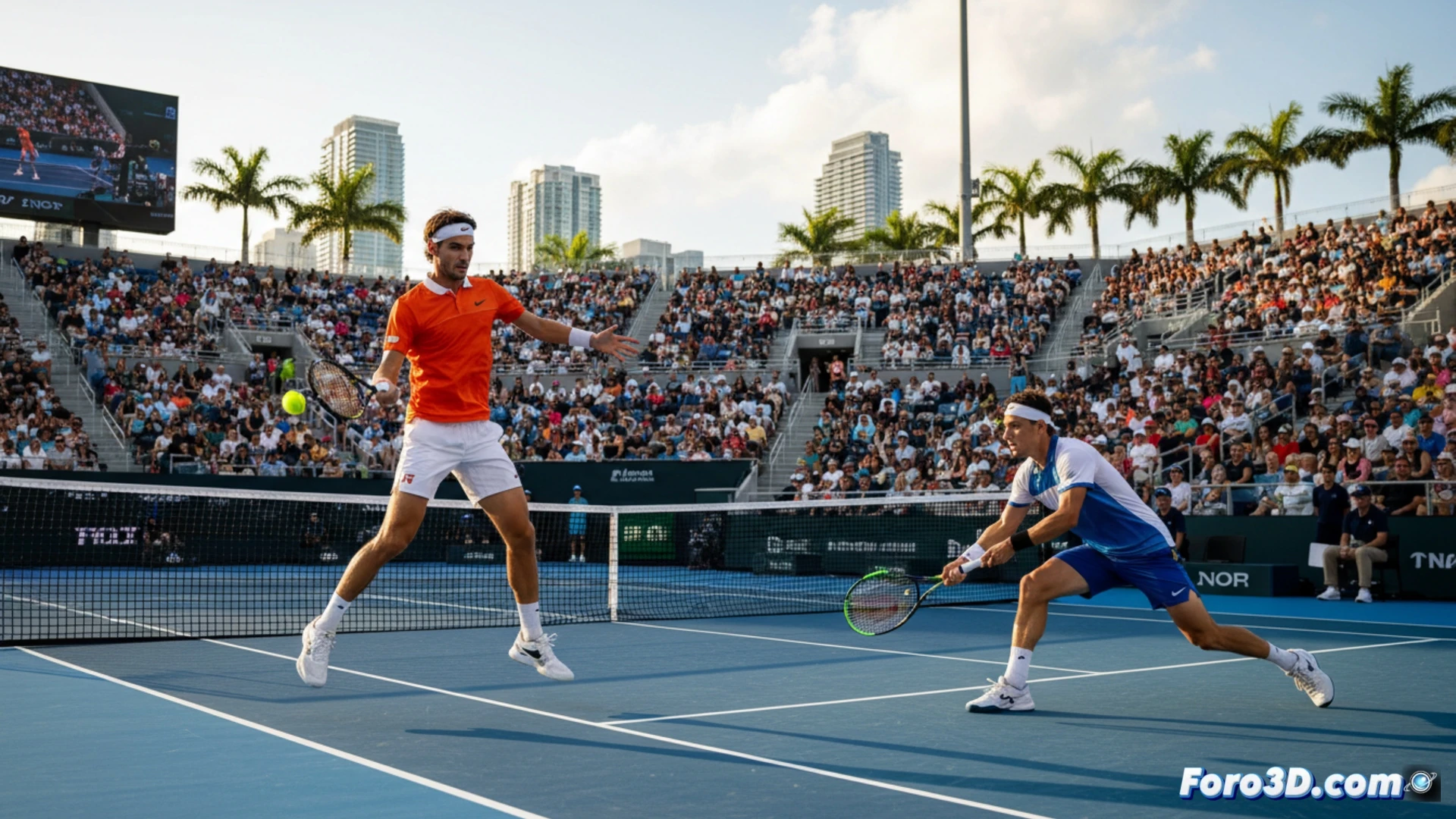
3D Analysis of Shots: Trajectories, Spin, and Decisive Angles 🎯
Through 3D reconstruction of key plays, we can precisely visualize what sets both finalists apart. The trajectory and spin of Sinner's flat forehand, his consistent impact point, contrast with the risk and angles sought by Lehecka. A 3D model of the Czech's serve would reveal its placement and speed, key to breaking the rhythm. Tactical simulations could predict how Sinner's volley counters Lehecka's passing shots, offering insight into the match's tactical development beyond traditional statistics.
Data Visualization: From Spectacle to Deep Understanding 📊
3D technology goes beyond mere spectacular visualization. By converting speed, position, and angle data into interactive models, it provides a deep understanding of modern tennis. This analysis not only enriches the experience for fans and experts but also becomes an invaluable tool for players and coaches in preparing and reviewing elite matches like this Miami final.
How can 3D analysis of serve kinematics and forehand impact reveal the key difference between Sinner's consistency and Lehecka's disruptive power in the Miami final?
(P.S.: player tracking is like following your cat around the house: lots of information and little control)