Jannik Sinner has entered tennis history by conquering the Sunshine Double without dropping a set, an achievement that fuels his battle for number one with Carlos Alcaraz. Beyond the result, this milestone is a perfect case study for 3D sports analysis tools. These technologies allow dissecting his game in a previously impossible way, transforming shots and tactics into interactive visual models to understand the basis of his current dominance.
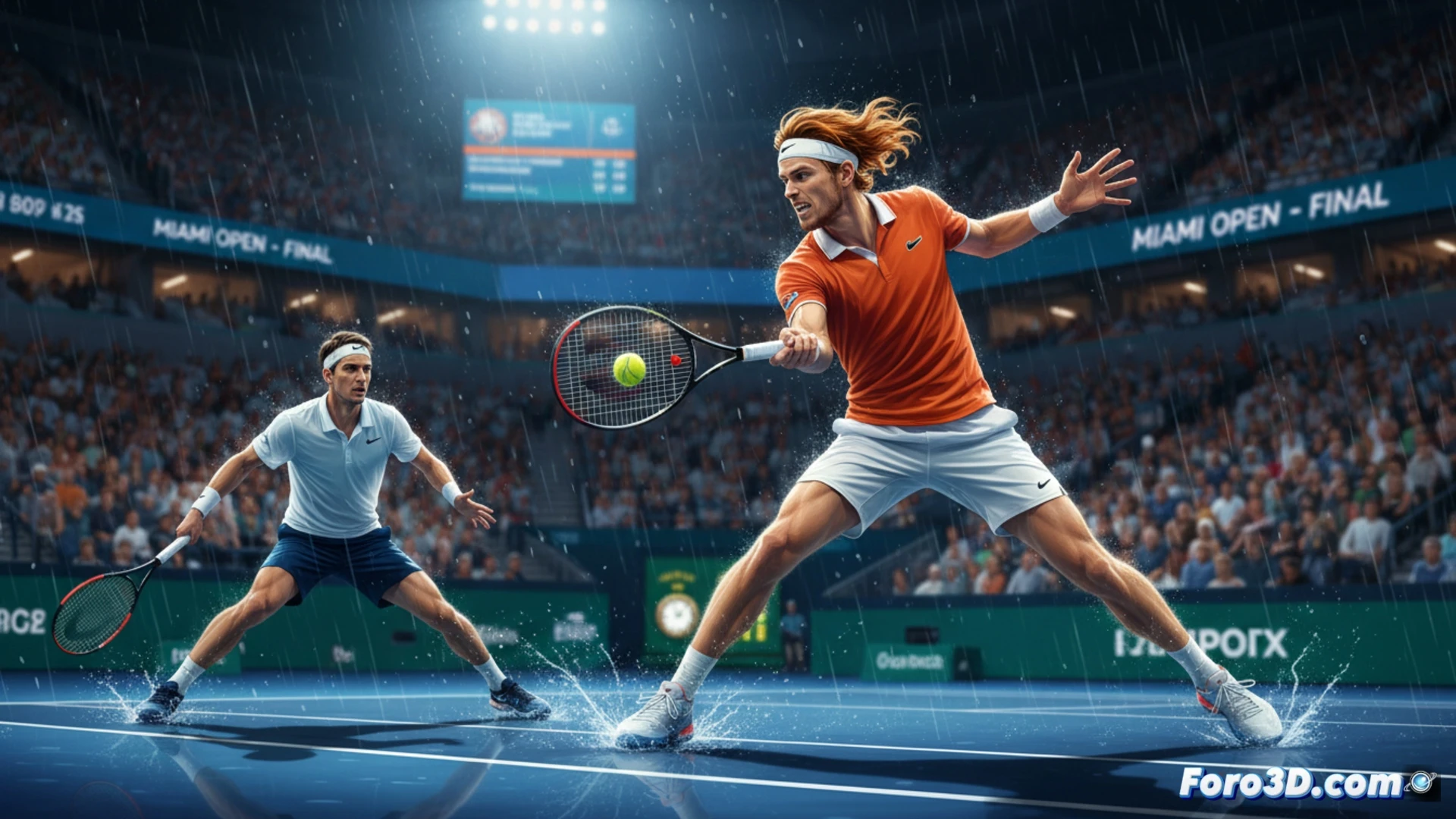
3D Modeling and Surface Simulation: Key to the Sinner-Alcaraz Rivalry 🧱
The upcoming clay court battle in Montecarlo highlights how the surface alters the game. Here, 3D technology is crucial. 3D play reconstruction systems can map the exact trajectory of each of Sinner's shots on hard court, creating a digital model of his game. This model can be simulated on a virtual clay court environment, predicting how his power and angles would adapt. Similarly, Alcaraz's 3D biomechanics could be analyzed to compare spin generation and movement, anticipating key tactics for the clay matchup.
Data Visualization: Beyond Traditional Statistics 📊
The rivalry can be visualized with innovative 3D graphics. Imagine a volumetric heat map of the court showing the density of impacts from each player, or spheres representing winners and errors based on their location and speed. These visualizations transform numbers into a clear spatial narrative, revealing attack and defense patterns. Thus, the fight for number one is not only followed in the rankings, but in three-dimensional models that explain the how and the why of each victory.
How could a 3D biomechanical analysis of Jannik Sinner's shots reveal the technical keys that allowed him to conquer the Sunshine Double without dropping a set?
(P.S.: 3D tactical simulation never fails, players on the court do)