Genetic analysis of the Shroud of Turin has revealed a complex reality: the relic is a biological palimpsest with DNA from dozens of species. This study, which applies modern forensic techniques to a historical artifact, shows the enormous difficulty of isolating an original signal amid centuries of accumulated contamination. Digital archaeology, through this digitization of biological material, faces the challenge of interpreting a chaotic and superimposed genetic archive.
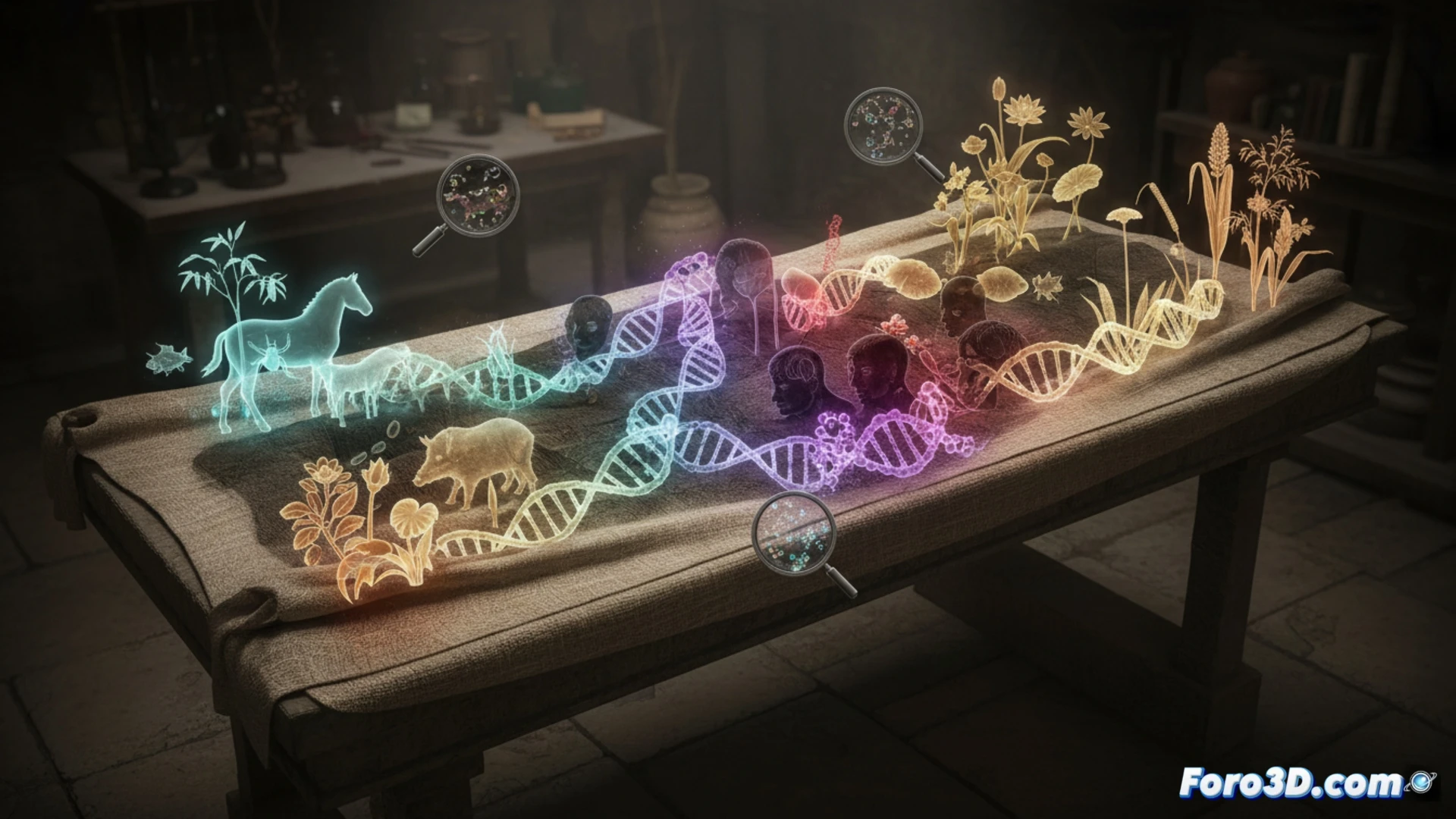
Methodology and Results: Deconstructing Historical Contamination 🔬
The researchers used next-generation sequencing to analyze the dust and microscopic remains on the fabric. The results are a catalog of global contamination: DNA from domestic animals like sheep, exotic species, and plants native to Asia and America, indicating manipulations after the 15th century. Crucially, human genetic material from multiple lineages was identified, including some predominantly Indian, reflecting the many hands that touched the shroud. The scientific challenge of the data lies in filtering this biological noise, a process similar to digitally cleaning a 3D scanned sculpture of accumulated layers of dirt and graffiti.
Lessons for the Digital Preservation of Heritage 💾
This case underscores a fundamental lesson for digital archaeology: the need for extremely rigorous documentation and handling protocols from the first contact with an artifact. Every intervention, whether physical or via a scanner, leaves a trace. The Shroud of Turin study demonstrates that, without these precautions, the historical object becomes an archive where the original signals are irretrievably lost under layers of parasitic data, complicating any claims about its origins.
How can environmental DNA analysis and genetic contamination bioinformatics help us distinguish between historical biological traces and modern contamination in high-value archaeological artifacts?
(P.S.: If you excavate a site and find a USB, don't plug it in: it might be Roman malware.)