For 3D professionals and content creators, audio fidelity is not a luxury, it's a necessity. Sound editing for animations, mixing for immersive environments, or acoustic evaluation in game engines require precise monitoring. The Sennheiser HDB 630 headphones are presented as a high-end wireless option that promises reference-level performance. This analysis evaluates whether its technical performance justifies the investment for a demanding professional workflow, beyond casual use. 🎧
Technical Analysis: Neutrality, Customization, and Critical Latency 📊
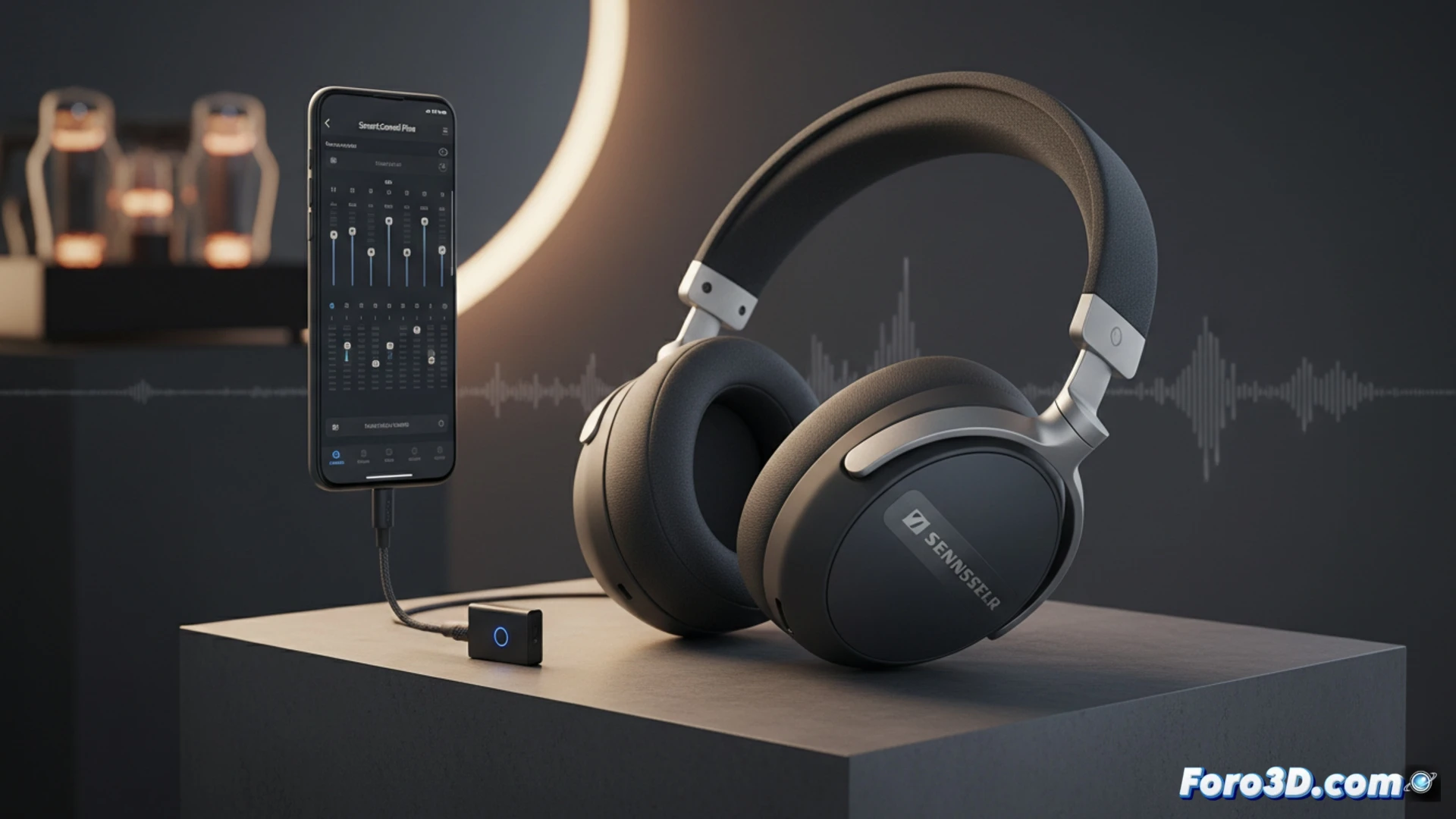
The core of the HDB 630 is a deliberately neutral and detailed sound profile, essential for making reliable editing decisions. Its definitive technical advantage is the included dongle, which enables a high-resolution codec with notably low latency, mitigating the phase shift between image and sound, a critical issue in video and animation post-production. The SmartControl Plus app includes a full-band parametric equalizer, allowing surgical precision adjustments to the response to adapt to any reference profile or correct room acoustics. Active noise cancellation and a 60-hour battery ensure comfort in marathon sessions.
Verdict for the Studio: Justified Investment in Fidelity ⚖️
Despite a discreet design and a high price, the Sennheiser HDB 630 constitute a solid professional tool. Their combination of neutrality, low-latency dongle, and parametric customization makes them exceptional for audio tasks within a 3D pipeline. They are not headphones for general consumption, but a valid wireless solution for creators who prioritize acoustic precision and technical flexibility. For the audiophile or demanding professional, their performance fully justifies the investment, positioning them as leaders in their category.
Can the Sennheiser HDB 630 headphones deliver the spatial precision and minimal latency needed for critical 3D modeling, animation, and rendering work?
(PS: RAM is never enough, just like coffees on a Monday morning)