The upcoming documentary Secrets of the Bees, produced by James Cameron, promises an unprecedented immersion into the world of bees. Beyond its narrative, the series is a milestone in scientific visualization, employing cutting-edge technologies to reveal behaviors and structures impossible to capture with the naked eye. This analysis focuses on the 3D and cinematographic techniques that make this experience possible, relevant for any digital artist interested in naturalistic outreach.
Capture and Simulation Techniques: From Photogrammetry to CGI 🐝
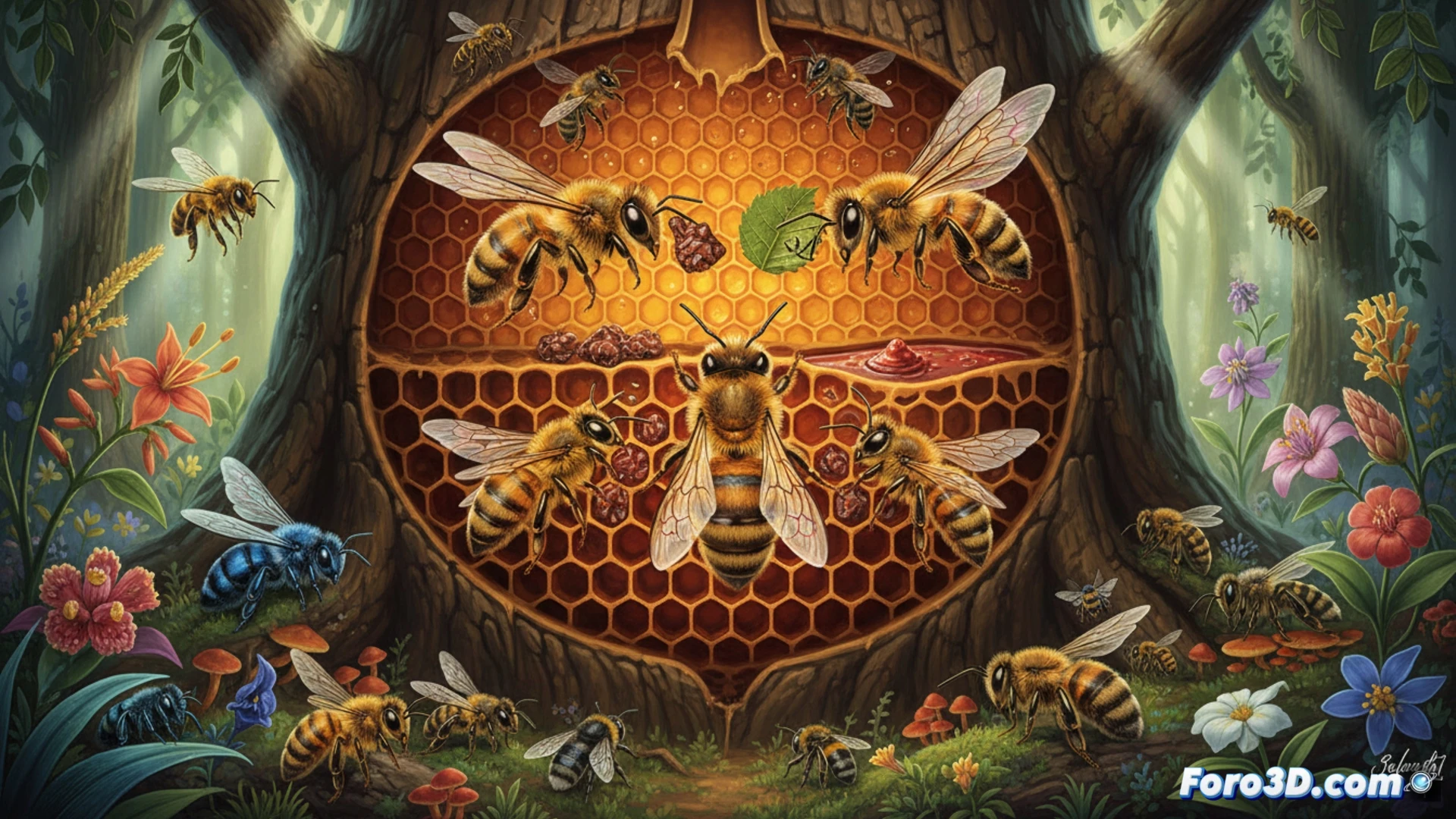
The production combines ultra-high-definition macro cinematography with photogrammetry to accurately model the complex geometry of the hive and bee anatomy. These captures serve as the basis for detailed 3D assets. For large-scale behavior sequences or microscopic phenomena, such as pollen flow, CGI and particle simulation are used. The recreation of rare species, like Ecuador's vulture bees, relies entirely on textured and animated 3D models based on scientific reference, allowing visualization of their unique behavior of making honey from meat.
Scientific Visualization as a Tool for Awareness 🎬
This documentary exemplifies how 3D visualization transcends entertainment to become a fundamental tool for ecological education. By making the invisible tangible, it allows communicating the complexity and fragility of ecosystems with profound emotional impact. For the Foro3D community, projects like this mark a clear path: our skills in modeling, simulation, and animation are crucial for scientific outreach and the fight for the conservation of vital species like bees.
How are 3D scientific visualization techniques used to map and simulate bee colony behavior in the documentary Secrets of the Bees?
(P.S.: fluid physics to simulate the ocean is like the sea: unpredictable and you always run out of RAM)