The history of conflicts is also the history of scientific innovation. From ancient catapults to atomic bombs, military technology has shaped the course of humanity. Today, 3D visualization offers us a unique tool to analyze this symbiosis, allowing us to reconstruct, simulate, and precisely understand how science has shaped war and vice versa. This article explores how three-dimensional modeling can materialize this complex relationship for study and dissemination.
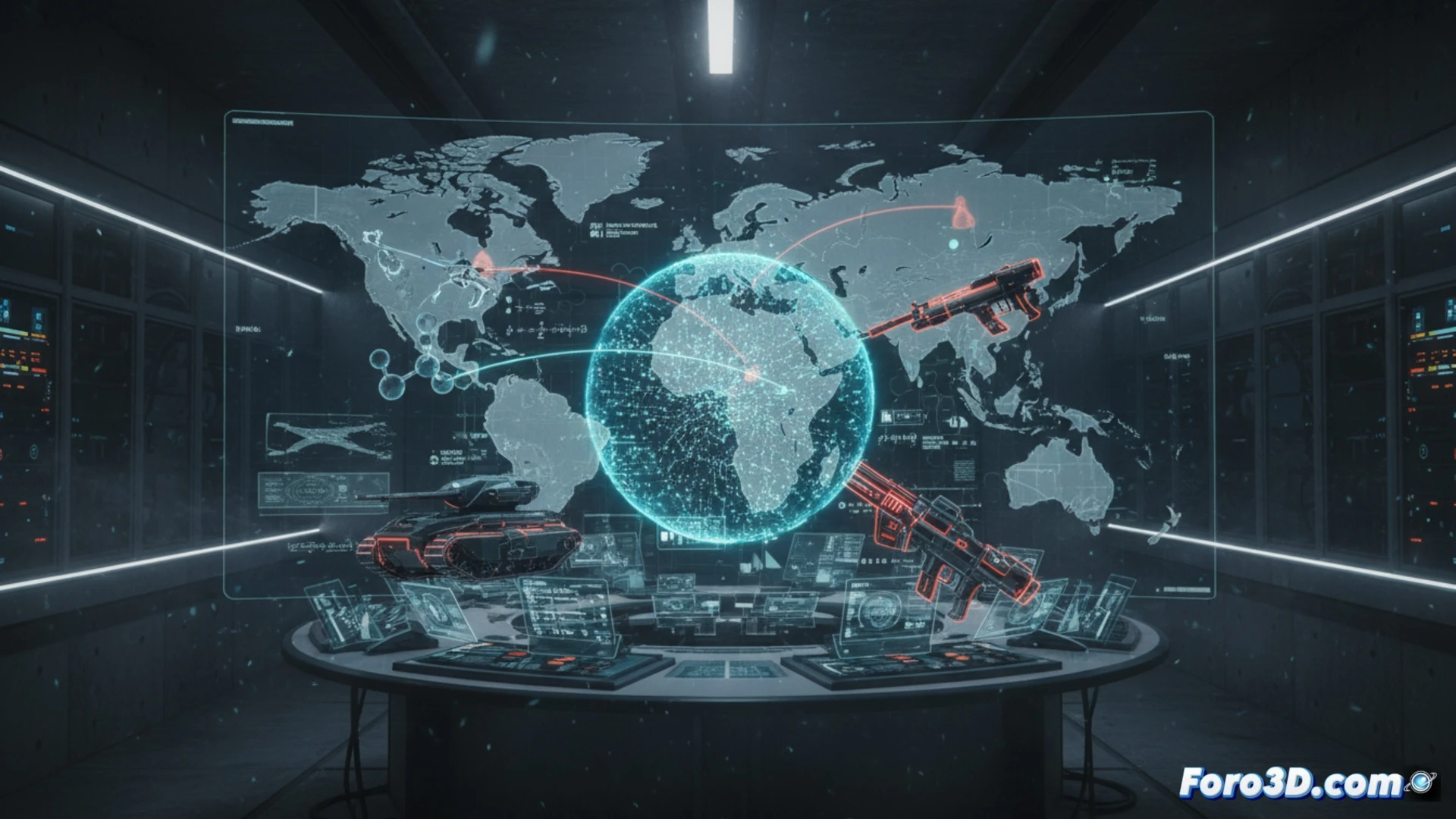
3D Reconstruction: From Tear Gas to the Space Race 🧪
3D technology allows us to break down historical phenomena into analyzable components. We can model the dispersion of chemical agents like tear gas in a virtual urban environment, studying its reach and impact in a safe and ethical way. Similarly, it is possible to create interactive timelines that overlay military milestones, such as the Vietnam War, with contemporary scientific achievements, like the Apollo 11 moon landing. These visualizations make tangible the paradox of the same innovative impulse applied to destruction and exploration. Reconstructing in detail a catapult or the mechanism of a bomb is not only a technical exercise, but a way to understand engineering in the service of military strategy through the ages.
Modeling the Past to Decide the Future 💭
The ability to visualize in 3D the intricate relationship between science and conflict forces us to a crucial reflection. By materializing these connections, we make them undeniable and open the debate on the ethics of progress. The true current challenge lies in using this same power of visualization and analysis to project futures where scientific innovation aligns unequivocally with support for our fellow human beings and the solution of major global problems, rather than with confrontation.
How would you visualize the evolution of a conflict in an interactive 3D map?