For any 3D professional, managing heavy files is a daily battle. Complex scenes, 8K textures, simulations, and final renders demand fast and reliable storage. After testing numerous units, the SanDisk Extreme Pro USB4 stands out as the best overall option. This external SSD is not just a backup device; it's a tool that tangibly accelerates your workflow thanks to speeds of up to 3800 MB/s, transforming tedious transfer waits into productive time.
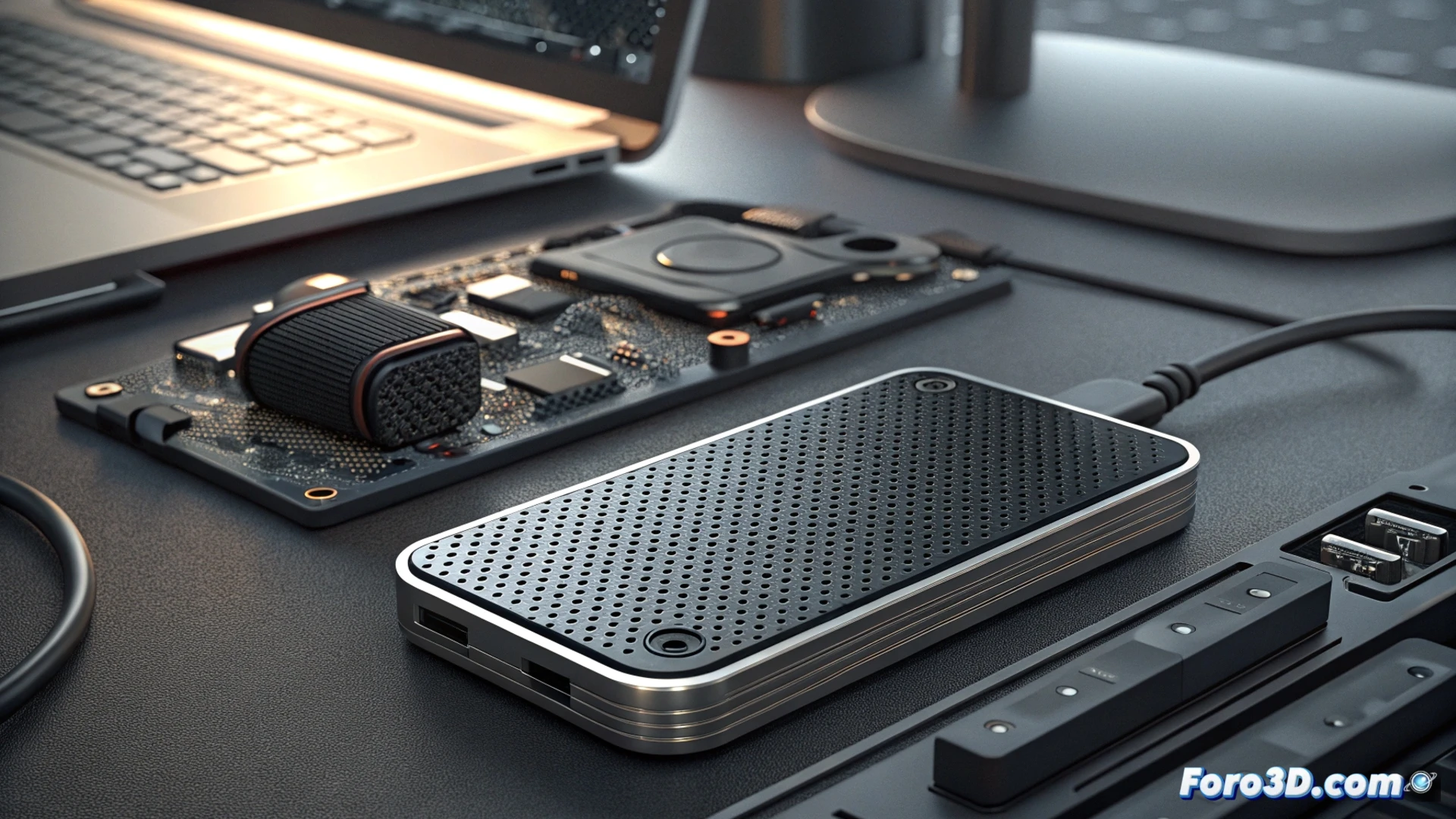
Technical Performance and Benefits in 3D Workflow 🚀
The key figure is 3800 MB/s under USB4 interface. This means loading or saving a multi-gigabyte scene in seconds, not minutes. Compared to an external HDD or even a USB 3.2 SSD, the difference is abysmal when working with heavy files like fluid simulation caches or dense geometry. The productivity gain is enormous, especially in iterative reviews. Its robustness, with resistance to shocks, dust, and water, makes it equally suitable for studio or remote locations, protecting critical assets. The only drawback is that to exploit its full potential, you need a USB4/Thunderbolt port on your station.
Does the Investment Justify for a 3D Studio? 💰
Its cost per GB is higher than other options, but for professional use in 3D, the equation goes further. The extreme speed reduces bottlenecks, speeding up deliveries and allowing more creative iterations in less time. Its physical and data reliability is crucial for active backups of ongoing projects. If your work depends on transferring, loading, or backing up large volumes of data daily, this investment is not an expense; it's a direct optimization of your pipeline that pays off quickly in efficiency and peace of mind.
Is the SanDisk Extreme Pro USB4 really the definitive solution for the bottleneck in the 3D workflow with massive files?
(PS: RAM is never enough, just like coffees on a Monday morning)