Sal da Vinci's recent performance at Sanremo, culminating in an improvised dance with Mara Venier among the audience, was an exercise in pure energy. For animation and motion capture artists, these kinds of moments are a source of study. Observing the natural fluidity, unscripted gestures, and real physical interaction provides keys to creating character animations with greater authenticity and expressive power.
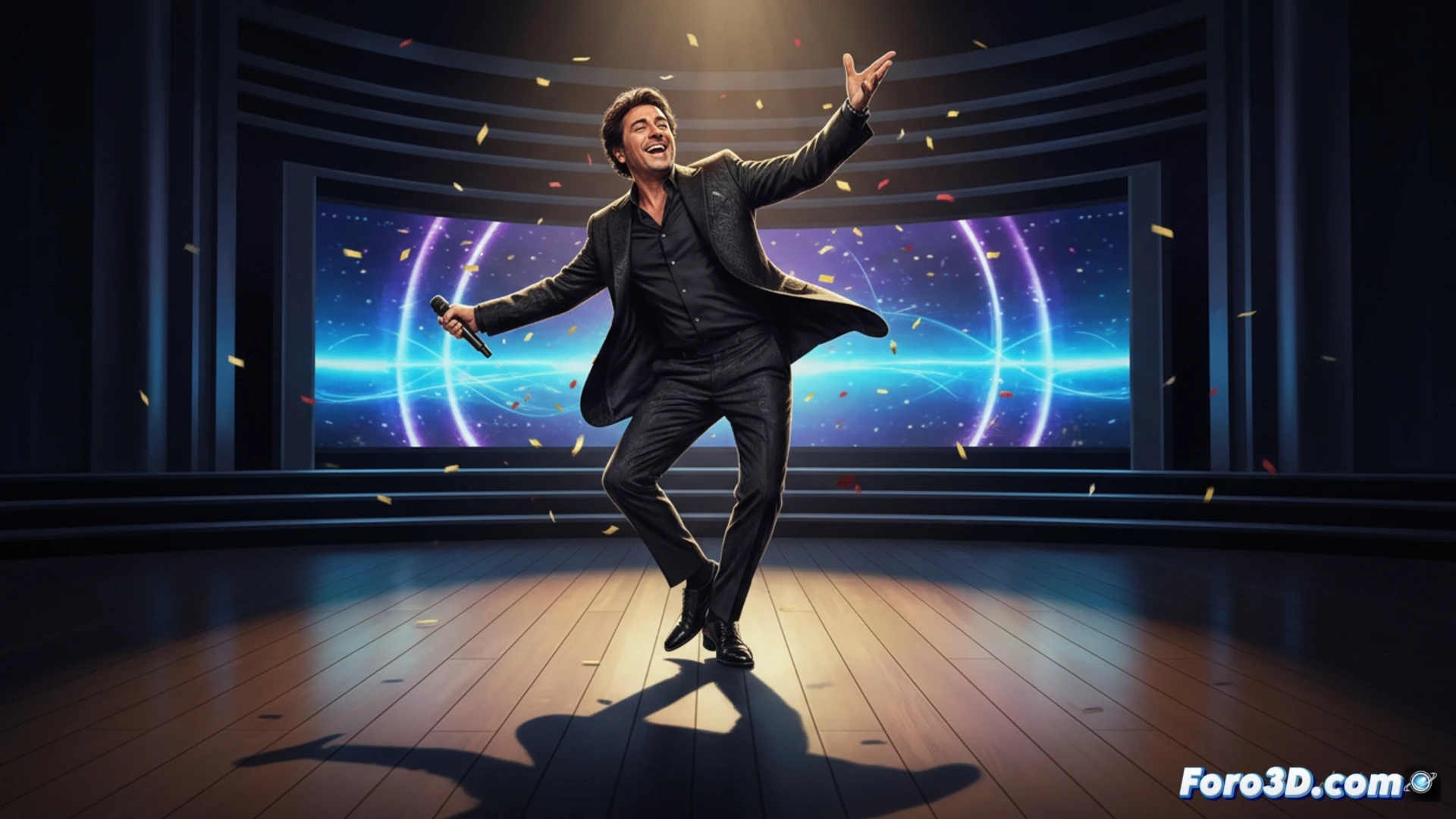
From Live Choreography to Data Capture: A Technical Analysis 📊
The value of this sequence lies in its organic movement. An animator can break down the scene: the transition from the stage to the audience area, the adaptation to the confined space, and the non-verbal communication between the dancers. Every turn and weight shift is valid data. Additionally, the television lighting, with its contrasts and how it models the figures in motion, serves as a reference for setting up lights in 3D scenes that seek a similar effect of immediacy and drama.
Does Your Rig Not Dance? Send Your Character to a Sanremo Course 💃
If your animations walk with the rigidity of a stick and your characters interact like two refrigerators, maybe the problem isn't the software. They might need a master's in television improvisation. Observe Da Vinci: without a configured bone, he dodged cameras and hugged a presenter with a naturalness that would make any IK controller cry. Next time, before tweaking animation curves, try putting some Italian orchestra in the background. The results can be different.