Carlos Sainz has issued a clear warning to Williams after a disappointing start to 2026. The driver points out critical problems: excess weight, lack of aerodynamic downforce, and low reliability. In this situation, 3D design and simulation tools emerge not as a luxury, but as an imperative necessity to diagnose failures and accelerate improvements, transforming complaints into actionable data.
3D Diagnosis: from physical problem to digital twin 🧠
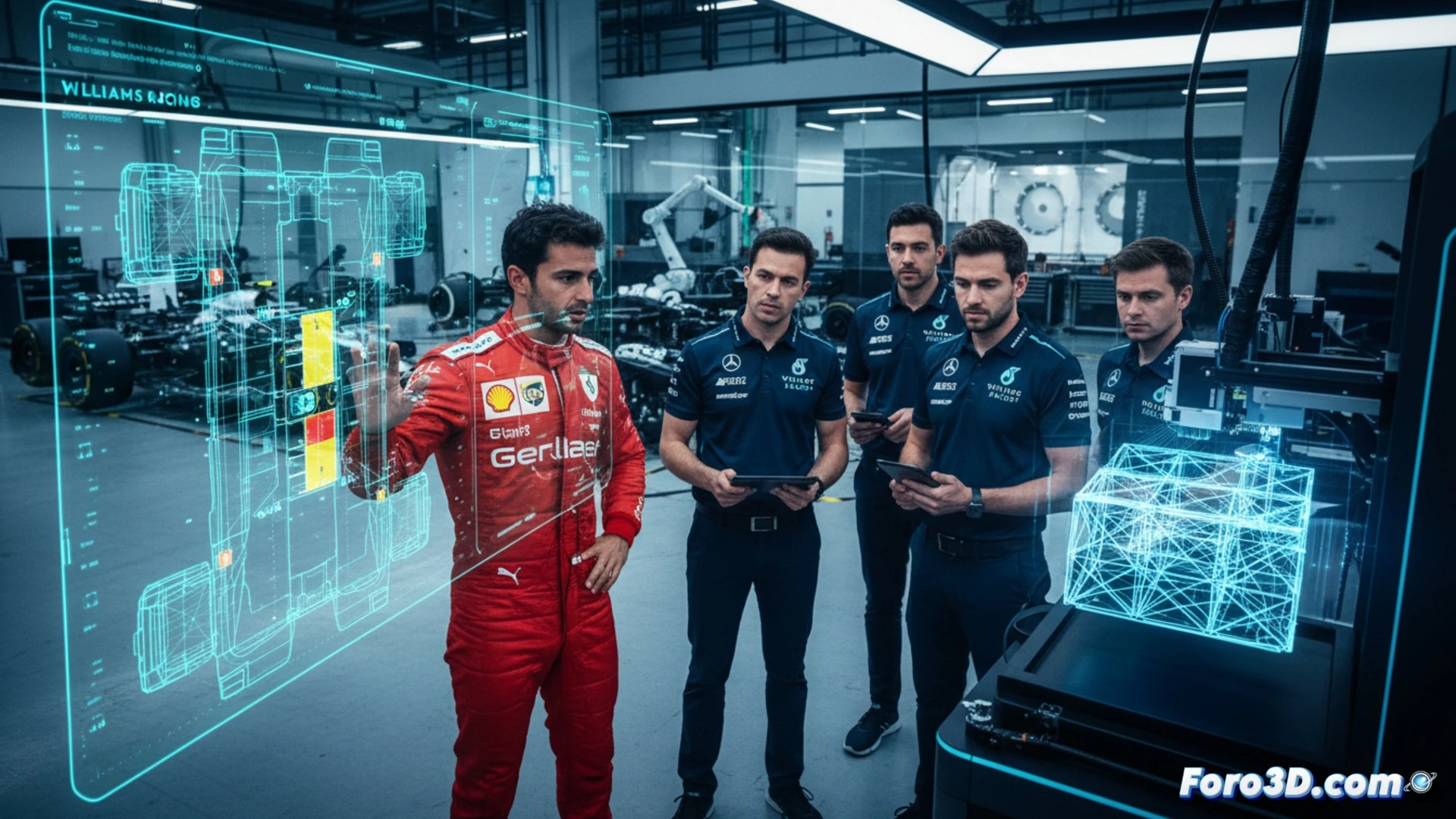
Sainz's criticisms are the ideal starting point for analysis with 3D technology. A 3D laser scan of the FW48 would allow creating an exact digital twin. In this model, modifications could be simulated to reduce weight, analyzing mass redistribution and its impact on balance. Using CFD (Computational Fluid Dynamics), airflow could be visualized, identifying areas of downforce loss. Additionally, finite element analysis (FEA) would test material fatigue, addressing reliability issues from the virtual phase, before manufacturing a single piece.
More than a tool, a culture of innovation ⚙️
Sainz's urgency underscores a greater need: to integrate the digital development cycle as the core of the team. A digital twin continuously updated with track data would allow correlating simulations with reality. This not only shortens improvement timelines but turns every driver complaint into an optimizable parameter in 3D. For Williams, adopting this philosophy could be the key to retaining their star and becoming competitive again.
How can 3D printing of aerodynamic components become the key for Williams to resolve its development crisis and retain a driver like Sainz?
(PS: 3D tactical simulation never fails, players on the track do)