Carlos Sainz has tied his future to the reconstruction of Williams, a long-term project that goes beyond the steering wheel. His decision for 2027 will depend on the team demonstrating tangible progress. In this context, competitive advantage is no longer sought only in the workshop, but in the servers. Advanced simulation and 3D data analysis have become the fundamental pillars to close the gap with the leaders and meet the expectations of the Spanish driver.
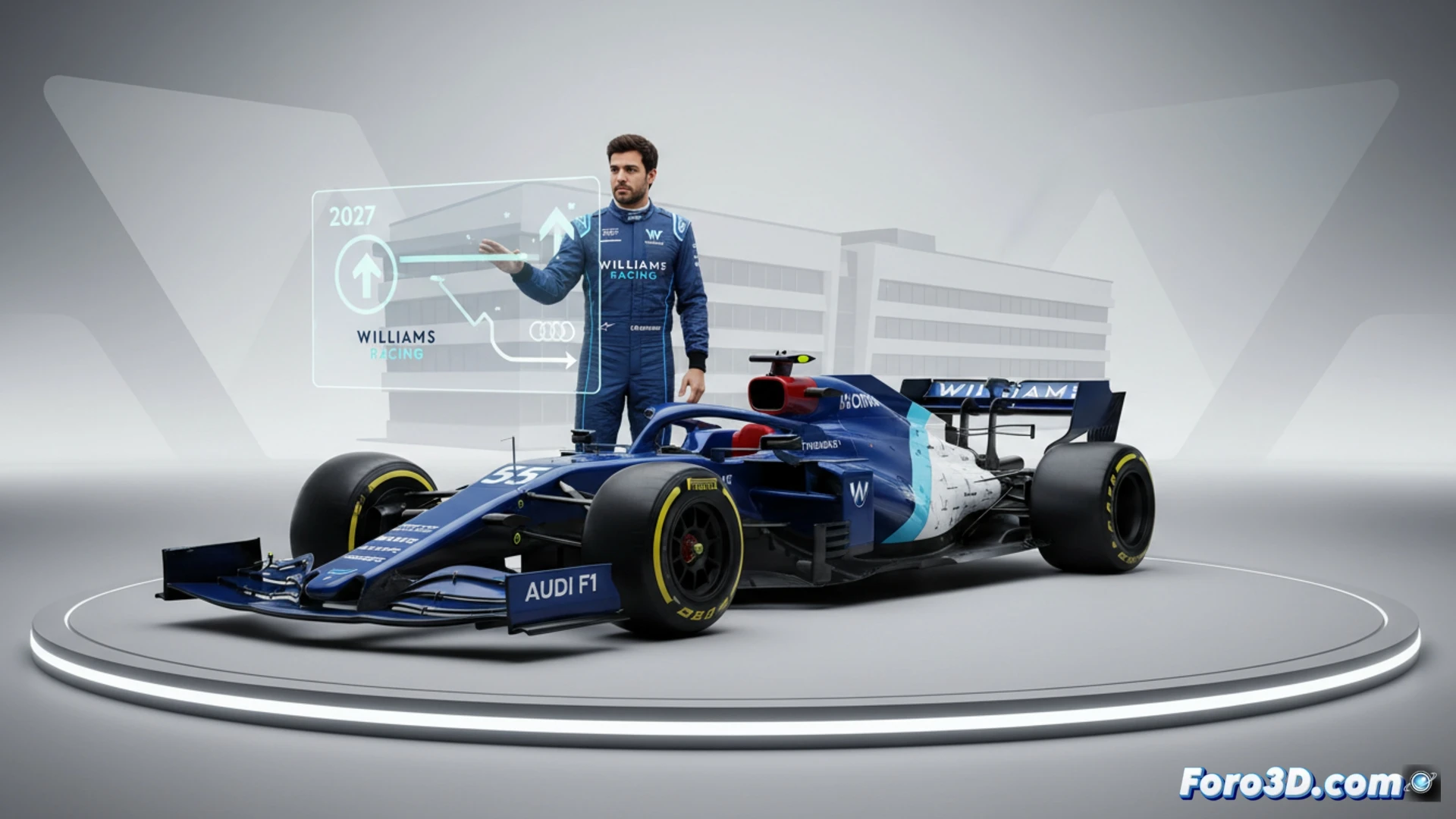
3D Simulation: The virtual test bench for the comeback 🚀
The improvement of the single-seater under the new 2026 regulations critically depends on digital environments. Teams like Williams use high-fidelity 3D models to simulate aerodynamic behavior, tire wear, and race strategy. Each circuit is recreated digitally, allowing engineers and Sainz himself to test configurations and make decisions in a zero-risk environment. 3D visualization of telemetry transforms numbers into clear images of where time is gained or lost, guiding development with precision.
More than a driver: A partner in digital development 🤝
Sainz's trust reflects a modern role for the driver, being a key sensor and validator of simulations. His feedback after comparing the real feel with virtual models is invaluable for refining the software. This constant feedback cycle between the physical car and its digital twin is the real bet. If Williams accelerates this process, it will not only retain its star driver but also lay the technological foundations for its return to the elite.
How can 3D simulation and digital modeling accelerate Williams' chassis development to convince Carlos Sainz in 2027?
(P.S.: player tracking is like following your cat around the house: a lot of information and little control)