Ryobi announced the expansion of its USB Lithium tool line for 2026, focused on 4-volt rechargeable batteries with USB-C port. Beyond the novel pruning shears or silicone gun, its power system raises an interesting question for the 3D professional: can these interoperable batteries be a viable power source for 3D digitization equipment in field work? We analyze their real potential.
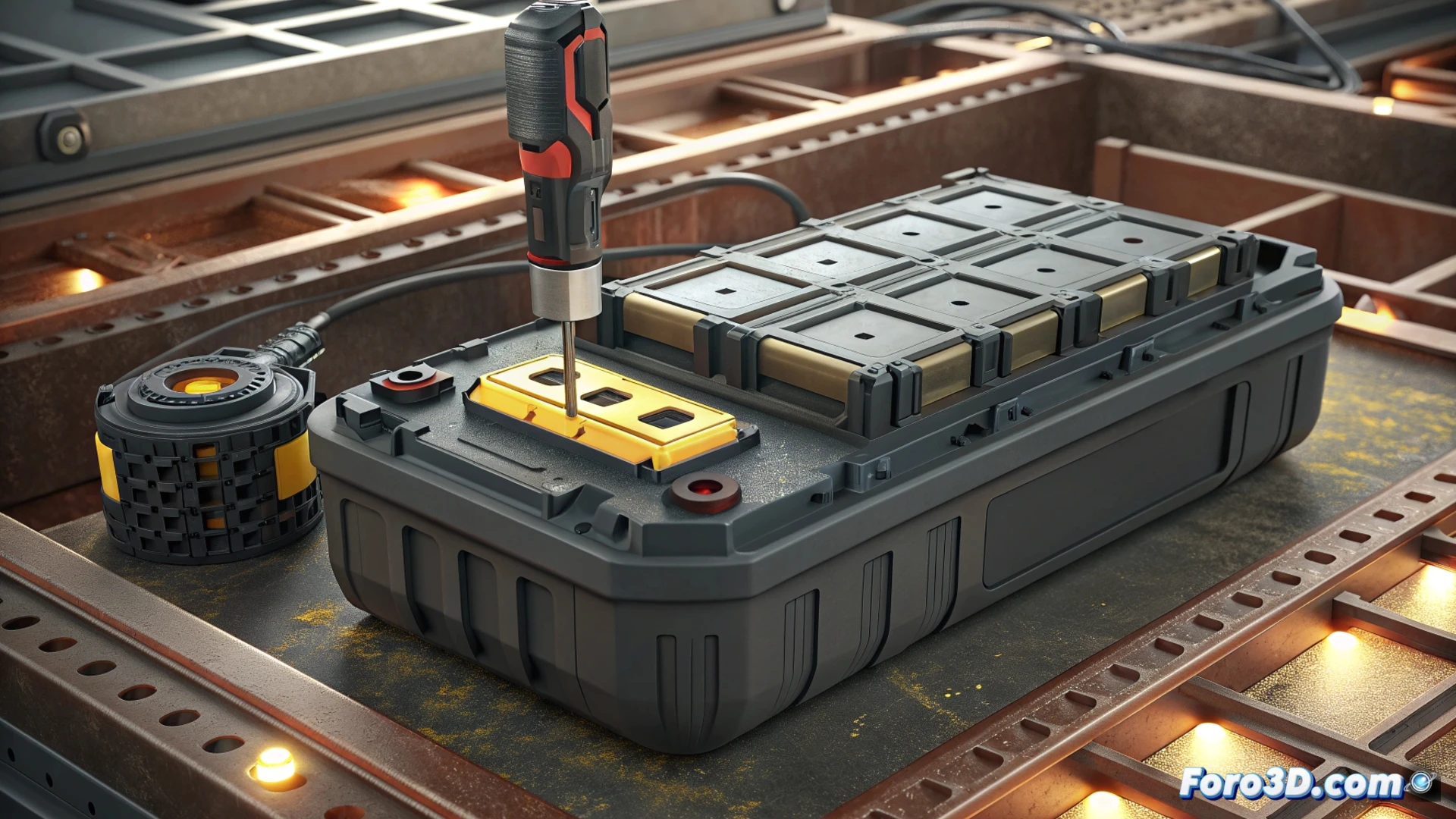
Technical Specifications and Practical Application in 3D Workflows 🔋
The core is the 4V battery, an unusual voltage that converts to 5V/3A (15W) on its USB-C port. For a professional on the move, this power is sufficient to charge or keep running a graphics tablet, a consumer handheld 3D scanner, or a lightweight laptop in low-demand mode. The advantage over a generic power bank is versatility: the same battery powers workshop tools and, in the field, your capture equipment. However, the 15W is clearly insufficient for high-performance laptops or mobile workstations, being a backup solution or for short sessions.
A Versatile Energy Ecosystem, But with Clear Limits ⚡
Ryobi's proposal is attractive as a unified energy concept. For a studio that already uses its tools, sharing batteries with lightweight 3D equipment adds convenience. However, for the dedicated technical professional, a high-capacity power bank with 45W or higher PD output remains a more robust and predictable option. These 4V batteries find their ideal niche in low-consumption 3D digitization workflows with maximum portability, where every gram and space counts.
Could Ryobi's new 4V USB-C battery platform become the universal power source for mobile 3D printers and on-site manufacturing projects? 🛠️
(PD: If the computer starts smoking when opening Blender, you might need more than a fan and faith)