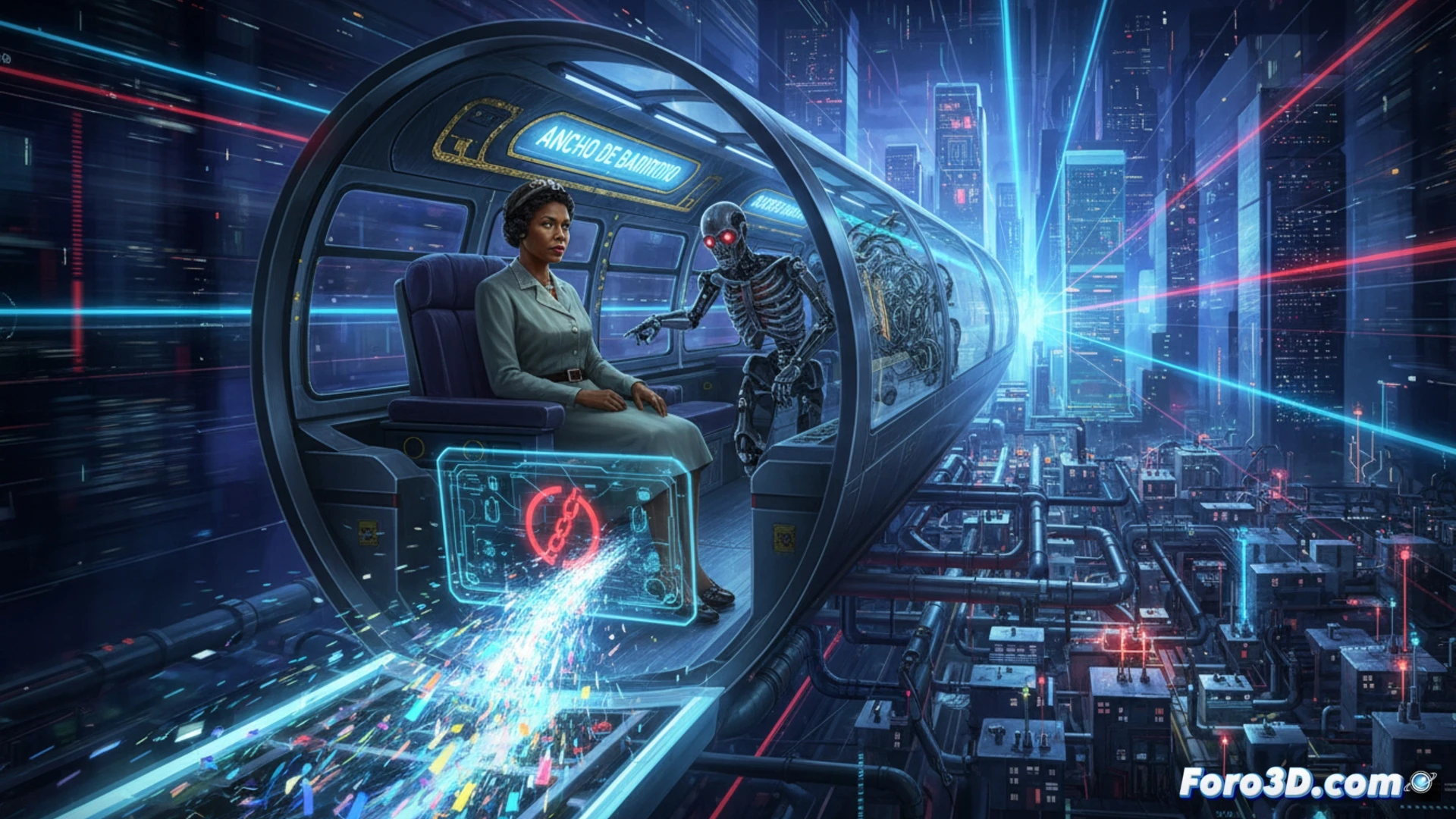
A speculative film script revives Rosa Parks' act of civil disobedience, but transposed to a digital dystopia. In The Last Seat on the Net, the bus is a high-speed data transport and segregation is algorithmic. The protagonist's refusal to give up her place in the Priority Bandwidth sector triggers a systemic failure. This work uses 3D art and narrative as tools for social critique, exploring digital inequality and technological control through a powerful visual allegory.
The Technical Allegory: From the Physical Seat to Bandwidth 🚌
The power of the project lies in its metaphorical translation. The segregated bus becomes the data network, where the genetic elite enjoys low latency and privileged access. Parks' act is no longer about a physical seat, but about an intangible resource: priority in the flow of information. Her resistance triggers a protocol error, a crack in the digital segregation system that allows free knowledge to flood the network's suburbs. This narrative construction demonstrates how 3D environments and systems concepts can materialize political abstractions, making oppression in digital space visible and understandable.
The Rendering of Social Consciousness 🎨
Beyond the dystopian anecdote, the script underscores the role of digital art in contemporary activism. The choice of 3D medium is not casual; it allows building worlds that, though fictional, reflect and exaggerate real trends, such as the digital divide or surveillance. By using a universally historical reference, the project seeks to generate the same ethical indignation, but applied to a new front of struggle. Thus, art becomes a consequence simulator, inviting reflection on who controls our data buses today.
How can the 3D recreation of a historical icon like Rosa Parks within a digital dystopian narrative transform physical protest into a powerful symbol of activism against surveillance and algorithmic segregation?
(P.S.: pixels have rights too... or at least that's what my last render says)