RollerCoaster Tycoon Classic, the remastered version that unifies the first two titles and their expansions, is now available on PlayStation 5 and Xbox Series. This release marks the culmination of a multi-platform journey that began on mobile and PC, arrived on Nintendo Switch, and now settles on next-generation consoles. The key question from a development perspective is: how does it adapt and preserve the technical essence of a classic isometric PC management game to these new hardware environments, maintaining its authentic gameplay and 95 scenarios.
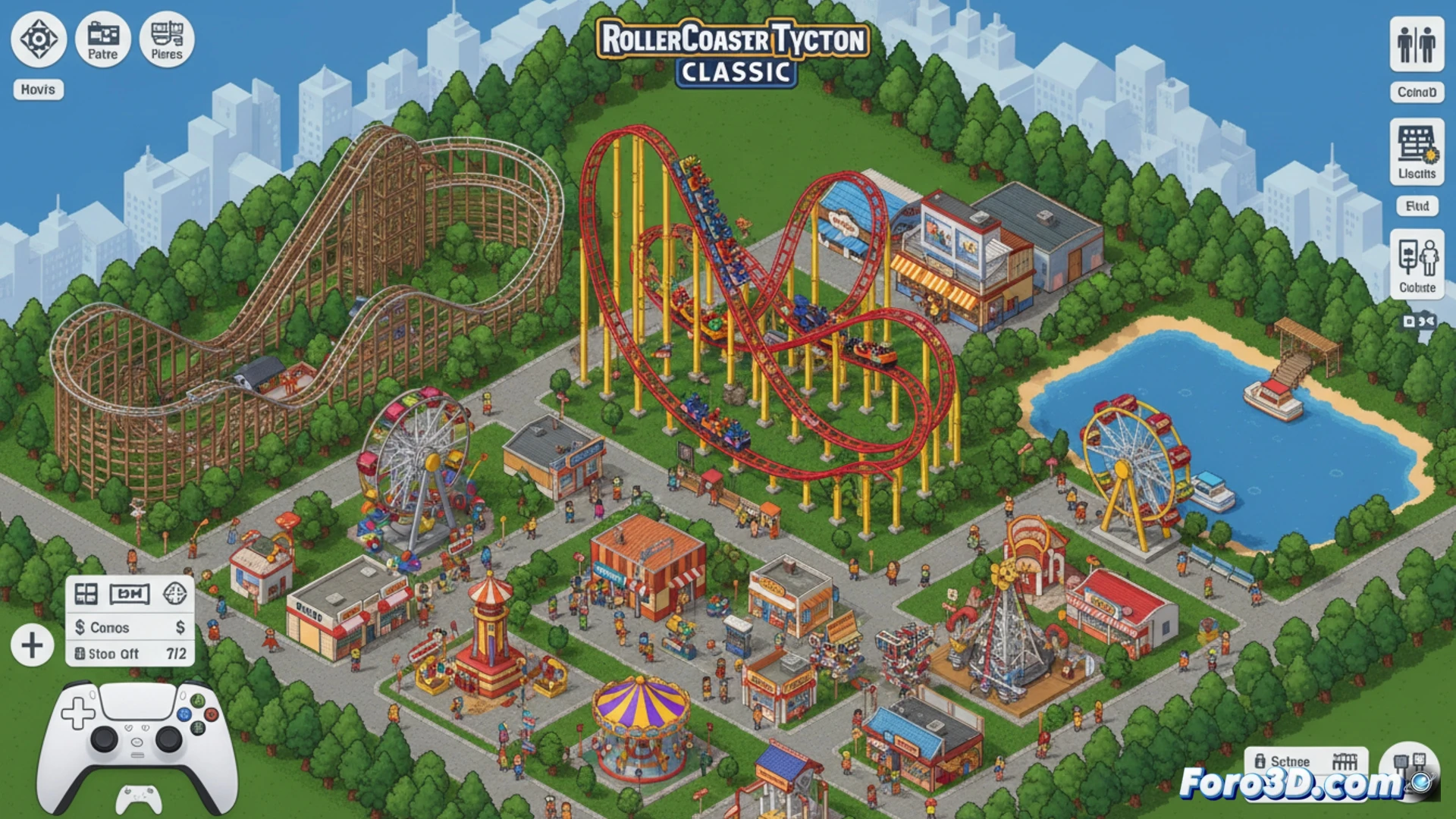
The technical challenge of faithful remastering 🎢
The process of bringing RollerCoaster Tycoon to modern consoles is not a simple port. It involves adapting the user interface and controls, originally designed for mouse and keyboard or touch screens, to a traditional controller. This requires a redesign of the interaction experience without altering the core gameplay. Technically, the biggest challenge is not improving the 2D isometric graphics, but ensuring their sharp and fluid rendering at 4K resolutions, maintaining tile alignment and the pixel art aesthetic that defines its visual identity. Additionally, optimization for PS5 and Xbox Series architectures must ensure minimal loading times and stability, even with parks filled with hundreds of rides and visitors, a considerable simulation load that the original game already handled efficiently.
The strategy for reviving management classics 📈
This release reflects an industry trend: the revaluation of niche genres like management simulation. The staggered launch strategy, from mobile platforms to next-generation consoles, demonstrates careful market research to maximize the audience. From development, the preservation of the original simulation code and AI is prioritized, considered sacred elements, over radical aesthetic changes. This underscores a key principle: in certain titles, fidelity to the mechanics and authentic feel is a technical and commercial value more important than any superficial graphical modernization.
How has the optimization of RollerCoaster Tycoon's original game engine, written in assembly, evolved to leverage modern CPU architectures in consoles like PS5 and Xbox Series?
(P.S.: shaders are like mayonnaise: if they break, you start all over again)