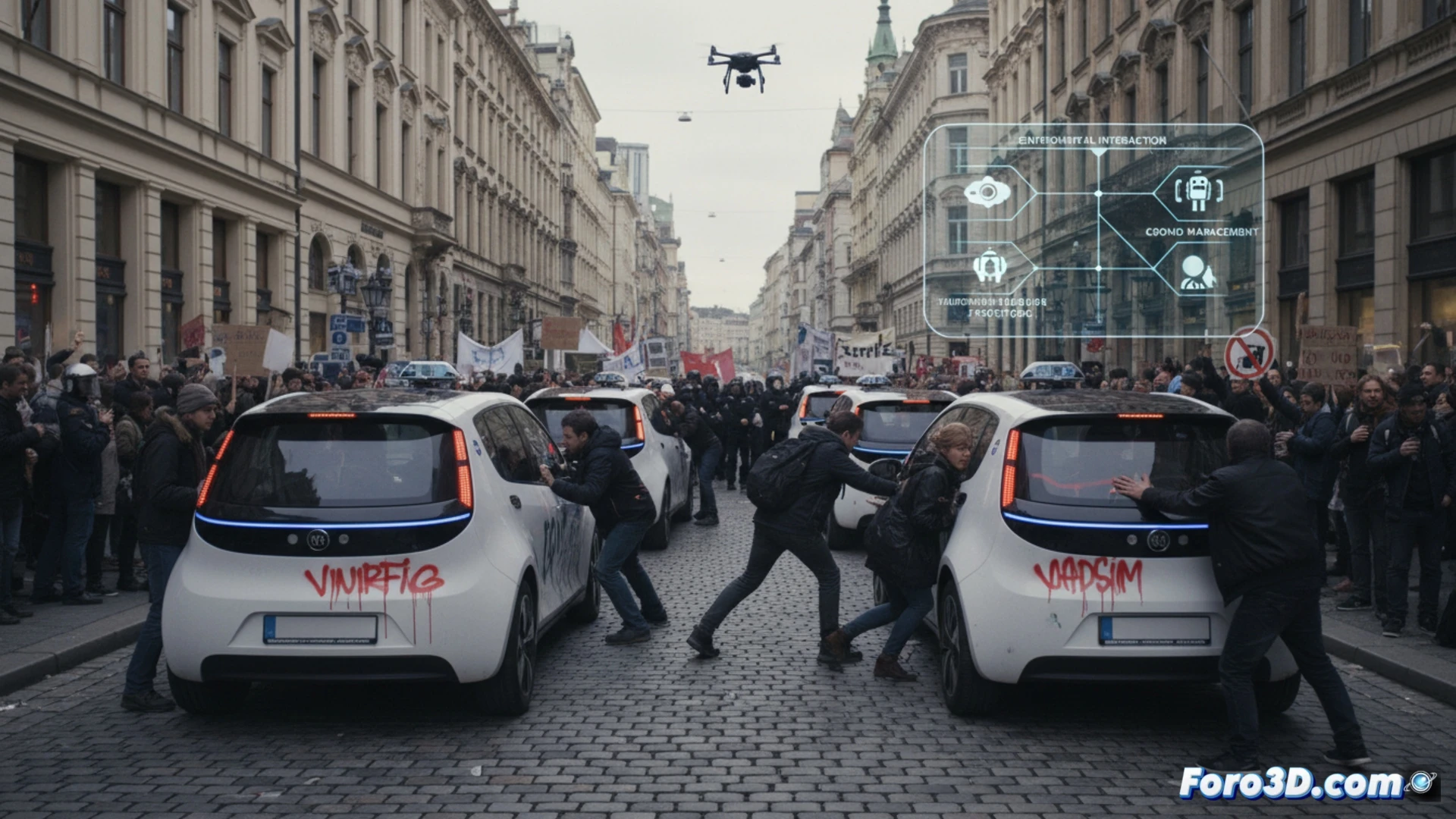
The expansion of autonomous vehicle fleets in urban centers is not without friction. Alongside adoption, protests and acts of vandalism against these robotaxis emerge. This scenario shows that safety challenges are not limited to the reliability of the driving algorithm, but must also consider interaction, sometimes hostile, with the physical and social environment.
Perimeter defense systems and attack mitigation 🛡️
Developers are integrating additional layers of physical and logical security. This includes perimeter monitoring systems with proximity sensors and 360-degree cameras to detect suspicious approaches. In the software, protocols are implemented to respond to aggressions: from hermetic door locking and real-time alerts to control centers, to the ability to move to a safe location if ongoing damage is detected.
Urbanity manual for machines (and for humans) 😅
It seems that the next big advance will not be a more precise driving model, but a street psychology module. Perhaps vehicles need an intensive course in interpreting unfriendly human gestures and dodging spray paint. Meanwhile, some humans might require a basic tutorial on why venting your frustration with a hammer against a wheeled officer is not a constructive form of technological debate.