The Rivas Vaciamadrid City Council has launched an invitation to its residents to rediscover and experience their neighborhood, promoting the use of public spaces and local commerce. This initiative, focused on strengthening the community fabric, represents an excellent starting point. However, in the niche of Digital Democracy and Participation, we wonder: how can we take this experience to a deeper and more informative level using the technology at our disposal? 3D visualization presents itself as a key tool.
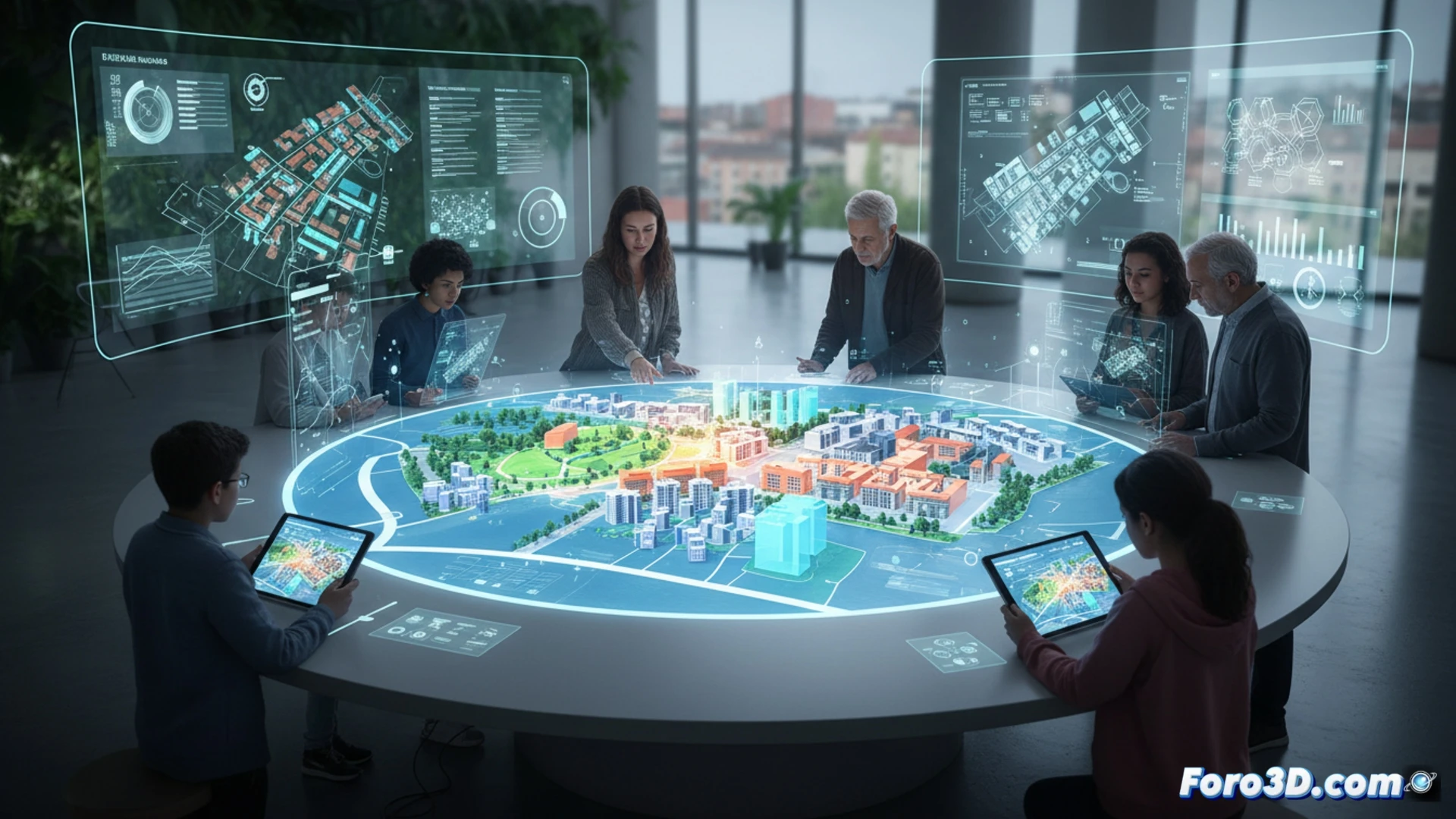
3D Tools for Informed and Dynamic Citizen Participation 🗺️
Imagine an interactive 3D map of the municipality, accessible from the municipal website, where residents not only see streets, but layers of information. They could visualize anonymous attendance data in squares and parks, discover the history of spaces, or access three-dimensional models of local businesses. For future projects, technology allows going further: through augmented reality on the mobile, a remodeling proposal for a square could be superimposed on its real location. Or, using virtual reality glasses, take immersive walks through an urban planning project before its execution, facilitating precise feedback based on an almost real experience.
From Invitation to Co-creation: The Future of Participation 🤝
Rivas' proposal is valuable in itself, but by integrating these tools, it evolves from a call to a process of continuous co-creation. Citizens go from being invited to stroll to being informed participants who can evaluate, simulate, and propose changes with a complete spatial understanding. This methodology not only dynamizes neighborhood life, but builds a more robust, transparent, and collaborative local democracy, where 3D technology acts as a bridge between the institution and the citizenship.
How could interactive 3D models and digital twins of neighborhoods transform citizen participation in urban planning projects, allowing Rivas residents to visualize, modify, and vote on proposals immersively before their real implementation?
(P.S.: visualizing a political debate in 3D is easy, the hard part is making it not look like a WWE match)