The return of Rick and Morty with its ninth season is not just an event for fans of adult animation. For the video game development community, the series represents a constant source of inspiration. Its unique blend of absurd humor, chaotic science fiction, and dimensional designs has deeply permeated the indie sector, serving as an aesthetic and narrative reference for projects seeking to break with the conventional.
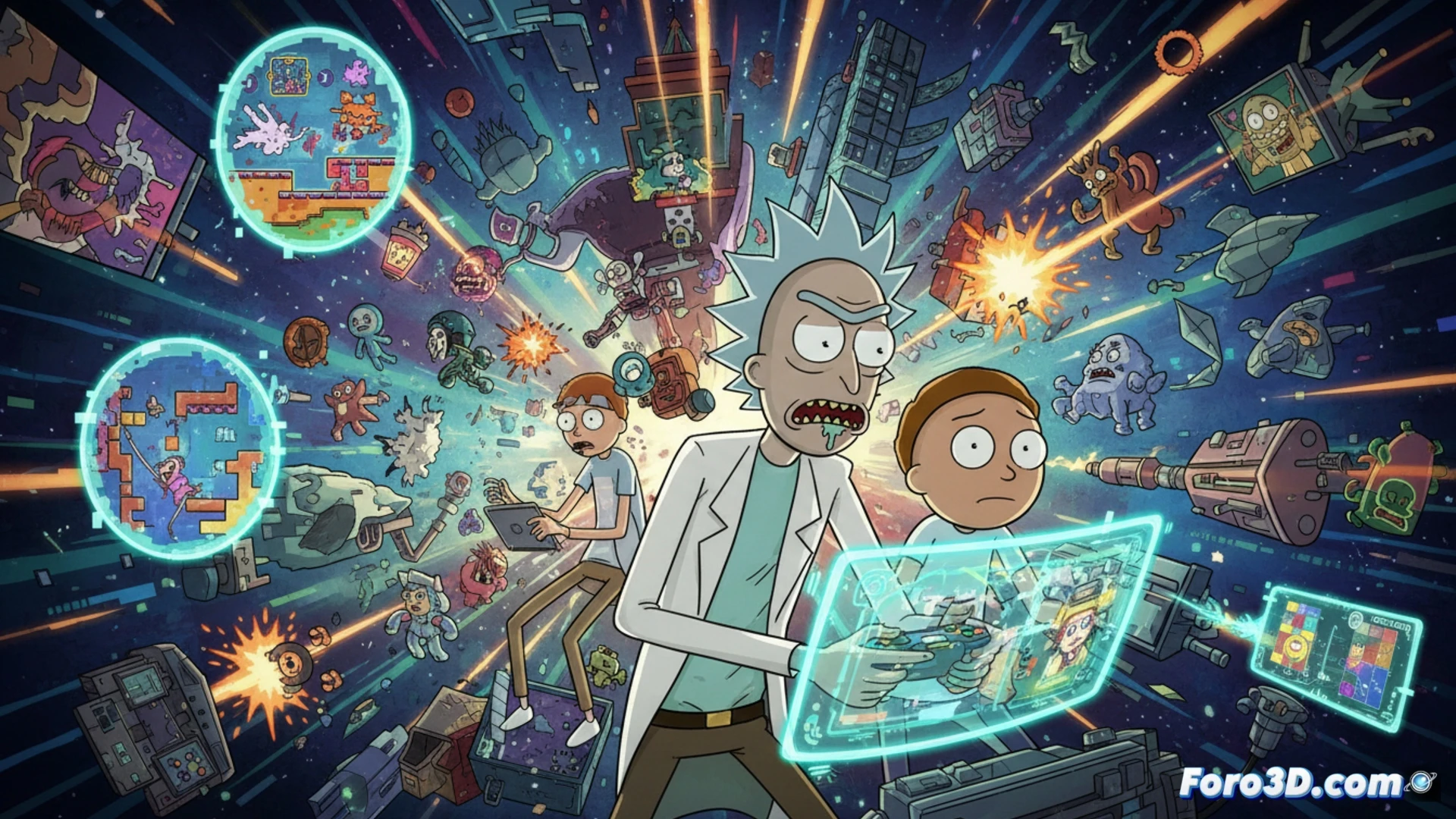
From the Screen to the Code: Inspiration for Indie Mechanics and Aesthetics 🎮
The influence of Rick and Morty materializes in titles that emulate its essence. Games like Trover Saves the Universe by co-creators Justin Roiland and Squanch Games transfer the humor and tone directly. Others, like The Stanley Parable, share its meta narrative and deconstruction of conventions. The aesthetic of interdimensional portals, grotesque aliens, and improvised technology has defined the art direction of numerous projects. Independent developers find in the series a model for creating unpredictable worlds, where logic can break and characters are deeply flawed, adding layers of complexity and humor to character and environment design.
The Future: Official IP and Limits of Inspiration 🤔
The series' continuity reignites the question about its potential in more ambitious official video games. Meanwhile, the inspiration for developers is clear, but it also carries a challenge: capturing the spirit of the series without falling into mere superficial copying. The true legacy of Rick and Morty in video games could be fostering an attitude of creative risk and narratives that challenge the player, principles that are already a valuable resource for any developer.
How do the non-linear narratives and metafiction of series like Rick and Morty influence mission design and open-world building in current indie video game development?
(P.S.: a game developer is someone who spends 1000 hours making a game that people complete in 2)