The preservation and execution of old video games on modern hardware is a recurring technical challenge for developers and enthusiasts. Far from being a simple matter of nostalgia, it is a deep compatibility problem involving obsolete software architectures, disappeared graphics APIs, and copy protections that current systems see as malware. This article breaks down the root causes of these failures and offers a practical approach, based on reverse engineering and community tools, to get those titles working again. 🎮
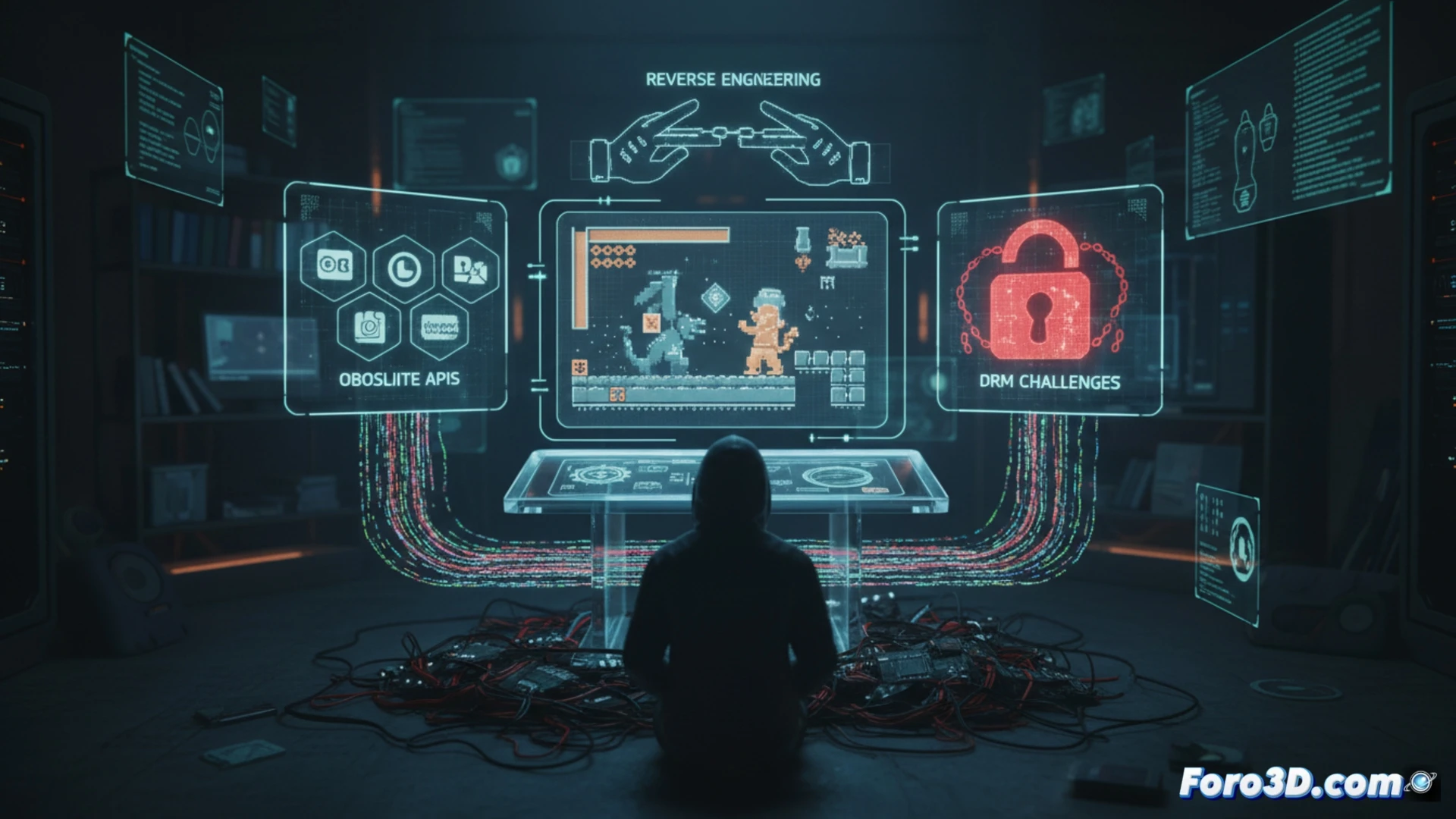
Anatomy of Incompatibility: APIs, DRM, and Architectures 🔍
The problems arise from several technical layers. At the core are obsolete graphics and audio APIs, such as DirectX 5-8 or old versions of OpenGL, whose calls are no longer handled efficiently by modern drivers, causing visual glitches or unexpected crashes. The second layer consists of old DRM protections like SafeDisc or SecuROM, which used low-level techniques that Windows now blocks for security reasons, directly preventing execution. Finally, there is the dependence on specific hardware, such as 16-bit timers and fixed resolutions for CRT monitors, which clash with 64-bit operating systems and current graphics cards. Understanding this incompatibility stack is the first step to diagnosing and fixing each failure specifically.
Practical Solutions: From Wrappers to Virtual Machines 🛠️
The community has developed ingenious tools for each layer of the problem. For graphics APIs, wrappers like dgVoodoo2 or DxWnd intercept old calls and translate them to modern DirectX, solving rendering and scaling issues. Against DRM, fan patches or tools like UniWS modify the executable to remove harmful checks. In extreme cases, emulation via DOSBox or a virtual machine with Windows 98/XP configured specifically for games offers the most faithful and compatible hardware and operating system environment. Success lies in correctly diagnosing the bottleneck and applying the appropriate layered solution.
How to approach the precise emulation of obsolete hardware and the adaptation of controls without altering the original classic game experience?
(P.S.: optimizing for mobile is like trying to fit an elephant into a Mini Cooper)