The presentation of the Honor Magic V6 is not just a commercial milestone; it is a call for technical analysis. Its unprecedented combination of extreme thinness (8.75 mm), maximum battery (6,660 mAh), and IP69 resistance makes it a perfect object of study for Reverse Engineering. Our discipline can decipher how critical components and sealing solutions are integrated into such a restricted volume, transforming marketing specifications into comprehensible technical blueprints and applicable design lessons.
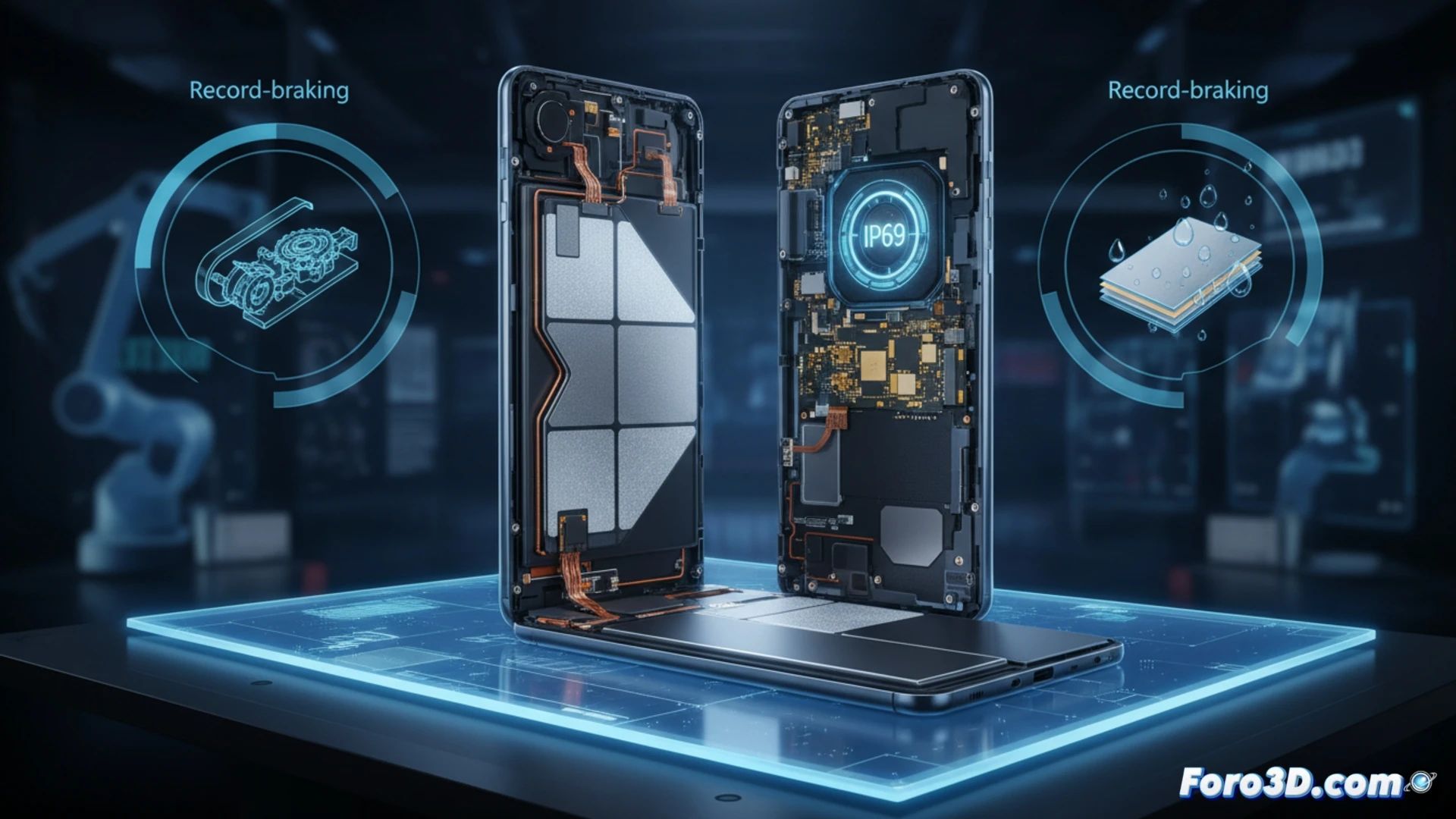
Digital Deconstruction: CT Scan and 3D Modeling to Analyze Critical Integration 🔍
The true engineering feat of the Magic V6 will only be unveiled through non-destructive digitization techniques. A CT scanner (Computed Axial Tomography) would allow obtaining a high-resolution internal volumetric model, crucial for analyzing the layout of the dual-cell battery and its insulation. Through reverse engineering, we could generate a polygonal mesh and a parametric CAD model to study the chassis architecture, hinge anchor points, and the labyrinth of O-ring gaskets and adhesives that enable IP69 certification. Finite element analysis (FEA) of stresses on this model would reveal how structural stresses are managed in such a thin profile.
Implications for Design and Standardization of Foldables ⚙️
This virtual analysis has immediate practical applications. Understanding the Magic V6's battery packaging and sealing solution establishes a new benchmark for the industry. For engineers, it poses a challenge in optimizing energy density and thermal management in minimal cavities. In the long term, the systematic deconstruction of these cutting-edge devices accelerates the sector's evolution, forcing innovations in composite materials, automated assembly processes, and watertightness testing protocols that surpass current limits.