Capcom's recent announcement of five million units sold of Resident Evil Requiem is not just a commercial success. It is the validation of a series of bold technical and design decisions in a title that celebrates 30 years of survival horror. This analysis focuses on how the combination of the RE ENGINE, the innovative dynamic perspective, and an inclusive difficulty design have defined a new technical benchmark for the genre, demonstrating that technical evolution must always serve the player's emotional experience.
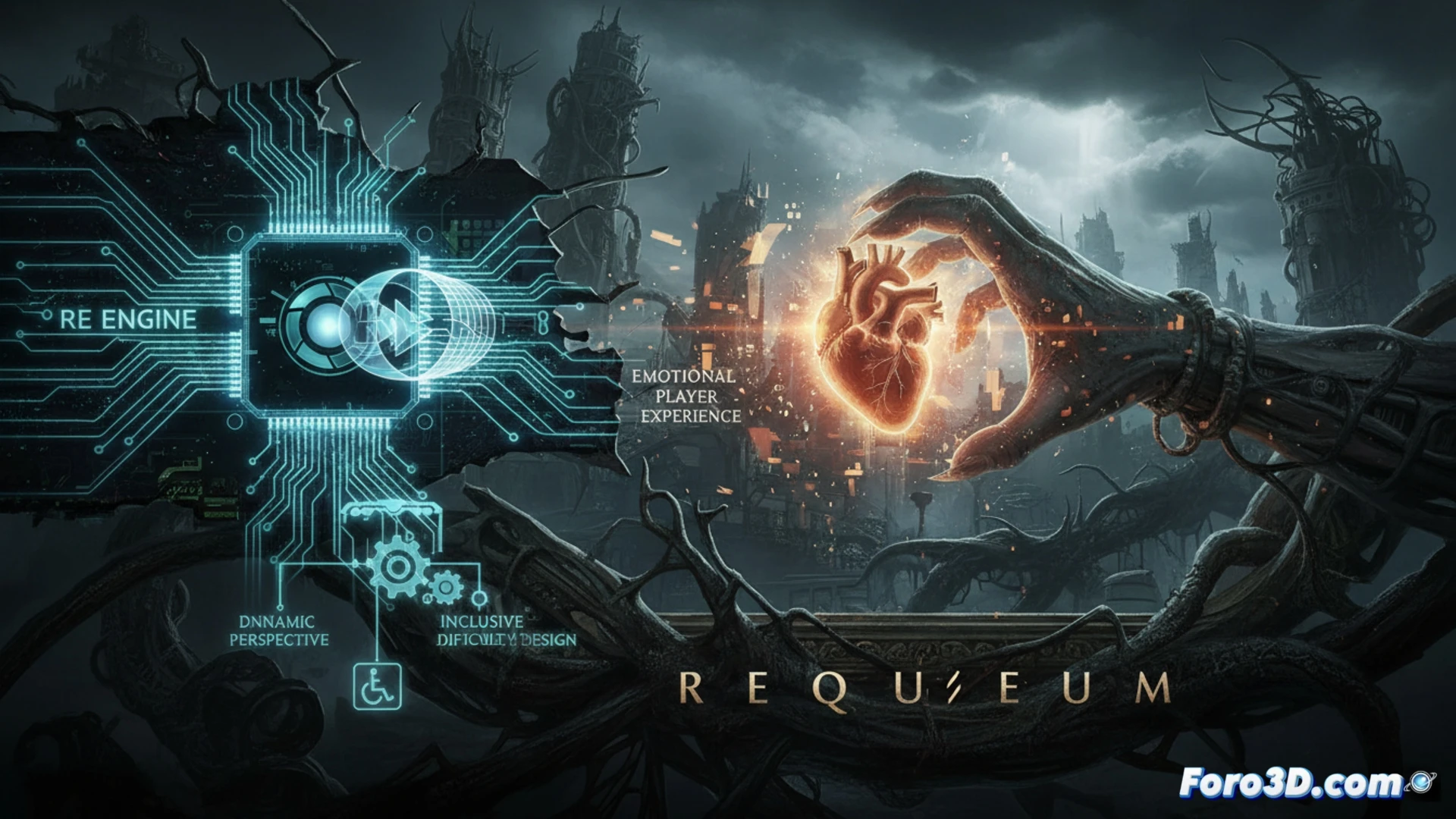
RE ENGINE and Dynamic Perspective: Technical Pillars 🛠️
The technical heart of Requiem is, once again, the RE ENGINE. Its key contribution here goes beyond visual realism in skin or hair, and focuses on enabling the star mechanic: the real-time switch between first and third person. This functionality is not a mere graphical toggle; it demands monumental optimization. The camera, scene composition, character animations, and interface must be recalculated instantly without performance drops. Additionally, the engine manages two distinct sets of level designs and enemy encounters that work coherently for both perspectives, doubling the design work but enriching the gameplay. This direct technical choice impacts the experience: first person intensifies fear and immersion, while third person offers tactical control in intense combats.
Lessons for AAA Survival Horror Development 📚
The Requiem case leaves clear lessons for developers. First, engine flexibility is crucial to enable gameplay innovations, not just to improve graphics. Second, accessibility through well-calibrated difficulty options does not detract from hardcore appeal; it expands the market without compromising the original vision. Finally, it demonstrates that in a mature genre like survival horror, evolution comes from giving the player agency over how to experience terror, whether through perspective or challenge. Technology, in this case, is the perfect bridge between tradition and modernity.
What optimization techniques and level design allowed Resident Evil Requiem to maintain fluid gameplay and high narrative tension on previous-generation hardware, and how can these principles be applied to current indie projects?
(P.S.: shaders are like mayonnaise: if they break, you start everything over again)