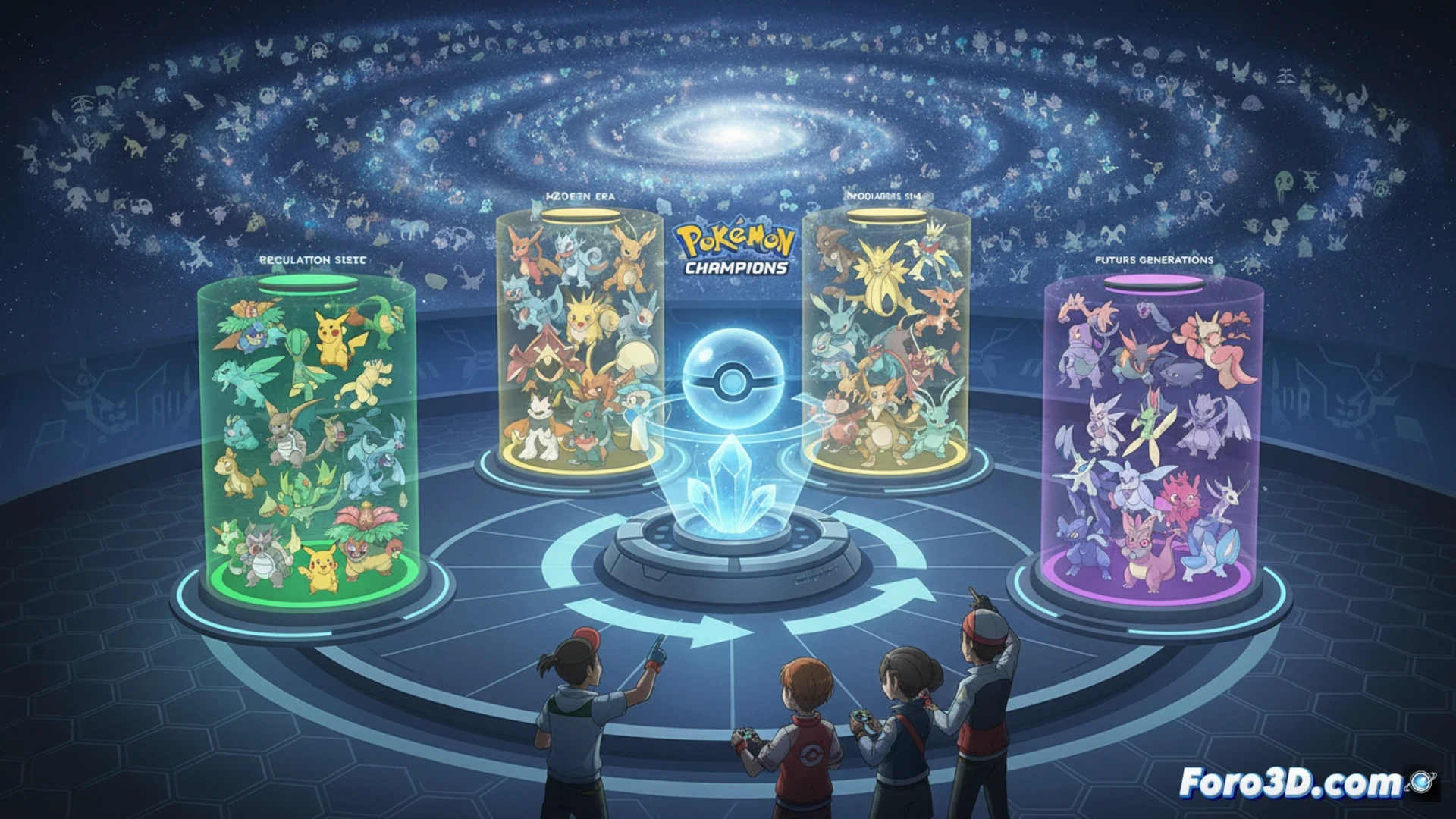
In a revealing statement, Masaaki Hoshino, producer of Pokémon Champions, has outlined a very long-term vision for the game, proposing continuous updates as long as the franchise exists. This commitment, which could involve thousands of creatures, entails a huge design challenge. To avoid overwhelming players and maintain a manageable meta game, the team will opt for a rotating blocks system or Regulation Sets, limiting the available Pokémon per season. This technical decision seeks to balance the ambition of the content with competitive health and accessibility.
The Engineering of a Sustainable Meta Game: Rotation and Balance 🛠️
The implementation of Regulation Sets is not just a content decision; it is a critical technical tool for long-term balance management. In a game with a roster that could grow exponentially, interactions between abilities, types, and stats become impossible to balance statically. Periodic rotation allows developers to reset the competitive environment, introduce focused adjustments, and control emerging complexity. Technically, this reduces the testing and debugging load compared to a permanent system with thousands of interacting variables. Additionally, it mitigates power creep issues and meta centralization, forcing the community to explore new synergies each season, which organically extends the game's longevity.
The Live-Service Dilemma: Completion vs. Playability ⚖️
The Pokémon Champions strategy reflects a fundamental dilemma in live-service game development: the tension between the desire for completeness and the need for healthy gameplay. Including all Pokémon would satisfy collecting, but at a potentially ruinous technical and balance cost. By prioritizing a dynamic and accessible meta game through rotations, developers bet on the active player experience over passive asset possession. It is a reminder that, in game design, less is more is often the key to sustainability, even when the content horizon is, literally, eternal.
How can designers of Regulation Sets systems in competitive games like Pokémon Champions balance metagame freshness with long-term stability, avoiding player fatigue and content obsolescence?
(P.S.: a game developer is someone who spends 1000 hours making a game that people complete in 2)