Olympic champion Rebeca Andrade announced her return plan to competition for 2026, generating great expectation. This preparation period will not only depend on her talent and discipline, but in current elite gymnastics, 3D technology has become an indispensable ally. Her case exemplifies how advanced digital tools are redefining training and analysis methods in high-precision sports.
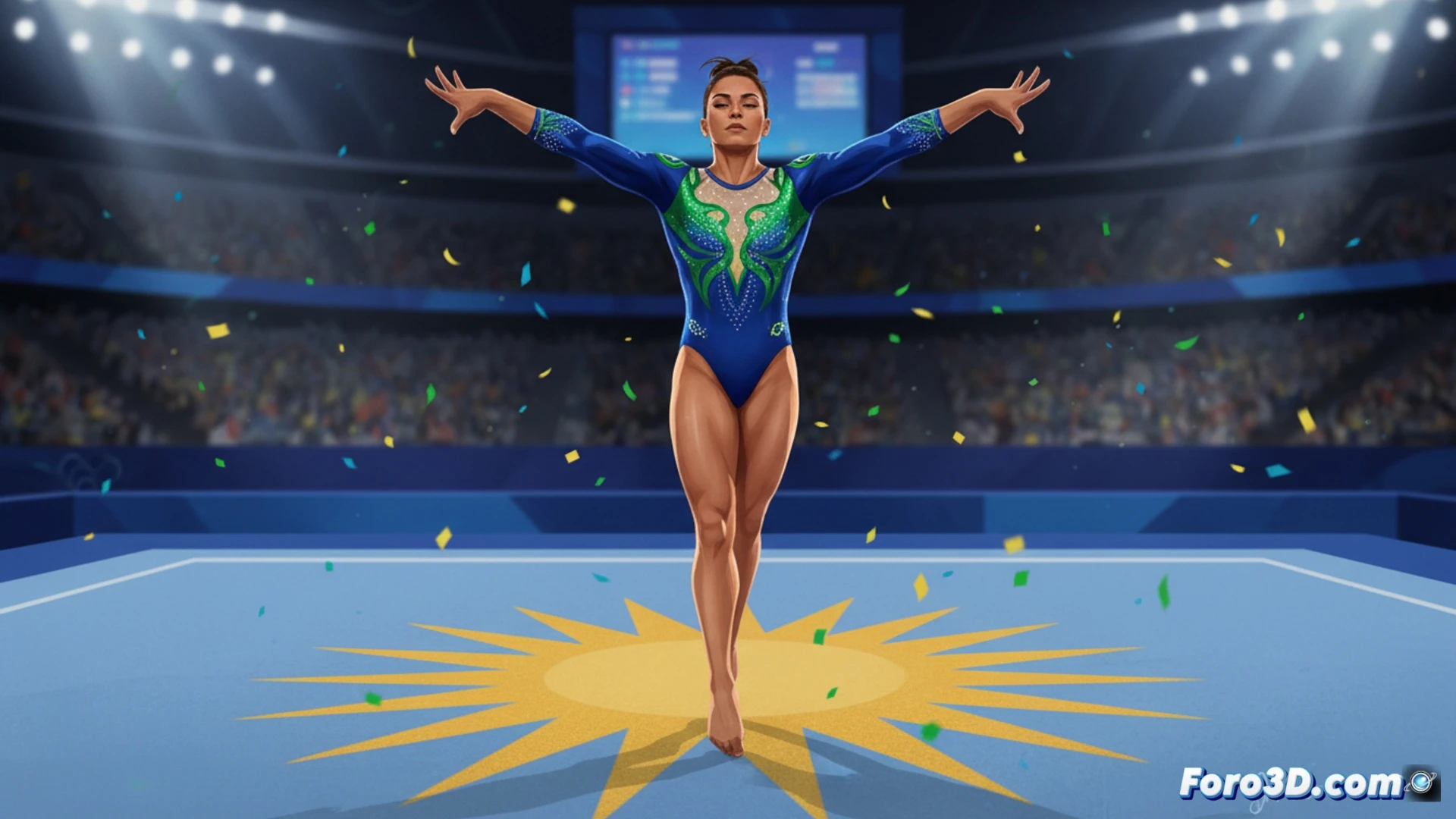
3D Biomechanics: the key to optimizing technique and preventing injuries 🏅
For an athlete like Andrade, 3D biomechanical analysis is fundamental. Motion capture systems allow digitally reconstructing each jump, turn, and landing with millimetric precision. This enables quantifying joint angles, impact forces, and center of gravity trajectories. This objective analysis identifies technical inefficiencies and asymmetries that could lead to injuries, allowing personalized adjustments in her training. Additionally, 3D simulation of complete routines helps visualize and perfect complex sequences before executing them physically, maximizing safety and efficiency during her preparation.
The future of sports training is digital 🤖
Andrade's path to 2026 illustrates an unstoppable trend. 3D technology is no longer a luxury, but a standard tool for high-level competition. Its integration enables smarter preparation, based on concrete data that complements the coach's experience. This approach not only elevates performance but prioritizes the athlete's long-term health, marking a new paradigm in elite sports where the physical and digital converge to achieve excellence.
How is Rebeca Andrade using 3D scanning and modeling to optimize her technique and prevent injuries on her path to the 2026 Olympic Games?
(PS: reconstructing a goal in 3D is easy, the difficult part is making it not look scored with the leg of a Lego doll)