Real Madrid arrives at the Etihad with a clear 3-0 advantage, the result of a solid performance in the first leg where Valverde stood out. With Arbeloa on the bench, the team defends a historic result that has never been overturned in Europe. City, forced into a miracle, relies on its home strength. The possible presence of Mbappé adds another factor to a match where Madrid cannot relinquish its offensive capacity.
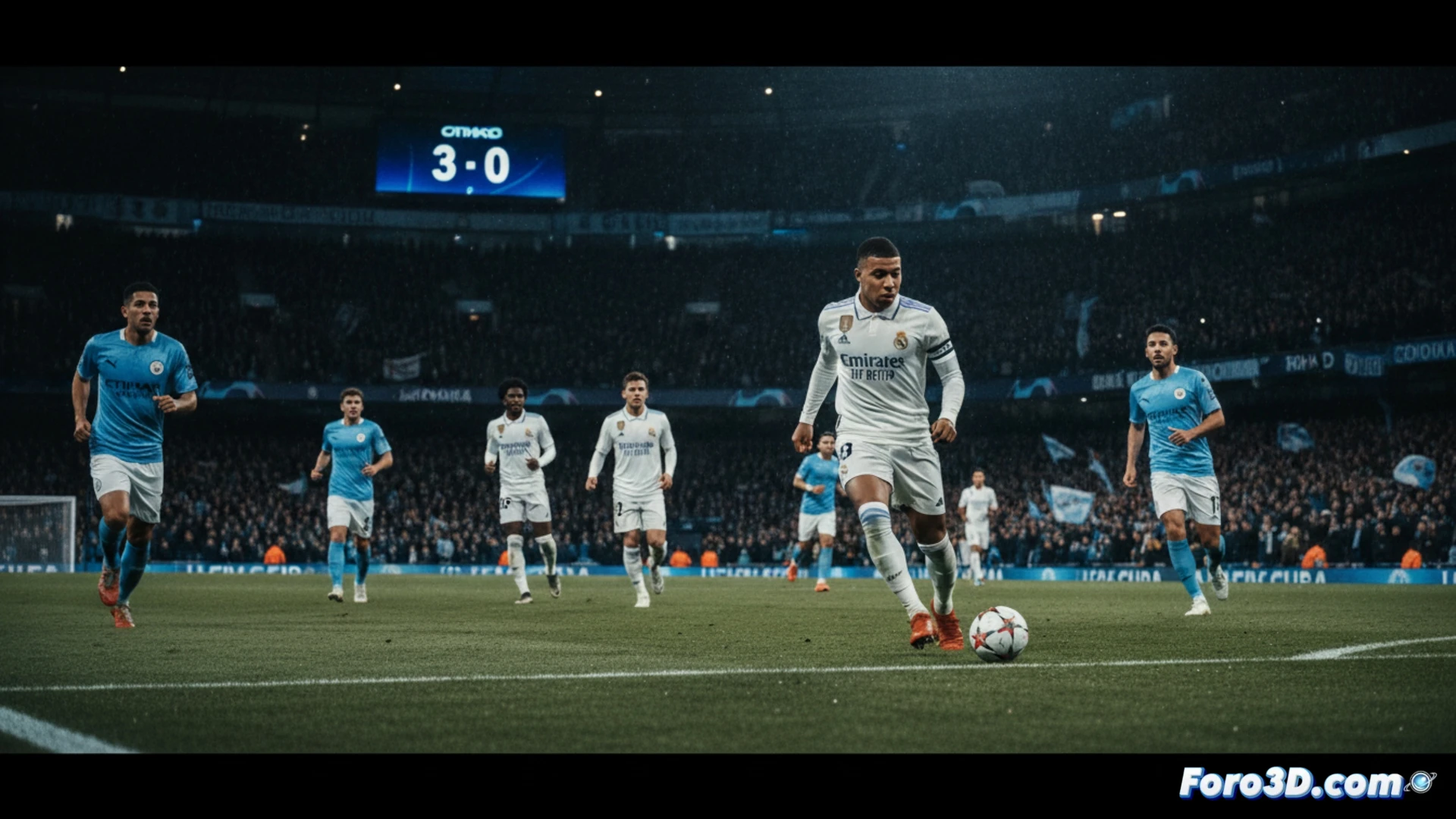
Optimizing the defensive rendering: Madrid's compactness 🛡️
The solidity shown in the first leg can be analyzed as an optimization process. The team functioned like a well-debugged system, with synchronization between lines that minimized buffer errors in transitions. The key was efficient space occupation, reducing gaps and forcing the opponent to execute in low-probability zones. Maintaining that compact code in a hostile environment like the Etihad is the ultimate debugging challenge.
City seeks the Ctrl+Z to undo the first match ↩️
Manchester City's mission has the feel of trying to revert a already saved and overwritten file. They need to execute a command of three goals without conceding any, something like a magic key combination that UEFA doesn't have in its regulations. Pep Guardiola probably reviewed all the tactical lines of code, but when the scoreline is a bug of three goals, even the best debugger can find itself facing a closed and well-compiled system by the opponent.