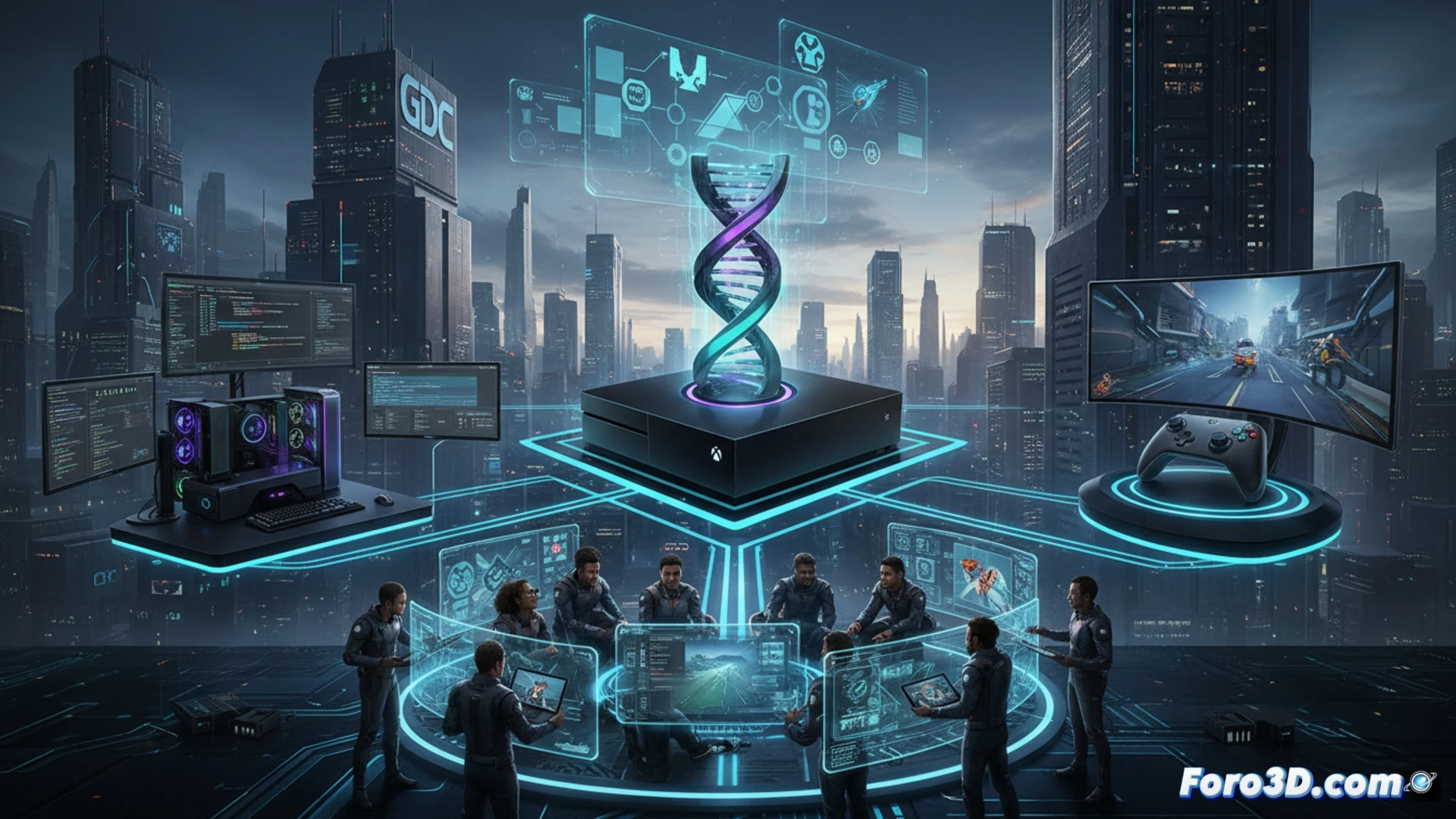
Microsoft has unveiled Project Helix, the codename for the next generation of Xbox. Announced by Microsoft Gaming CEO Asha Sharma, the hardware promises to lead in performance and run both Xbox and PC games natively. With more details expected at the GDC, the industry wonders what implications this platform convergence will have for studios and their development workflows.
Performance and Convergence: A Technical Analysis 🧠
The promise to lead in performance suggests a significant architectural leap, likely focused on GPU power, ray tracing, and memory bandwidth. This could allow developers to design for a higher visual standard from the start. The ability to run PC games is key: it implies total unification of the Windows ecosystem, where a single build could work on both platforms without porting. This would drastically reduce development and testing complexity, but it also raises questions about console-specific optimization and how differences in PC hardware configurations will be managed.
A Unified Ecosystem: Opportunities and Challenges ⚖️
For studios, Helix represents the culmination of play anywhere. Long-term planning simplifies by focusing on a single primary technical ecosystem. However, it could also consolidate dependence on Microsoft's store and services. The GDC will be crucial to understand how Microsoft will manage this convergence, development kits, and engine support. The future could be more agile development, but in a more homogeneous platform landscape.
How could Project Helix unify development across Xbox, PC, and cloud to simplify the video game creation pipeline? 🎮
(P.S.: optimizing for mobile is like trying to fit an elephant into a Mini Cooper)