The boundary between consumer and professional 3D scanners in 2026 is defined by specialized hardware. While the former use conventional structured light, pro and prosumer systems adopt industrial blue laser. This key technology solves the scanning of complex surfaces like metals, dark or reflective objects, eliminating the need for preparation sprays. They are designed for engineering, industrial design, and quality control, where metrological precision and versatility are critical.
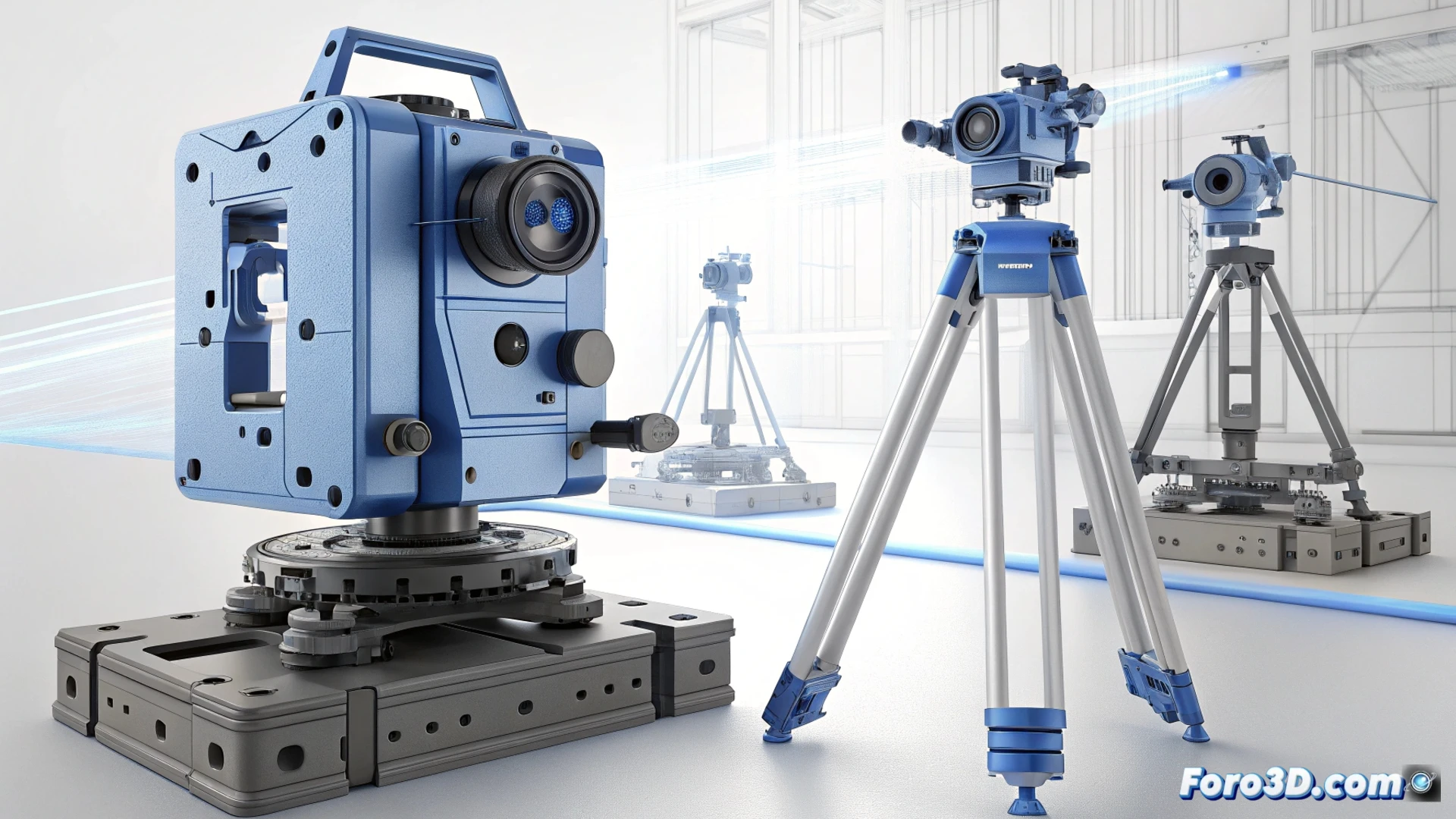
Case study: Revopoint MetroX Pro and its critical components 🔍
The Revopoint MetroX Pro exemplifies this professional segment. Its core is a blue laser emitter, which offers greater precision in adverse conditions. It is a multimodal system, combining structured light modes for speed and laser for maximum detail, and integrates an RGB camera for textures. This hardware requires a robust workstation: PC with Windows, dedicated GPU, and abundant RAM to process dense data, although rival models are standalone. Its software manages capture, fusion, and export to CAD, closing an integral workflow. The volumetric precision it achieves positions it for reverse engineering and dimensional inspection tasks.
Standalone or PC-connected? Hardware choice defines the workflow ⚙️
The decision between a standalone professional scanner or a PC-dependent one is crucial. Those tied to a workstation, like the MetroX Pro, offer greater processing power and real-time visualization, ideal for controlled environments. Standalone ones prioritize mobility. In both cases, the investment in blue laser and multimodal hardware is justified for users who need precise, CAD-ready data, surpassing the limitations of consumer scanners in serious industrial applications.
How are 2026 professional 3D scanners, with blue laser hardware and multimodal capabilities, redefining the limits of precision and applicability in industry?
(PS: Your CPU heats up more than the Blender vs. Maya debate)