The third season of Prehistoric Planet, titled Ice Age, shifts the visual narrative to the world after the dinosaurs. Produced by BBC Studios and Apple TV, with Tom Hiddleston as narrator, the series employs cutting-edge visual effects to recreate the extreme landscapes and megafauna of the Pleistocene. This approach transforms paleontological and climatic data into an immersive experience, where scientific visualization merges with outreach for a mass audience.
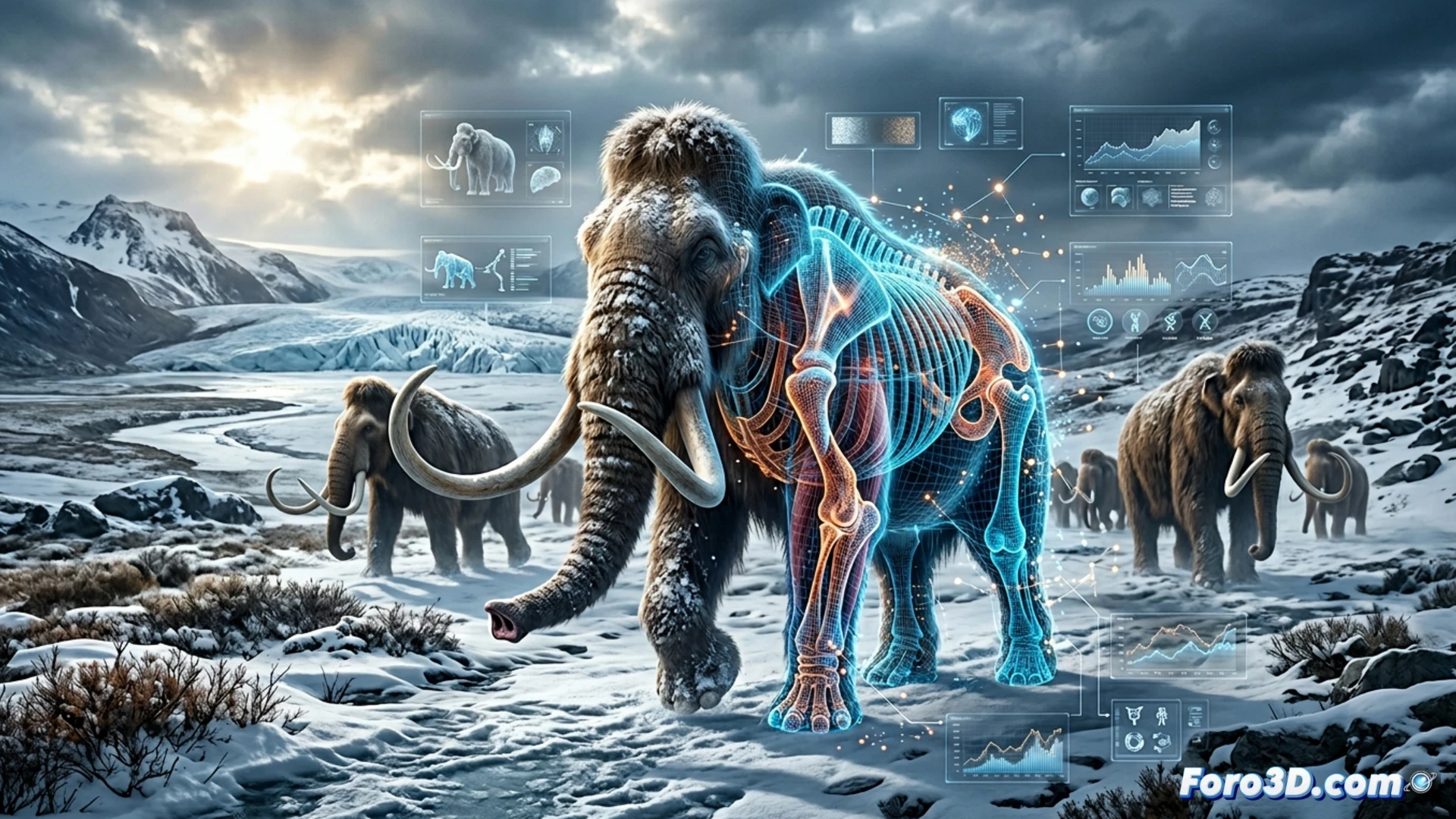
Framestore and the Technical Challenge of Prehistoric Realism 🦣
The Framestore studio faced the challenge of accurately simulating key elements for scientific credibility. Recreating the dense fur of animals like the giant ground sloth required advanced dynamic simulation solutions to achieve realistic movement influenced by wind and the environment. Parallelly, building the landscapes, from cold deserts to frozen tundras, involved modeling not only the geography but also the geological and climatic processes that defined them, integrating scientific data into the digital environments.
Beyond the Ice: Visualization as Narrative Correction ❄️
The series uses the power of 3D visualization to correct the simplistic view of the ice age as a uniformly frigid period. By modeling extreme changes, from droughts to glaciations, the VFX illustrate a dynamic period that shaped evolution. Thus, the technology not only seeks spectacle but stands as a fundamental tool for more accurate and rich scientific education, transforming climatic complexities into an understandable visual narrative.
How are scientific visualization techniques used to reconstruct and validate the environments, fauna, and climatic phenomena of the last great glaciation in productions like Prehistoric Planet: Ice Age?
(P.S.: modeling manta rays is easy, the hard part is making them not look like floating plastic bags)