Recent spy images confirm that Porsche is working on a new generation of the 911 Dakar. This prototype, based on the Carrera GTS, shows greater ground clearance and the absence of front active aerodynamics. Its development, still in the early phase, underscores how the industry turns to digital tools to create specialized vehicles, reducing the time and cost of traditional engineering cycles.
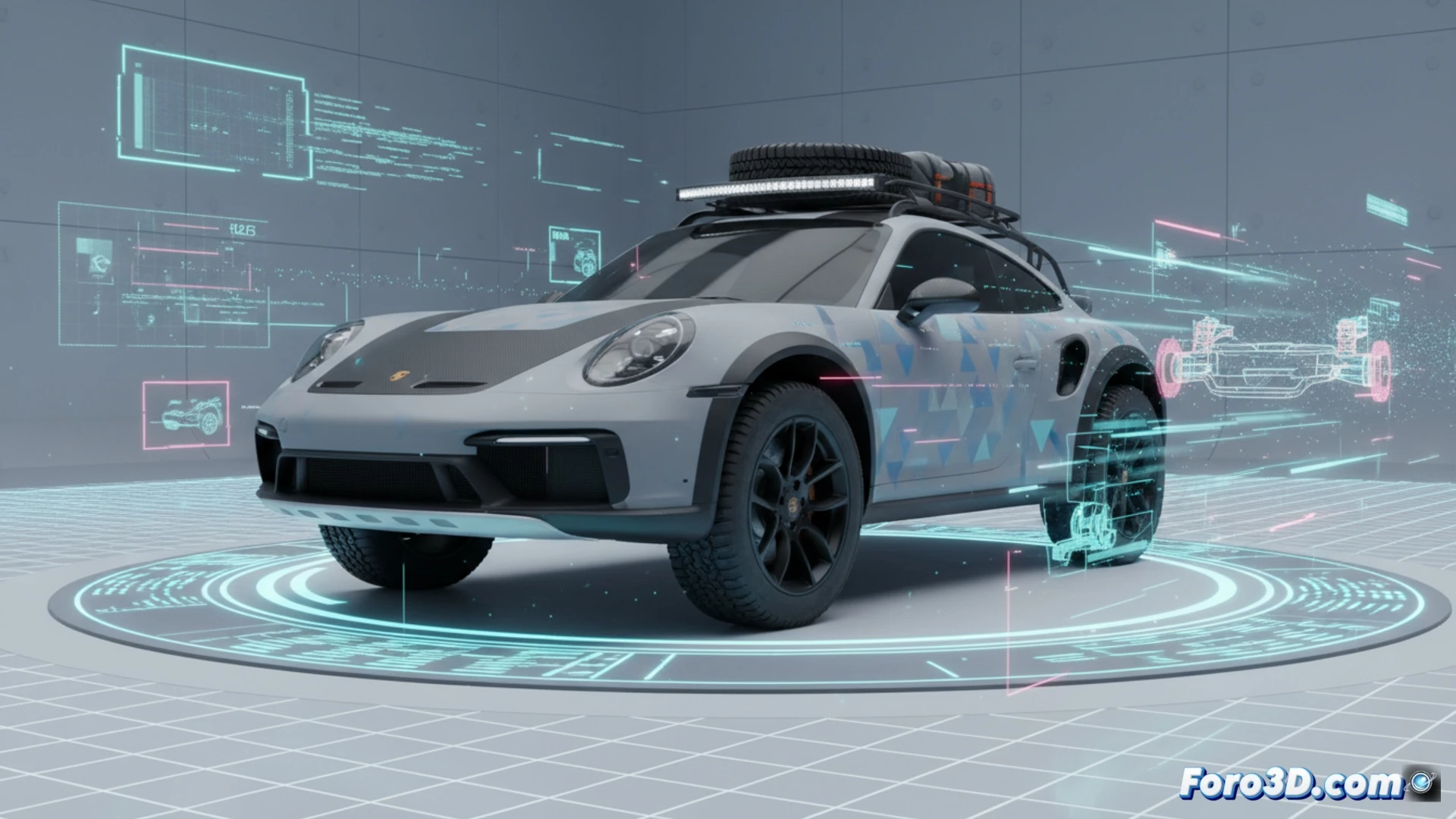
CAD Modeling and Simulation: Pillars of Development 🛠️
Before a physical chassis exists, the new Dakar is born in a digital environment. 3D CAD modeling is crucial for defining the geometry of the raised suspension, widened wheel arches, and chassis reinforcements. Through finite element analysis (FEA) and computational fluid dynamics (CFD) simulations, engineers validate structural strength and airflow, optimizing performance without building a single prototype. Digital twins allow testing behavior in extreme terrains, virtually adjusting parameters to achieve the balance between off-road capabilities and on-road performance.
From Render to Track: Efficient Validation ⚡
The physical prototyping phase, as observed, is now the final step in a digital process. Photorealistic renders and virtual configurations enable design evaluation and decision-making before the costly manufacturing of components. This 3D-centered methodology not only accelerates development but also makes it economically viable to meet niche demand, such as for this adventure 911, ensuring its technical and commercial viability from the first digital sketch.
How is 3D modeling and computer simulation revolutionizing the development of high-performance off-road vehicle prototypes like the future Porsche 911 Dakar? 🏜️
(P.S.: simulating an ECU is like programming a toaster: it seems easy until you order a croissant)