The commemoration of the fifth centenary of Pizarro's second voyage to Peru invites a deep reflection on our past. Beyond the institutional act, a crucial question arises: how can we analyze this complex historical legacy with the tools of the present? Digital archaeology emerges as the key discipline, offering objective methodologies to document, study, and disseminate this episode from a new perspective, away from traditional approaches and focused on the digital preservation of the material heritage linked to that expedition.
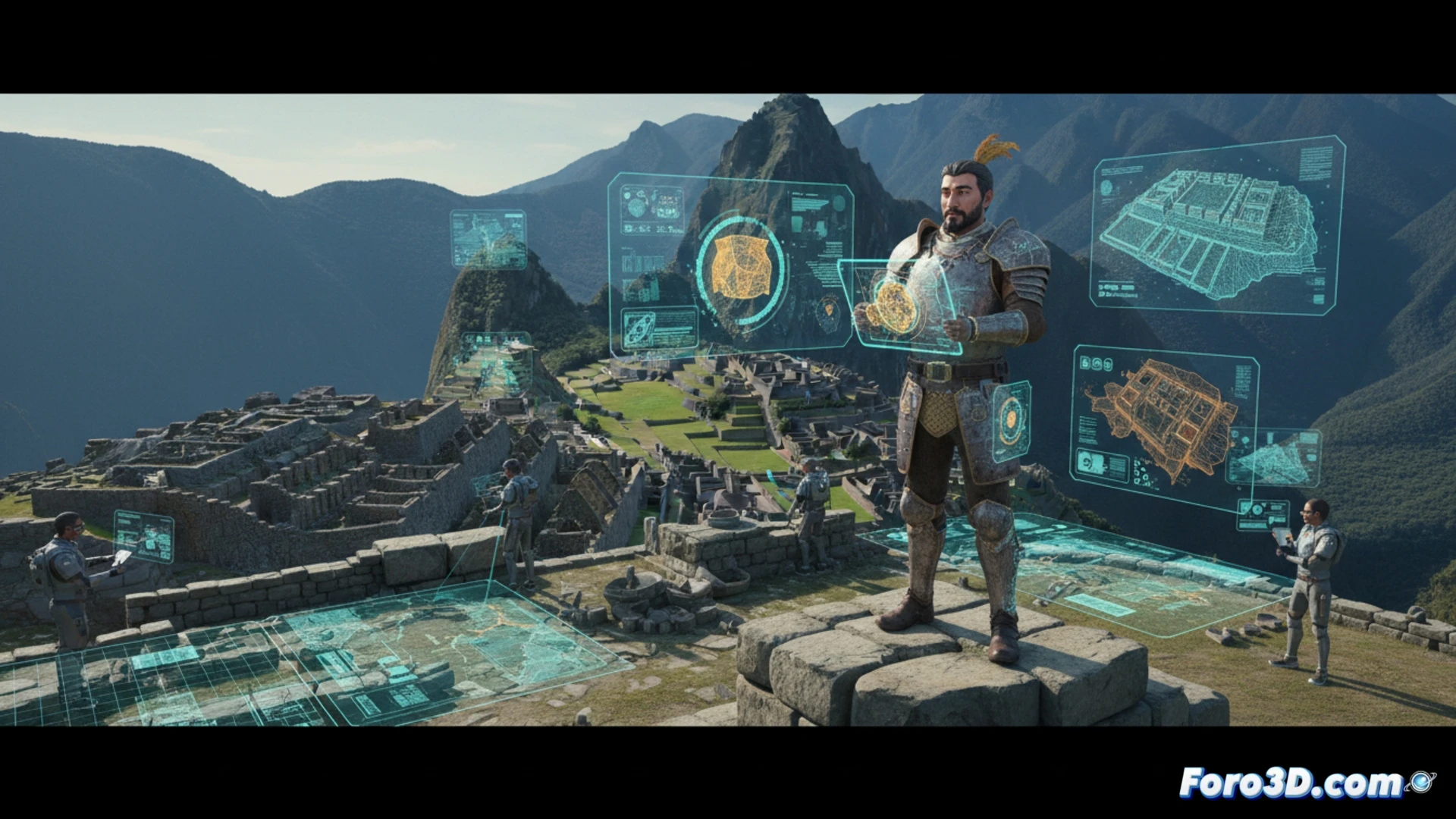
Photogrammetry and laser scanning: documenting Pizarro's heritage 🗿
The practical application of 3D technologies in this context is vast. In Extremadura, photogrammetry could document with millimeter precision the places linked to the conqueror, such as his birthplace in Trujillo or the embarkation ports. Laser scanning would allow the creation of digital models of artifacts from the era. But the most revealing potential lies in virtual reconstruction. The ships of the 1526 expedition could be modeled, navigation tools, or even the cultural encounter recreated in an interactive 3D environment. These models are not decorative ends, but analysis tools that allow historians and archaeologists to test hypotheses on logistics, routes, or living conditions, providing a layer of tangible and accessible evidence.
A complex legacy visualized in polygons 🧩
The true power of digital archaeology here is its ability to visualize complexity. A 3D model of a settlement allows overlaying layers of information: demographic data, material exchanges, landscape transformations. This transcends the individual figure and shows the structures and consequences of that encounter of worlds. By digitizing this heritage, we do not glorify it; we preserve it for critical and multidisciplinary analysis. Extremadura has the opportunity to lead, through technology, a modern and rigorous reinterpretation of a chapter that defined its history and that of a continent.
How can 3D models and digital archaeology offer a more complex and objective narrative about the encounter between Pizarro and the Inca Empire, challenging traditional historical perspectives?
(P.S.: If you dig at a site and find a USB, don't plug it in: it might be Roman malware.)