Visual Endeavors, a technology studio founded by Aron Altmark, emerges with the mission of bringing immersive experiences to the level of The Sphere in Las Vegas to more artists and spaces. Its response is PixelCannon, a robust hardware and software-agnostic real-time rendering server designed specifically to power complex LED installations. This solution directly addresses the main obstacles: prohibitive cost and processing intensity, opening new possibilities for medium-scale productions.
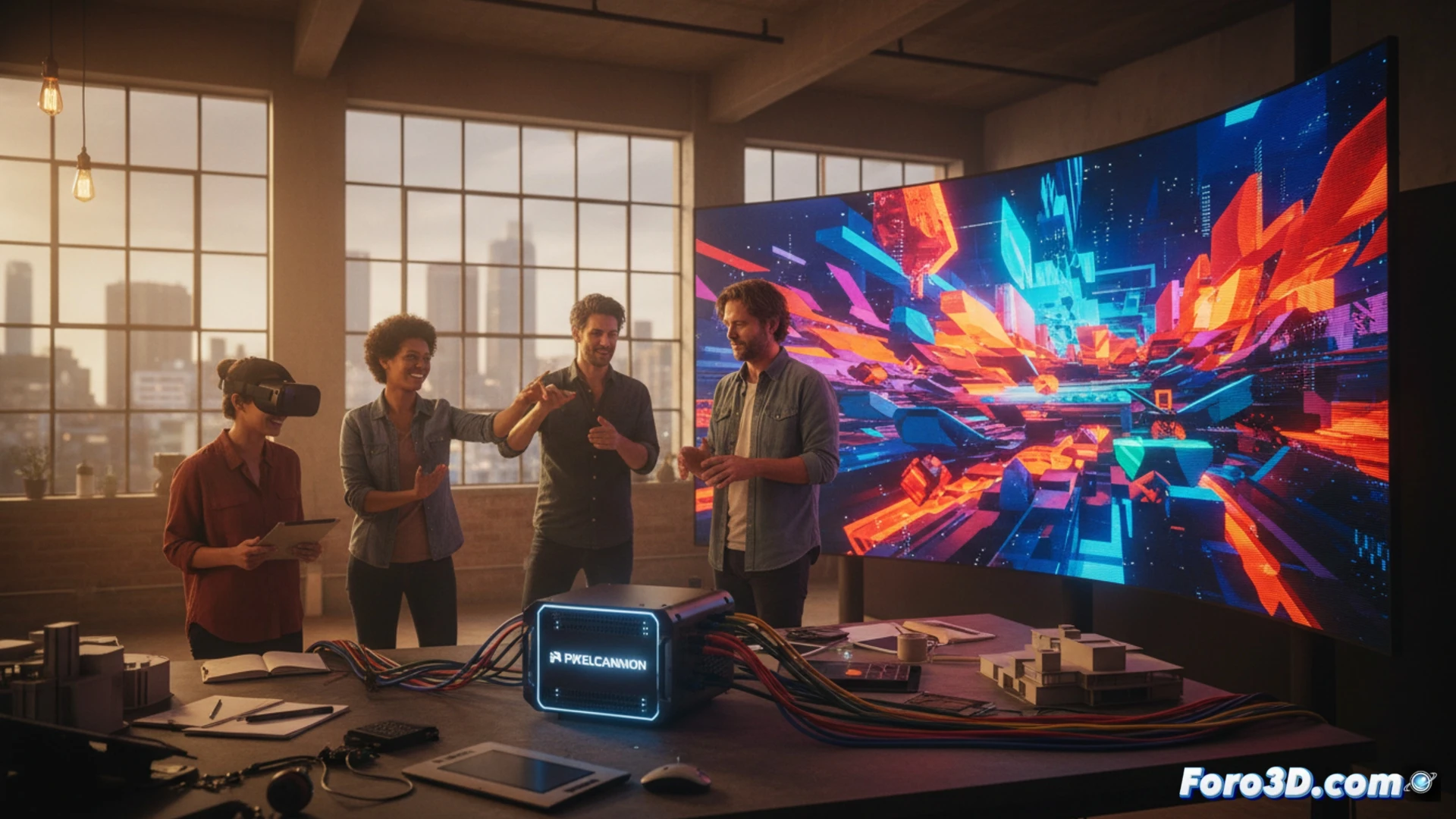
Software-Agnostic Architecture and Accessible Performance 🚀
PixelCannon stands out for its comprehensive approach. The hardware is built as a robust and reliable unit for tours and live events, capable of handling high resolutions and complex real-time video mappings. Its true innovation is being software-agnostic, allowing integration with engines like Notch, TouchDesigner, or Unreal Engine according to the project's needs. This flexibility eliminates dependence on a closed ecosystem and significantly reduces the entry barrier, offering a cost-performance ratio that did not exist until now for high-end visuals.
The Future of Immersive Scenography ✨
The emergence of solutions like PixelCannon signals a turning point. Integrating massive LED screens with live-rendered content and complex architectural mapping will no longer be exclusive to superproductions. This empowers artists, scenic designers, and event producers to conceive more immersive and technical narrative experiences, where dynamic digital scenography becomes an accessible language, transforming public spaces and events into immersive canvases.
How is PixelCannon transforming the creation of 3D scenography and immersive mapping so that show studios of any scale can compete with high-level productions?
(P.S.: architectural mapping is like putting Instagram filters on a building)